

Essay: Beyond the global queer
Is there such a thing as the queer person, universal and uniform? The internet would have us believe there is. In 2025 memes and TikTok videos about non-binary baristas were going viral. Internet users were confessing that the best coffee is made by a person with blue hair, piercings and an androgynous look: all signifiers of queerness they conveyed.
Essay by Rojda Yavuz

Jeanne et Moreau (Lara Tabet and Randa Mirza) - Image part of the installation Safe Distance, Troubled Dreams (2018)
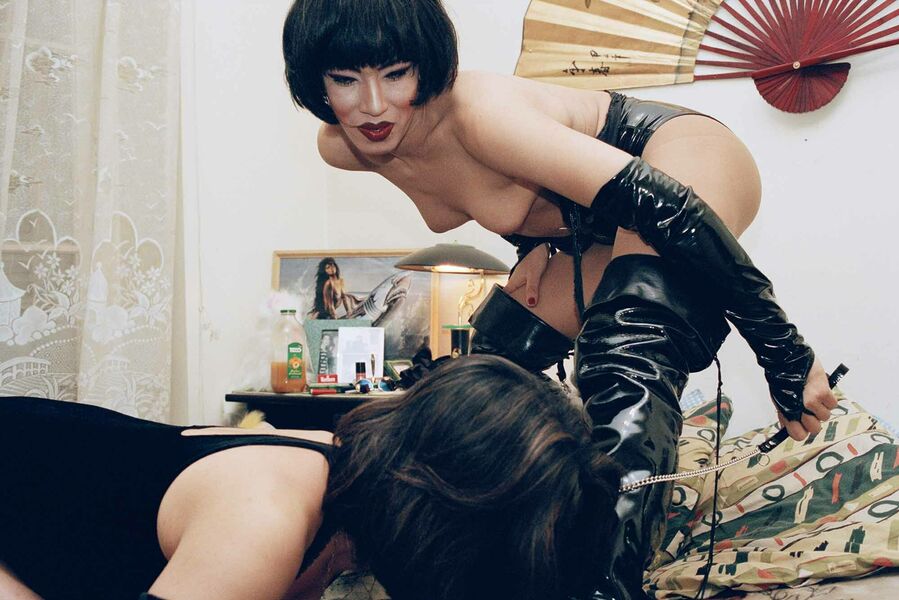
Kader Attia 'The Landing Strip' (2000-2002/2019)
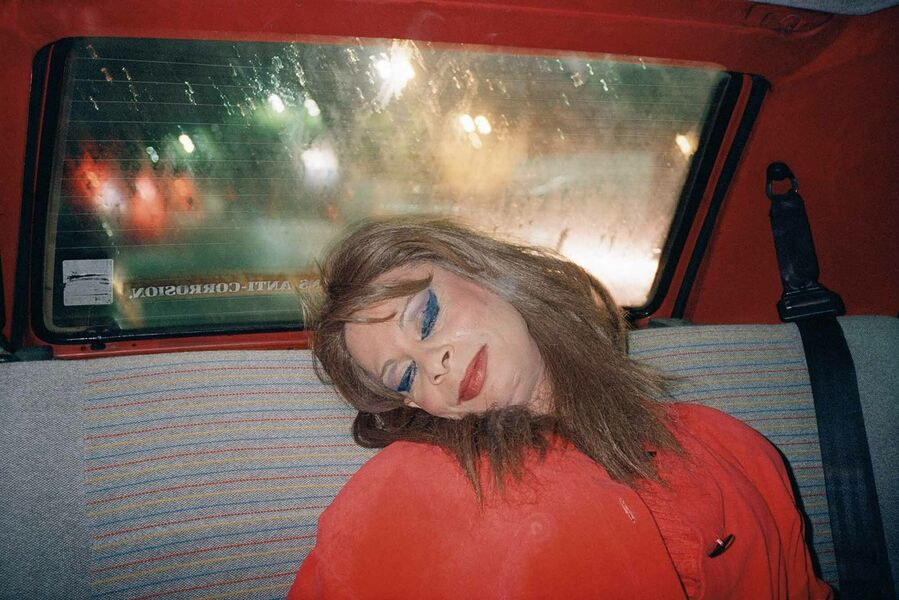
Kader Attia 'The Landing Strip' (2000-2002/2019)
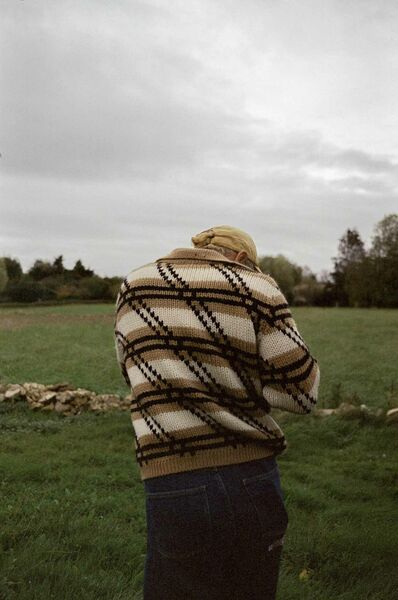
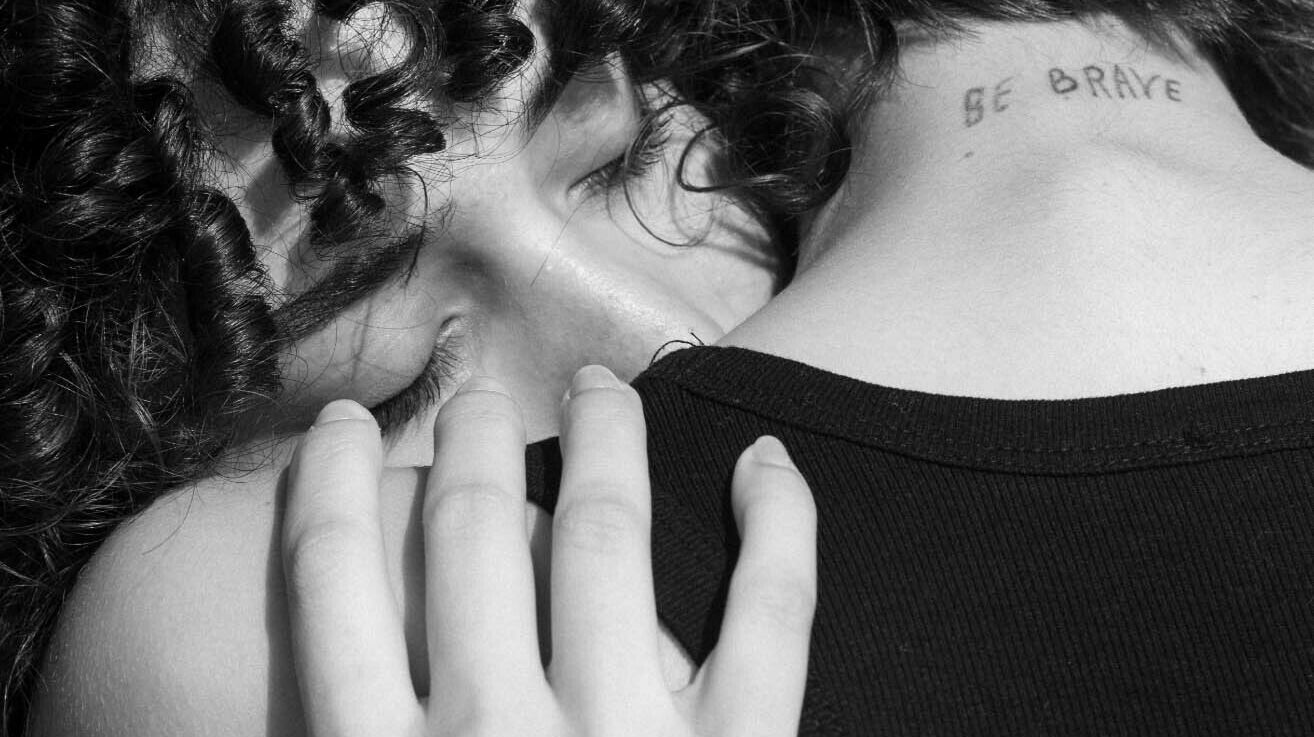
Mohamad Abdouni, The First Boy I Ever Loved I Know Nothing About Today, 2026
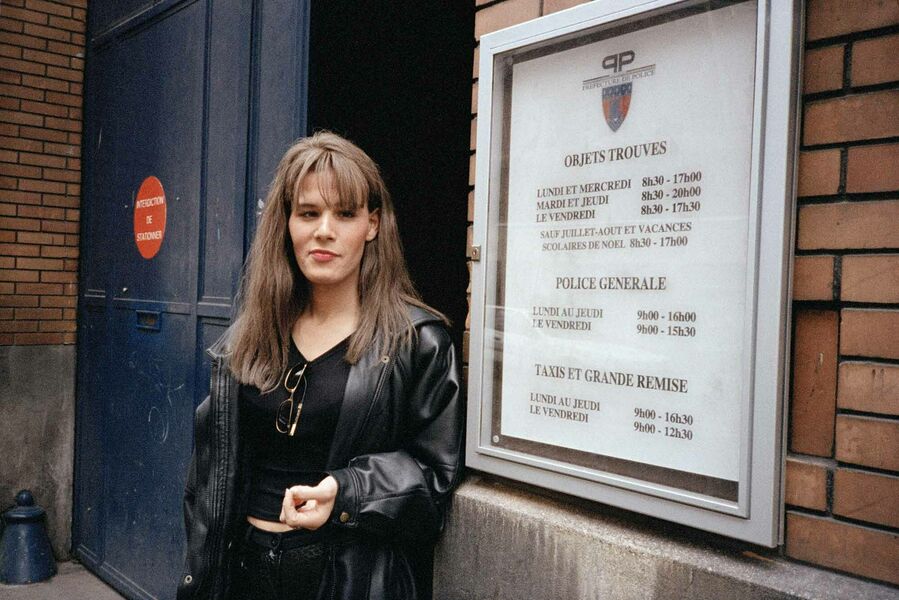
Kader Attia 'The Landing Strip' (2000-2002/2019)
Naming ‘queer’
‘Queer’ refers to lesbian, gay, bisexual, trans, non-binary, asexual and other people who do not adhere to heteronormative standards. The umbrella term became widely adopted by LGBT communities on Turtle Island (the USA and Canada) from the 1980s onwards.
The term includes both sexual and gender identities and thereby is often considered more inclusive than the acronym LGBT, because it hints at fluidity rather than fixed categories. By now, the term has spread outside its original context and is used all over the world, with local adaptations popping up everywhere. In this way, kweer in Turkish, كويير in Arabic, and کوئیر in Farsi, were incorporated into local vocabularies to name queer life in the SWANA region (South-West Asia and North-Africa).
Export of Empire
As social, political and sexual landscapes change, and our understanding of queer histories expand, language shifts too: terminology is introduced, reworked and adapted to contemporary contexts. However, what appears to be a natural evolution or trend, is yet another export of the US Empire.
The American invasions and military interventions in the SWANA region and elsewhere, supported by European allies, are synonymous with the limitless dissemination of Western culture. Imperialism is not only about destroying existing lands and cultures, but about importing Western products, habits and ideas to create new neoliberal markets for profit and control (Naomi Klein, 2007).
Similarly to colonial bureaucrats, techniques of rule, representation, sexual regulation, and morality are all cogs in the imperial machine. Loyal to the mission civilisatrice, the Western Empire has exported its discourse on how ‘deviant’ sexualities should be named and experienced, for recognizability and as a tool for domination.
'Global’ culture
The internet intensifies the creation of a monoculture even further. Although the internet has given many queer people access to communities and resources that previous generations could only dream of, its centralization of the past decade poses a great danger. Three American social media apps monopolize our attention spans and algorithms feed us culture rather than us seeking it out. Our frames of reference have narrowed down and became strongly mainstream with an intensity that traditional media could never achieve. While queerness aims to make space for fluid identities, in the online imaginary it has become a caricature: the non-binary, blue-haired barista, flattened out for recognizability and likes.
In their text “Queer theory and permanent war” (2016), academics Jasbir Puar and Maya Mikdashi challenge the apparently ‘self-evident’ idea that queerness is Western: “What must the queer body do, or be, to be recognized as such, and by whom? Do we want this recognition, and if so, how and for what purposes?”. Perhaps we should not only question the vocabulary, but also the way queer sexuality is recognized, catalogued or theorized.
Lessons from queerness
In The Queer Arab Glossary (2024), editor Marwan Kaabour states: “[...] The way queerness has been shaped over time, and the way it exists within different regions around the world, has historically taken many different routes that sometimes diverge. There is wealth in that divergence that must be looked at.”
Gender and sexual identities are far more diverse and complex than hair color, clothing styles, or symbols like rainbow flags. Queerness may not be the blue-haired barista, the polyamorous urban dweller or the techno lover breaking their fast at Berghain.
So then, what can the SWANA region teach us about queerness? That it goes far beyond ‘just’ same-sex love or transitioning. Queerness is practiced and felt, lived and mourned, alongside resistance to occupation, military oppression, check points, borders, and destruction of land. That it is inevitably shaped by Empire, but simultaneously – due to its fluidity, which is less easily disciplined by power – carries within it some of the (survival) tactics to reject that same Empire. Queer people do not look the same everywhere. We are just all consuming the same content.
BIO Rojda Yavuz
Rojda Yavuz is a writer and artist, whose practice is research driven and rooted in (moving) image and text. Their interests include gender and digital subcultures which they approach through a critique of power and coloniality. In this text Yavuz dissects the viral meme of “the blue haired barista”. Against the backdrop of an interconnected world and an imperial discourse on sexuality, Yavuz argues that a global understanding of queerness does not exist, and that the SWANA region adds to its many shapes.
Sources
- Puar, J. and Mikdashi, M. (2016). ‘Queer theory and permanent war’, GLQ: A Journal of Lesbian and Gay Studies, 22(2), pp. 215-222
- Klein, N. (2007). The shock doctrine. London: Penguin books.
- Kaabour, M. (ed.) (2024). The queer Arab glossary. London: Saqi books.