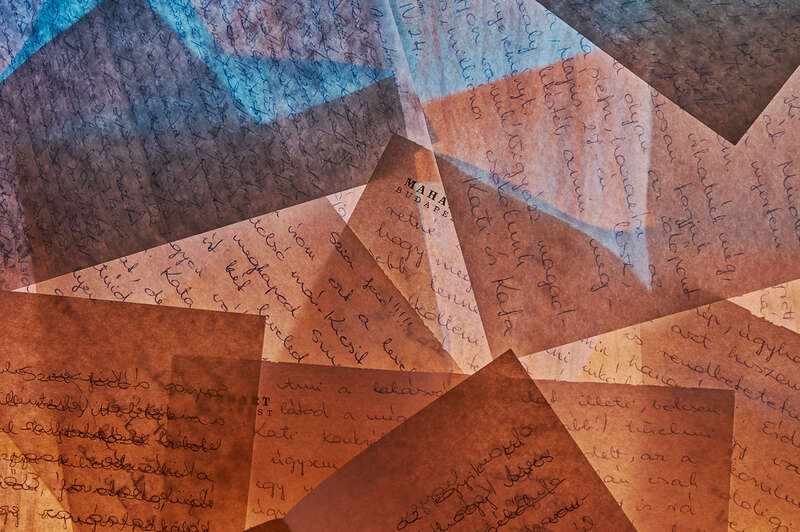
La Fille du Marin: Home(s) away from Home
My photographic practice often begins with questions of memory, belonging and the places we carry with us. La Fille du Marin, which I have been developing since 2018, grew from my experience of growing up as the daughter of a sailor and from a journey to discover places I had never been able to visit with my father, as my mother had done before I was born. I did not know then that the journey would extend far beyond its original duration, becoming a much longer voyage.
As part of the process, I immersed myself in my parents’ letters and diaries. Through them, I rediscovered forgotten childhood memories and emotions, and from these, new images began to emerge. The project gradually became a blend of photographs and family writings, and, in the process, a kind of self-portrait. Making the work allowed me to recognise the parallels between my father’s profession, his life at sea, and my own path of leaving my home country and moving abroad.
The photograph and diary detail presented below offer a glimpse into La Fille du Marin. The text is a 'reproduced' detail from my mother’s diary, which became an important part of the process through which I revisited my childhood and the stories of my parents’ life at sea.
Editors’ note: You can also read our conversation Seafaring Traces: Fragments of Fathers, in which Katalin Száraz Davies joins Kasia Molga and Ioanna Sakellaraki to reflect on their fathers’ lives at sea and the ways these inherited stories, memories and absences have shaped and evolved within their respective practices.
Katalin Száraz Davies
22 okt 2026 • 2 min
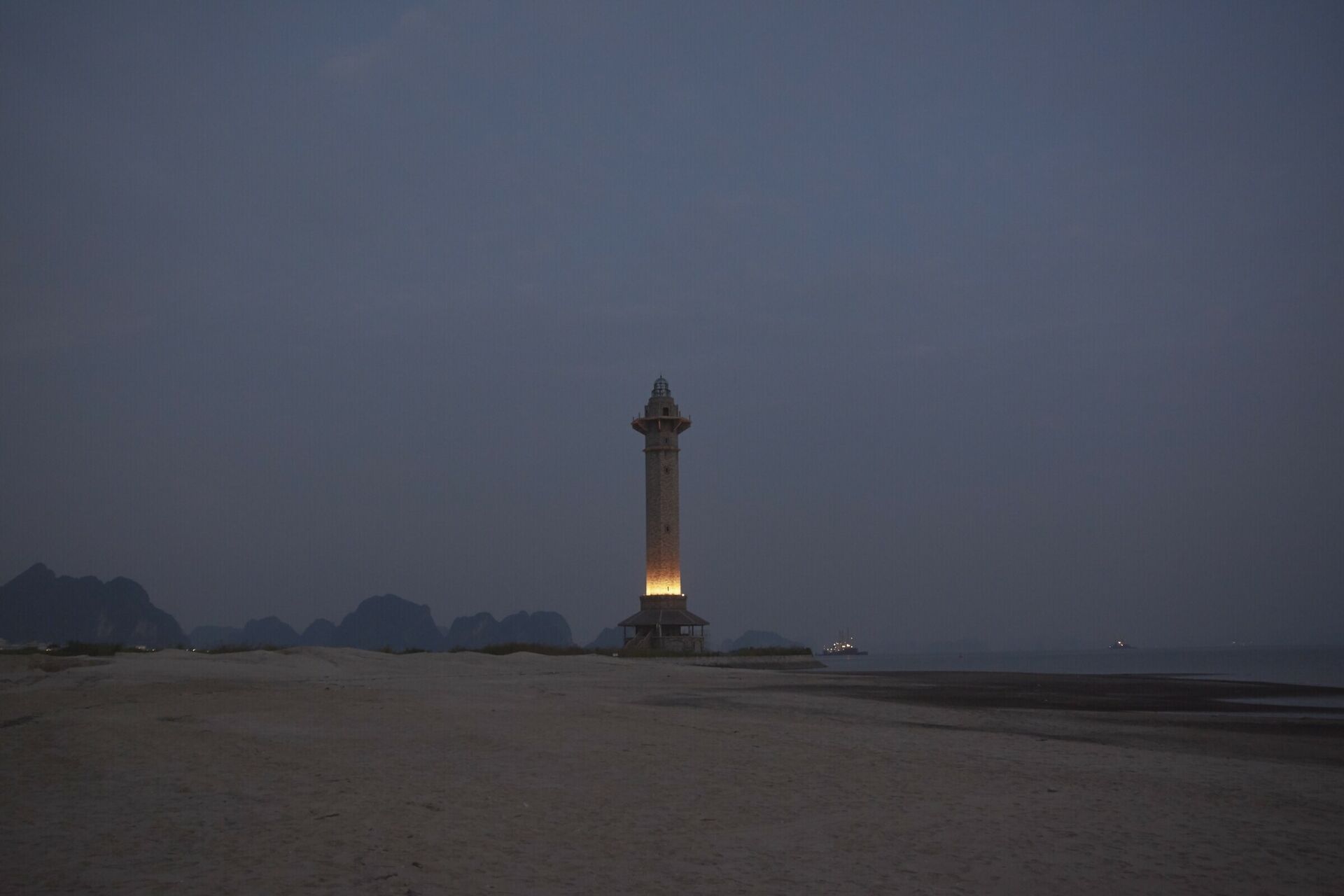
21 January 1987 Mom’s diary
Today I spent the whole day peeking out of bed because this iron thing is shaking again. Yesterday we left the Malacca Strait behind us, we passed the skyscrapers of Singapore, and today we’re already “enjoying” the rough waves of the South China Sea. I hope it won’t be like this all the way to Kawasaki!
Yesterday we were closest to the Equator - only two degrees away. Now we’re moving away from it again. But it’s very hot outside, it rains often, exactly like the saying goes: “as if someone were pouring it from a bucket…”
As I watch the sailors working - though I only see a small part of their work - I realise that everything here is much harder than an outsider (and most people at home!) imagines. At home, people think the ship just sails, docks every day in beautiful cities where adventures, drinks, and of course beautiful women are waiting for them. Of course, there is a bit of truth in that too, but the ratio between work and leisure is completely different from what people think.
On deck, the harshness of the weather, the scorching tropical sun or even the cold can be cruel, not to mention that this large piece of iron is constantly, continuously rusting in the humid, warm air, and the rust always has to be hammered off somewhere, and a new layer painted on. And other similar jobs.
But the engine room! That labyrinth, with its countless narrow stairs, the heat above forty degrees, the noise, the huge oily machines! (…) So for the engineers it is perhaps even worse than up top. I don’t envy the waiters or cooks either, because their schedule is the worst, and besides, they have to deal with people - and a hungry sailor is a difficult “tool of work.”
Any of these jobs on land could be considered an average or even a difficult job. But all of this on a swaying ship… for long months alone, or rather without family and children… and still not alone, because you are locked in with the same faces day after day!!!
And however small and simple a country Hungary may be compared to the distant “wonder countries,” it is still home, where fresh newspapers and fresh food are available every day, and where one is not locked inside iron walls and thousands of miles of seawater.
And yet they do it. What is there to love about it? Do they even love it at all?
This online contribution is part of Trigger #7: Ocean, the wider project accompanying the printed book published by FOMU and Fw:Books. Extending the book beyond its printed pages, the online series follows further conversations, works and perspectives that explore the ocean as an environment, a force and a way of thinking with images. Each contribution takes its own route through these questions.