
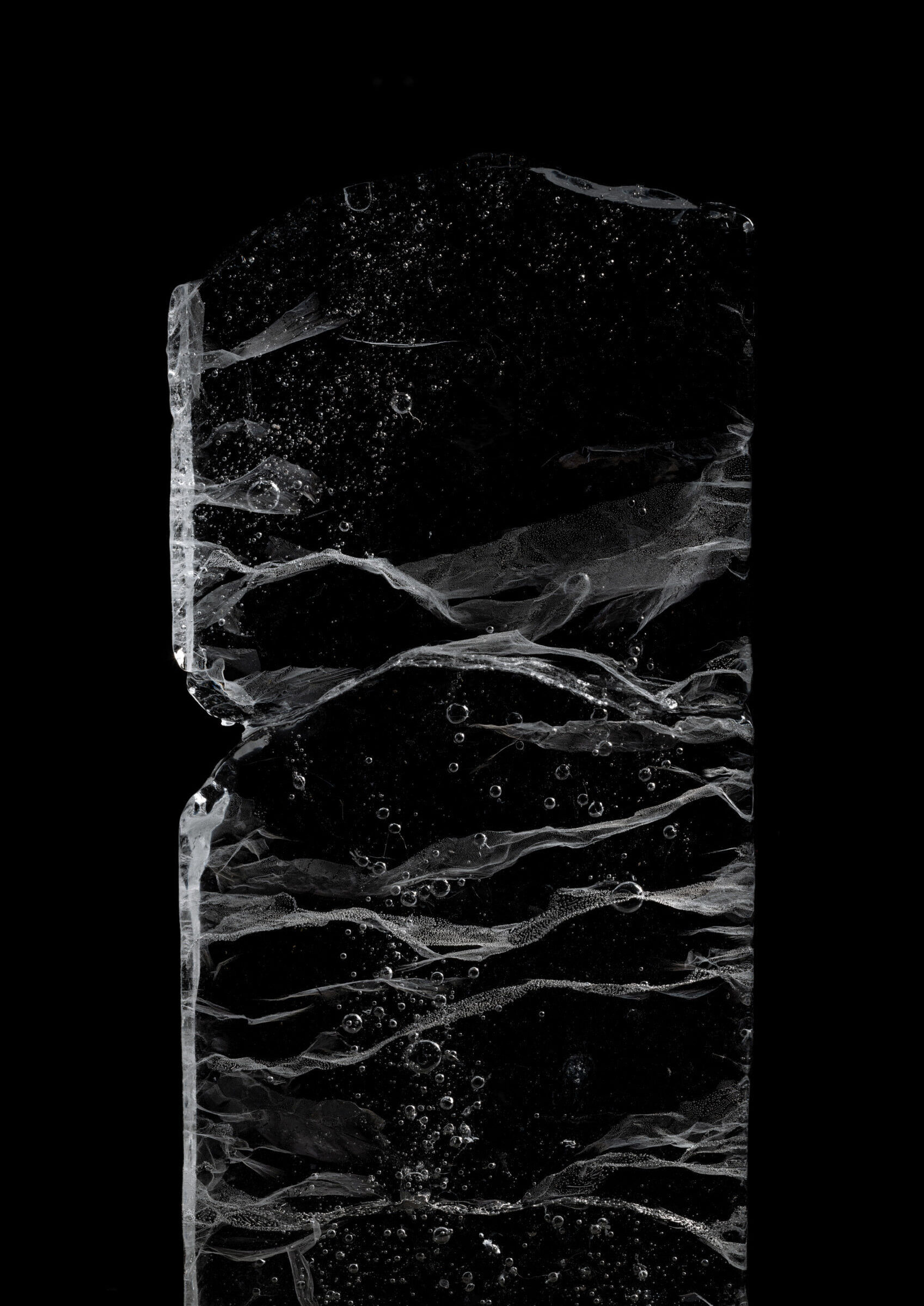
Antarctica 2.1, from Climate Archive, Suzette Bousema, 2019.
Travelling through Invisible Oceans
Suzette Bousema in conversation with Peter Bijl
Much of what shapes the ocean remains invisible to us. Deep currents, microscopic plankton, melting ice sheets, geological time, and changing climate systems profoundly influence life on Earth, yet we rarely encounter them directly. We mostly know them through scientific images, measurements, models, and data.
As an artist working with photography, I’m interested in how such distant or invisible phenomena can become tangible. How do we relate to processes that exceed our senses, unfold across vast scales, or remain hidden beneath the ocean surface? What role can images play in making these worlds perceptible?
I first met paleoceanographer Peter Bijl while working on Dinoflagellates (2020), a project that involved photographing fossil plankton through a microscope. Looking at these microscopic traces of ancient oceans, I became interested in how we relate to worlds that are no longer—or not yet—accessible to us and in the role images and scientific methods play in that process.
In the conversation that follows, we discuss fieldwork, photography, fossils, dead zones, Antarctica, and the challenge of making invisible worlds visible.
Suzette Bousema & Peter Bijl
21 okt 2026 • 11 min
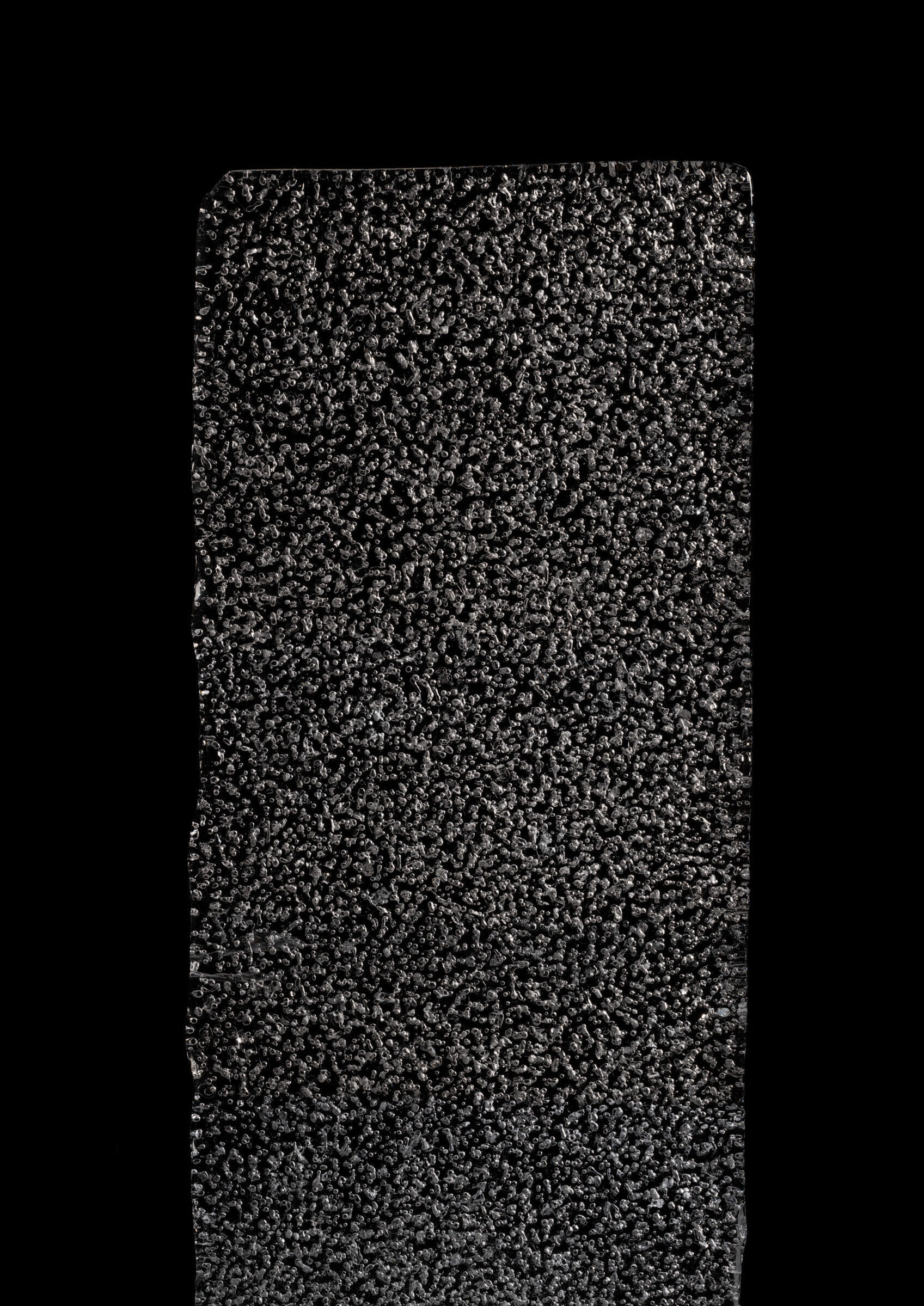
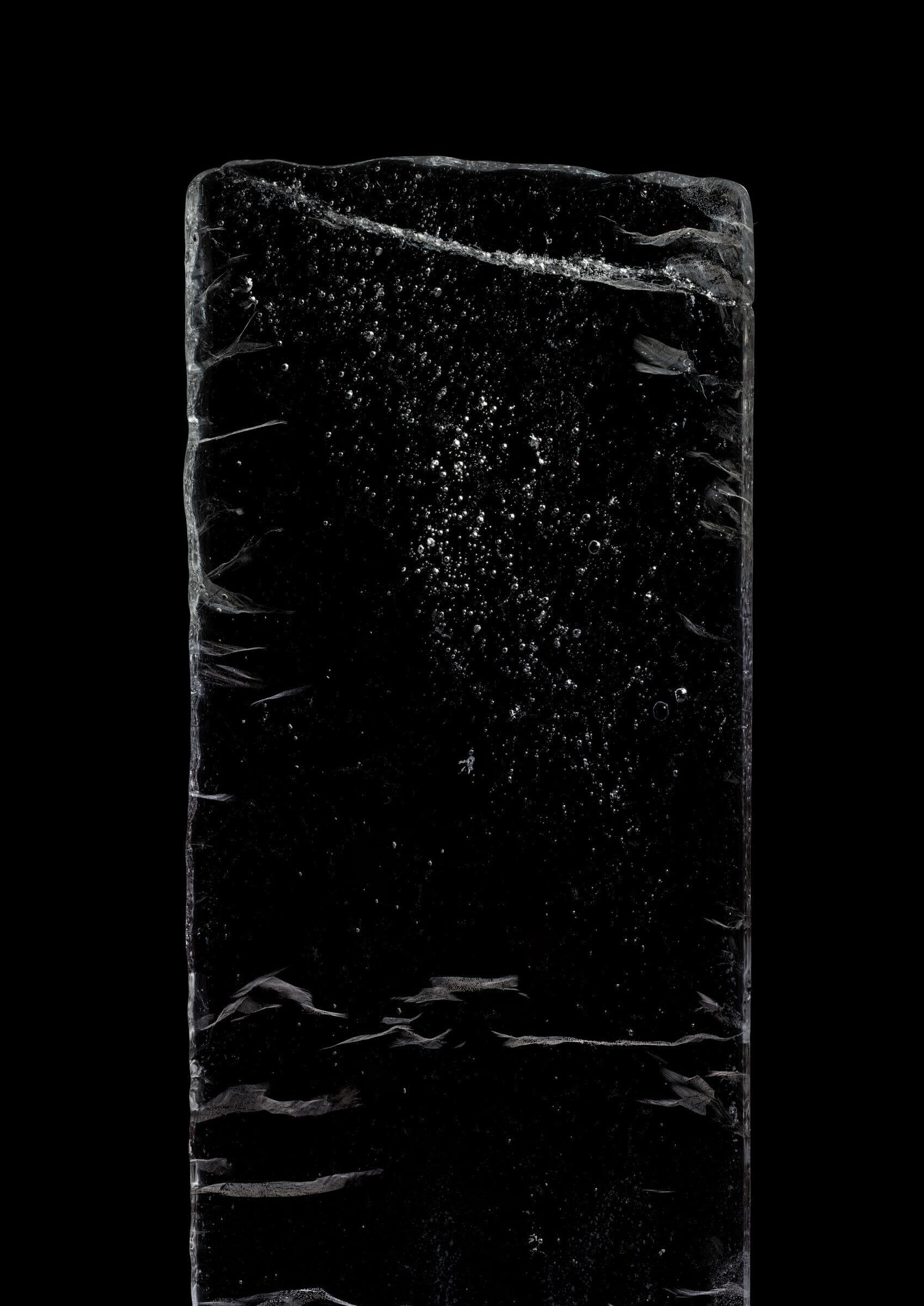
Suzette Bousema: In my work, I often look for tangible forms within abstract ecological questions, especially those related to climate and the ocean. I’m interested in finding images, materials, or objects that allow people to connect to processes that otherwise remain difficult to grasp. That was the starting point for Climate Archive (2019), for example, for which I photographed twenty-thousand-year-old ice cores from Antarctica and Greenland.
When we first met, I was immediately fascinated by your research on dinoflagellates. Here were microscopic organisms, preserved for millions of years, that could tell us something about past oceans and climates. For me, they became a way of approaching geological time through an image. What is it exactly that these tiny fossils can reveal to us?
Peter Bijl: ‘Dinoflagellates’ is a word you don’t hear often. They’re single-celled organisms that live in the sea. Some species have the ability to form a cyst—a kind of protective casing made of bioplastic—when conditions become unfavourable. When conditions improve, they emerge again, but the casing sinks to the seafloor, where it can remain preserved for millions of years.
We find these cysts in ocean sediments. Although they end up on the seabed, they originate from plankton living in surface waters. Because there are so many different species, each with its own shape, ecology, and geographical distribution, they provide an extraordinary archive of past ocean conditions. By studying which species occur where and when, we can reconstruct aspects of ancient marine environments and climates.
They’re incredibly small, between 20 and one 100 micrometres in size. A micrometre is one thousandth of a millimetre. You really need a microscope to see them. Yet despite their size, they can tell us stories about entire oceans.
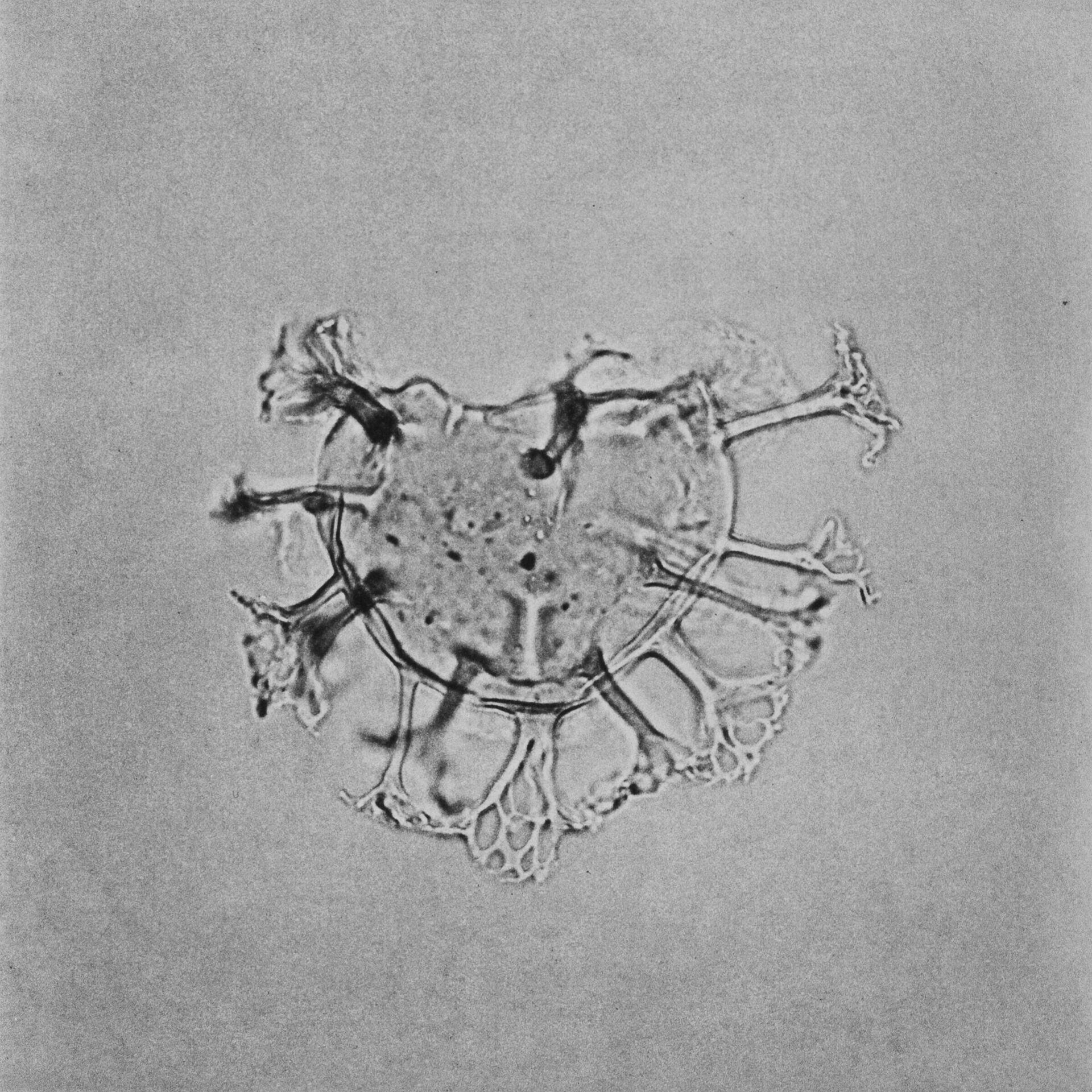
Enneadocysta dictyostila 2, from Dinoflagellates, Suzette Bousema, 2020.

Operculodinium centrocarpum, from Dinoflagellates, Suzette Bousema, 2020.
Suzette: What fascinated me was the challenge of translating something so small into an image. Looking through the microscope, I realised that simply documenting the specimens wasn’t enough. The microscope image felt flat and fragile, while the fossils themselves carried a strong material presence.
That led me to work with polymer prints, a technique related to etching. By transferring the photograph onto a relief plate, the image gains texture and depth. The resulting prints almost resemble fossils themselves—as if the image had become a geological trace. When I looked at them, I was reminded of cracking open a stone and discovering the imprint of a plant preserved inside.
In that sense, the project wasn’t only about documenting scientific samples. It made me think about photography as a tool for mediation between science, scale, and perception, a way of making visible what normally escapes our senses and of translating scientific knowledge into a physical and visual experience.
Peter: I think that’s also what makes these organisms so fascinating. They’re incredibly small, yet they allow us to imagine entire worlds that no longer exist.
The funny thing is that the species living today—perhaps forty to sixty common species—are actually rather simple compared to those from fifty million years ago. In the fossil record, you find far greater diversity: larger, more exuberant, and, often, much stranger forms. We don’t fully understand why, which makes them all the more intriguing.
The dinoflagellates we find around Antarctica are particularly remarkable because they’re warm-water species. Fifty million years ago, Australia was still connected to Antarctica. The atmosphere contained far more greenhouse gases, there was no ice on Earth, and global temperatures were much higher. Some tropical regions may have become almost too warm for complex life, while Antarctica remained comparatively hospitable. It’s extraordinary to think that a continent now covered by ice was once home to rainforests.
What interests me is that these tiny fossils allow us to reconstruct environments on a planetary scale. A microscopic organism becomes evidence of ancient oceans, climates, and ecosystems.
And the ocean itself remains largely invisible. Most of what happens beneath the surface is beyond direct human experience. The average ocean depth is about 4 kilometres, while the deepest point reaches 11 kilometres. Proportionally speaking, a billiard ball has more relief than Earth does.

Suzette Bousema in her studio working on MOC, by Elisa Piazzi, 2026.
Suzette: The ocean often feels strangely distant, even though it shapes so much of our lives. We live with its consequences, but many of the processes that regulate climate happen far beyond our field of vision.
Recently, I’ve been working on an installation about global ocean circulation, the Meridional Overturning Circulation. What interests me is that it’s one of the most important systems regulating climate, yet almost nobody has ever seen it. We usually encounter it as a diagram in a textbook or a scientific model. As an artist, I became interested in how such an invisible and planetary-scale process could be translated into something people can physically experience.
Scientists have found that the circulation has already slowed down since the middle of the twentieth century, and models suggest that it may weaken significantly further over the coming century. What exactly is happening there?
Peter: This circulation has an enormous influence on the climate along the entire western coast of Europe, from Southern Spain to Northern Norway. Much of that is linked to the Gulf Stream, which transports warm water from the Caribbean towards the North Atlantic.
As the salty water from the Caribbean travels north, it gradually cools and becomes denser. Eventually, around the North Atlantic near Iceland and Greenland, it becomes dense enough to sink into the deep ocean. That sinking is one of the driving forces behind the circulation system.
Suzette: So the circulation depends on water sinking in the North Atlantic?
Peter: Exactly. The concern is that increasing amounts of freshwater are entering that region through rainfall, melting ice, and other processes. Freshwater is less dense than salt water, which makes it harder for the water to sink. Evidence suggests that this part of the circulation is already weakening.
What’s particularly interesting is that we know from geological records that similar slowdowns have happened before. In the past, they were associated with major climatic changes, including very cold periods across Europe.
Suzette: When I first learned about that, I was struck by how difficult it is to imagine. It’s a process unfolding beneath the ocean surface and across entire ocean basins, yet it affects everyday life here. If the circulation weakened significantly, what would that actually mean for people living in Western Europe?
Peter: The most immediate effect would be much colder winters. Summers would change less dramatically, but winter conditions could begin to resemble those on the eastern coast of North America. Much of Europe’s infrastructure isn’t designed for that kind of climate.
In Norway, for example, ports that remain ice free throughout winter because of the Gulf Stream could become affected by sea ice. But the consequences go far beyond human infrastructure. Deep ocean circulation is also responsible for transporting oxygen into the deep sea. If that circulation weakens substantially, many larger deep-sea organisms that depend on oxygen could disappear.

Overview of global ocean circulation (Meridional Overturning Circulation – MOC). This simplified schematic shows the main flow pathways across the world’s oceans at different depths: warmer surface waters moving from the tropics toward the poles are shown in yellow, while cold, heavy deep waters and extremely dense bottom waters are highlighted in purple and dark purple, respectively. This global network operates like a giant oceanic conveyor belt, circulating heat, oxygen, carbon, and nutrients to keep Earth's climate and marine ecosystems in balance. The sinking of cold, salty water in the North Atlantic and Southern Ocean acts as the engine driving this circulation, where a single water molecule takes roughly a thousand years to complete a full circuit. (Credit: ARC Australian Centre for Excellence in Antarctic Science / Poncet et al., 2025)
Long
Caption
Needed
Suzette: The installation begins with a familiar scientific diagram. Different colours indicate currents at the ocean surface and in the deep sea. But what fascinated me was how much complexity disappears when such a vast, three-dimensional system is compressed into a flat image.
I started wondering what would happen if people could move through that diagram rather than simply look at it. Could an ocean circulation become something spatial and bodily rather than abstract?
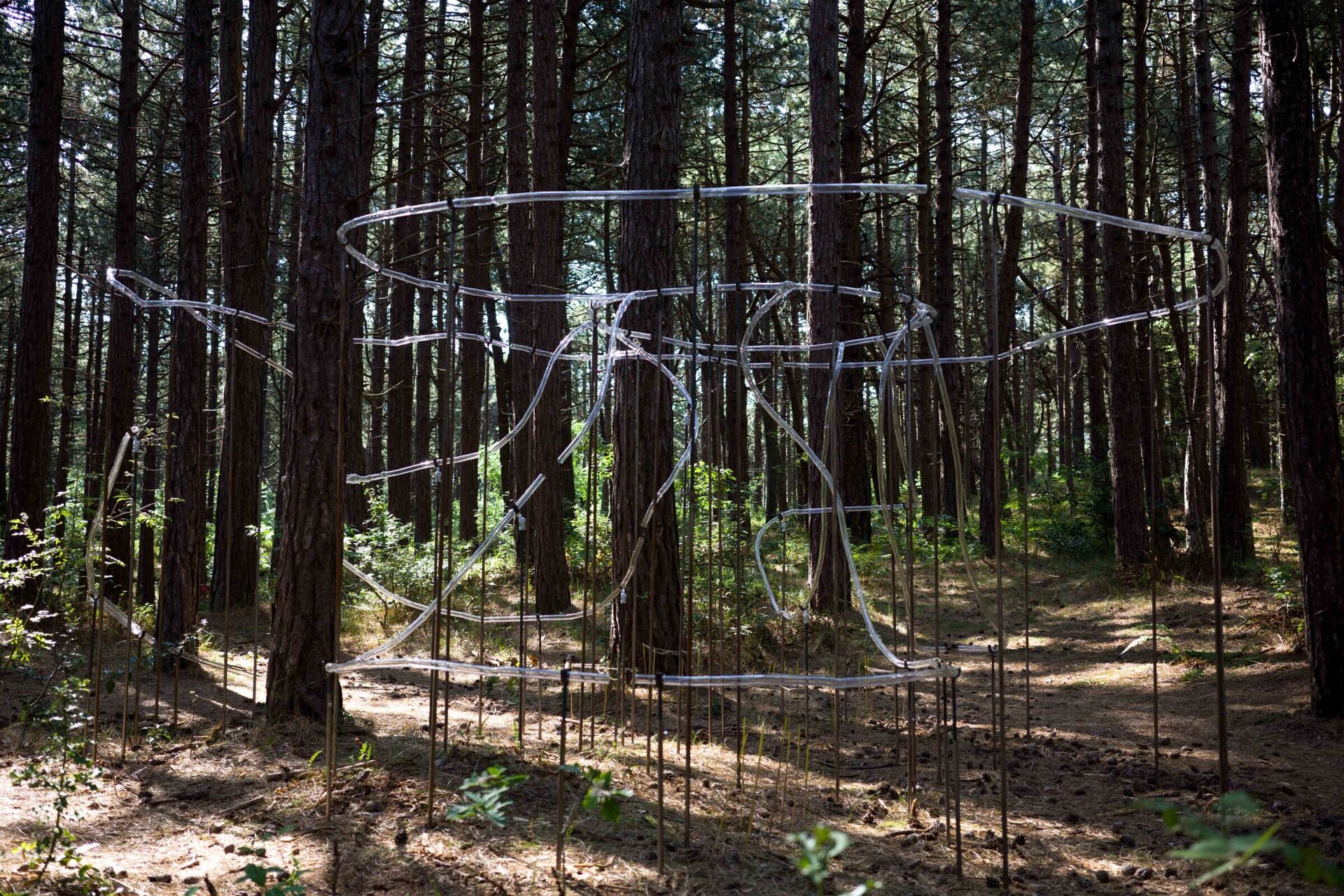
Translating it into a physical form turned out to be surprisingly difficult. I first built a scale model because I couldn’t fully understand the circulation from the diagram alone. Only when I started constructing it in three dimensions did the system begin to make sense to me.
The final installation is made from bent glass tubing that follows the pathways of the circulation. I add a textured surface so that the forms retain something of the fluidity of water rather than becoming purely schematic.
Peter: That difficulty is inherent to the phenomenon itself. Ocean circulation is almost impossible to represent accurately because water is never still. Currents constantly generate smaller eddies and movements that overlap and interact with one another.
Even scientific visualisations simplify enormously. NASA has tried to visualise these systems, but as soon as you move a body of water—through wind, storms, or Earth’s rotation—you create new layers of complexity and turbulence.
The diagrams we use are therefore not exact representations. They’re ways of thinking. As Earth scientists, we learn to visualise these systems mentally. We move through them in our imagination, almost as if we’re travelling along the currents themselves. But for people outside the field, that kind of spatial imagination is much less accessible.
That is what I find interesting about your installation. It translates something that often exists only as a model or mental image into a physical experience. It gives form to a process that most people never encounter directly.
How large will it eventually be?
Suzette: Around 5 by 6 metres and about 2.2 metres high. Some parts rise above your head, while others descend towards knee level. The idea is that visitors can walk alongside the circulation and experience it as a landscape rather than a diagram.
It’s interesting what you say about moving through these systems mentally. In a way, the installation emerged from exactly that problem. I needed to build it physically before I could understand it myself.
Caption
Caption
Caption
Suzette: Speaking of moving through places you’ve only imagined, you recently went to Antarctica. What was that like?
Peter: It felt like a dream come true. I would never travel to Antarctica simply as a tourist, but going there as part of my research made it deeply meaningful.
As a geologist, you spend much of your time travelling through time in your imagination. You constantly try to reconstruct landscapes that no longer exist. Antarctica has occupied my thoughts for years, both in its present form and in its distant past.
What surprised me was how much physically being there changed my understanding. Walking through the landscape made it easier to imagine the Antarctica I study—the Antarctica of rainforests, warmer oceans, and entirely different climates. Suddenly the abstract became tangible.
Suzette: I find it interesting that you say physically going somewhere allows you to understand it better. Many of my projects deal with phenomena that are enormous, distant, or invisible. I can’t simply travel to Antarctica or to the middle of the ocean. Through collaborations with scientists, that’s not always necessary to tell a story. Yet the few times I’ve been able to do fieldwork myself, I immediately noticed how much it changes my relationship to the subject. It becomes less abstract and more tangible.
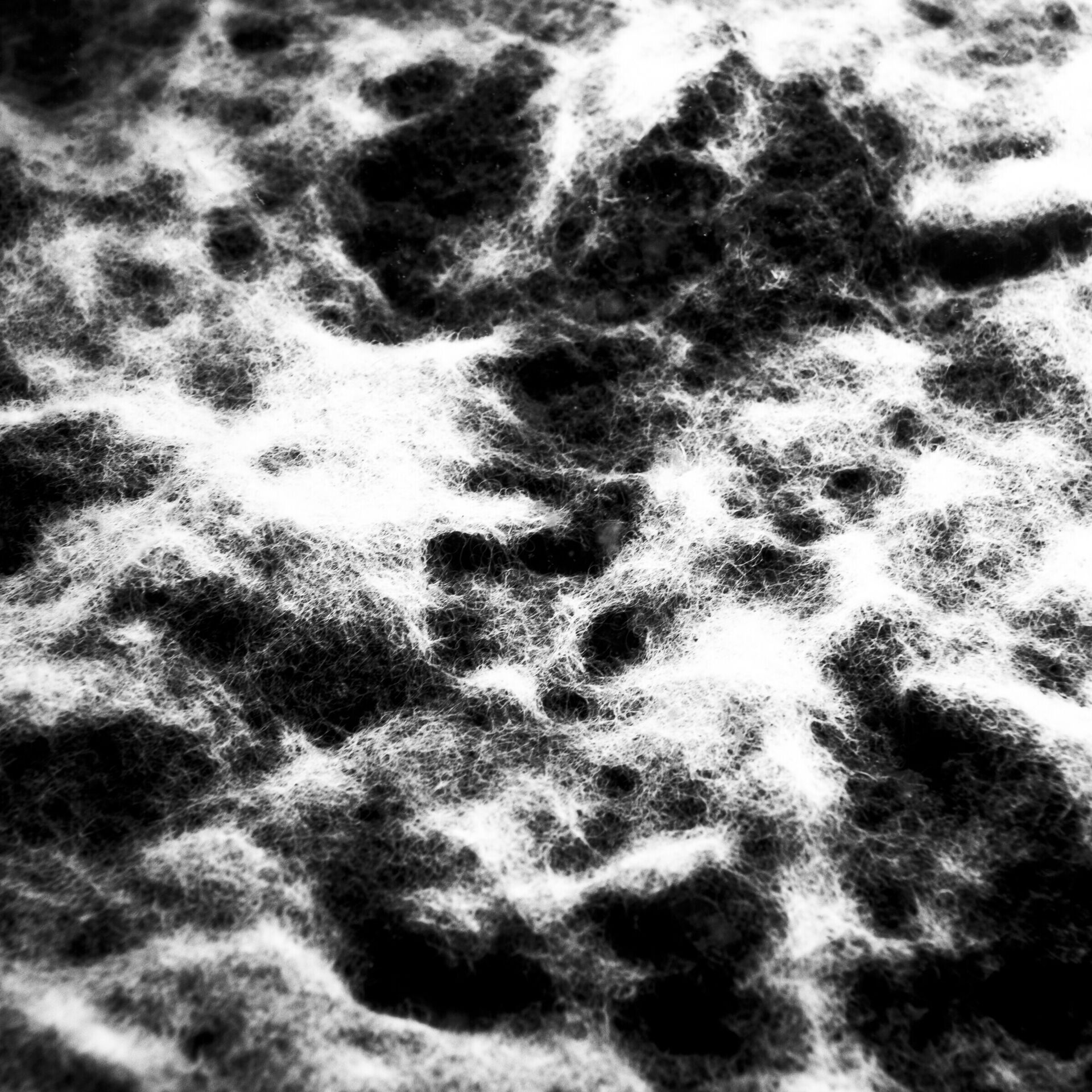
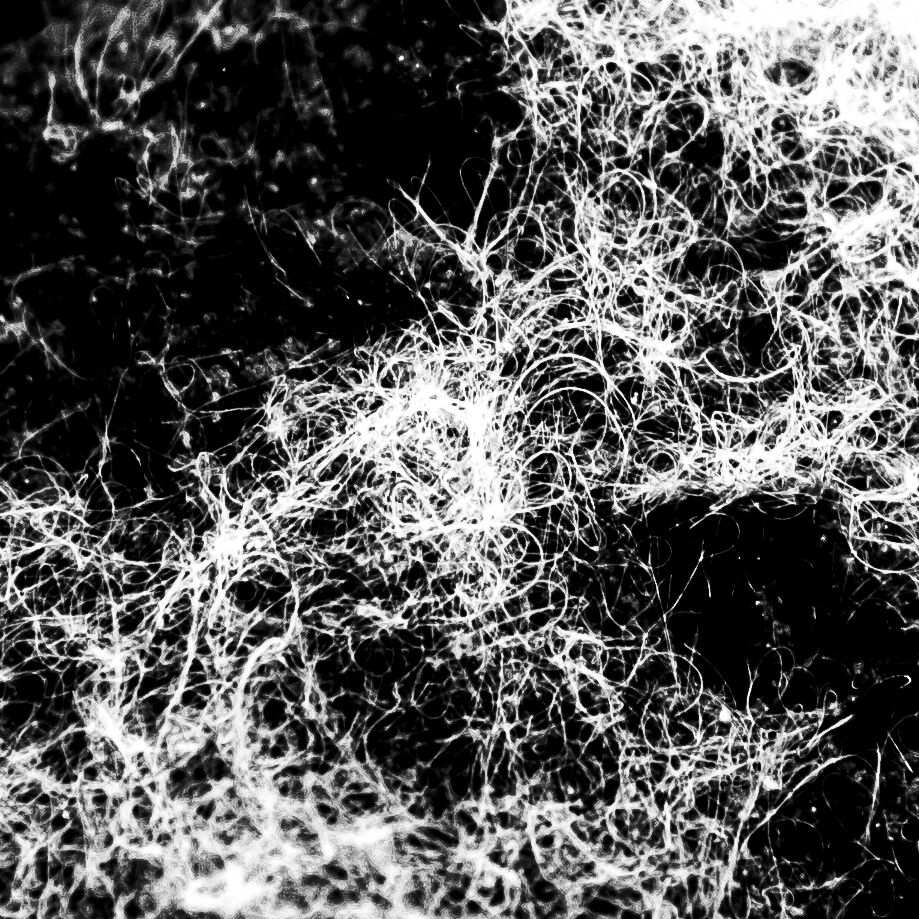
For Dead Zones (2022-2025), a project about oxygen-depleted areas in the sea, I went diving in the Grevelingenmeer. A scientist had told me about Beggiatoa, a bacterium that lives on the seabed precisely at the boundary where oxygen disappears. She described it as a vast white spiderweb spread across the seafloor. Because the Grevelingenmeer contains a dead zone relatively close to home, I decided to learn how to dive so I could see it for myself.
When I finally encountered it, about 10 metres below the surface, it felt like crossing a threshold. Here was a visible marker of something that’s normally imperceptible: the point where life begins to disappear. What struck me wasn’t only its significance but also its beauty. The bacterium formed intricate patterns across the seabed. I began photographing them and later translated those images into sand-blasted glass plates for a floor installation. In the exhibition, visitors metaphorically follow the same path, descending into a dead zone and encountering Beggiatoa themselves.
Peter: That encounter makes a difference. Someone can explain it in a lecture, show graphs, or present videos, but seeing something with your own eyes changes your understanding. In a way, I think we’re both trying to make inaccessible realities perceptible. You do that through visual art, while I do it through the geological record and the reconstruction of deep time.
Suzette: Yes, because unlike a dead zone, you can’t even visit the place you’re studying.
Peter: No, unfortunately not. Geologists often ask each other: If you could travel to any place and any period in Earth’s history, where would you go? It sounds like a fantasy, but behind it lies something fundamental. The desire to understand how Earth works is one of the reasons many of us became scientists in the first place.
Suzette: I think that’s where our practices meet. We’re both trying to approach worlds that remain beyond direct experience and to make them perceptible through images, materials, models, or stories.
Peter: And perhaps to build bridges to places we can’t reach ourselves.
Suzette: Whether that place lies millions of years in the past, at the bottom of the sea, or somewhere in a possible future, what interests me is that these places are never completely inaccessible. Through research, imagination, and different forms of representation, we can move closer to them.
Peter: Close enough to realise that they’re not separate from us.
Suzette: Exactly. The deep past, invisible ecosystems, future climates—they’re often presented as distant worlds. But they shape the conditions of life in the present. Perhaps both art and science try, in different ways, to make that connection tangible, not to transport us elsewhere but to help us recognise our place within processes that extend far beyond what we can directly see or experience.
Caption
Caption

Caption
This online contribution is part of Trigger #7: Ocean, the wider project accompanying the printed book published by FOMU and Fw:Books. Extending the book beyond its printed pages, the online series follows further conversations, works and perspectives that explore the ocean as an environment, a force and a way of thinking with images. Each contribution takes its own route through these questions.