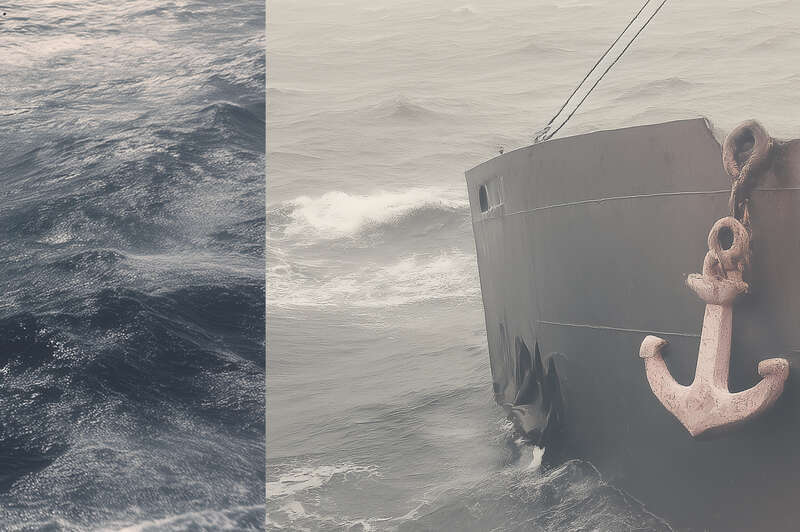
This work began as an immersive installation shaped by ancestral memory of the sea, brought into dialogue with the fragile futures climate change is already writing into our lives. It brings together a climate prediction model and generative AI developed by researchers at The New Real platform at the University of Edinburgh, trained on my late father Tadeusz Molga’s archive of photographs, ship logs, and travel journals. He was a sailor in the merchant navy, and through him I inherited not only a love of the ocean but also a deep respect for its force, its beauty, and its significance. How to Find the Soul of a Sailor became my way of imagining future seas through his perspective, allowing AI to trace the patterns and emotional residues embedded in his records and translate them into a deeply personal, speculative narrative.
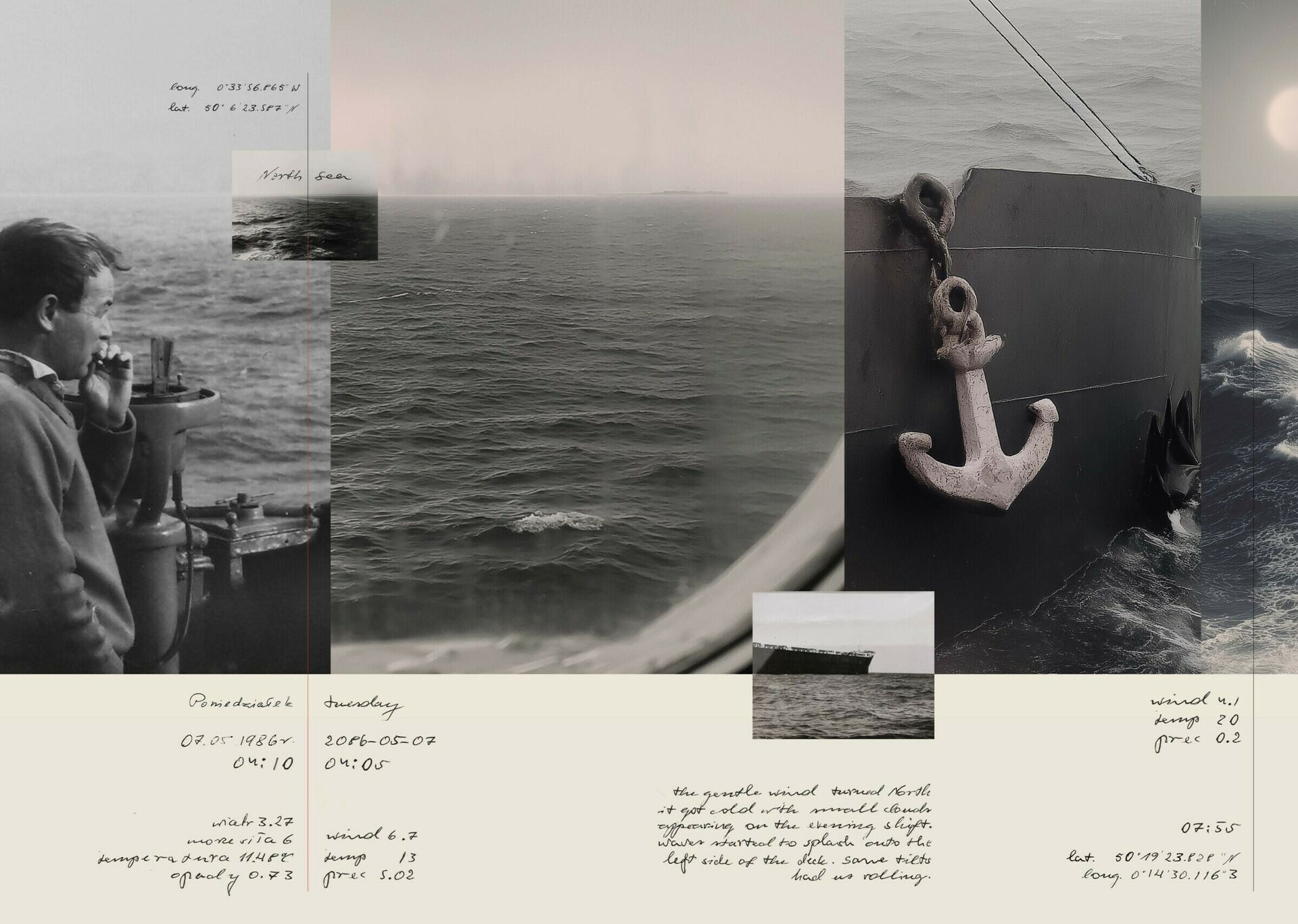
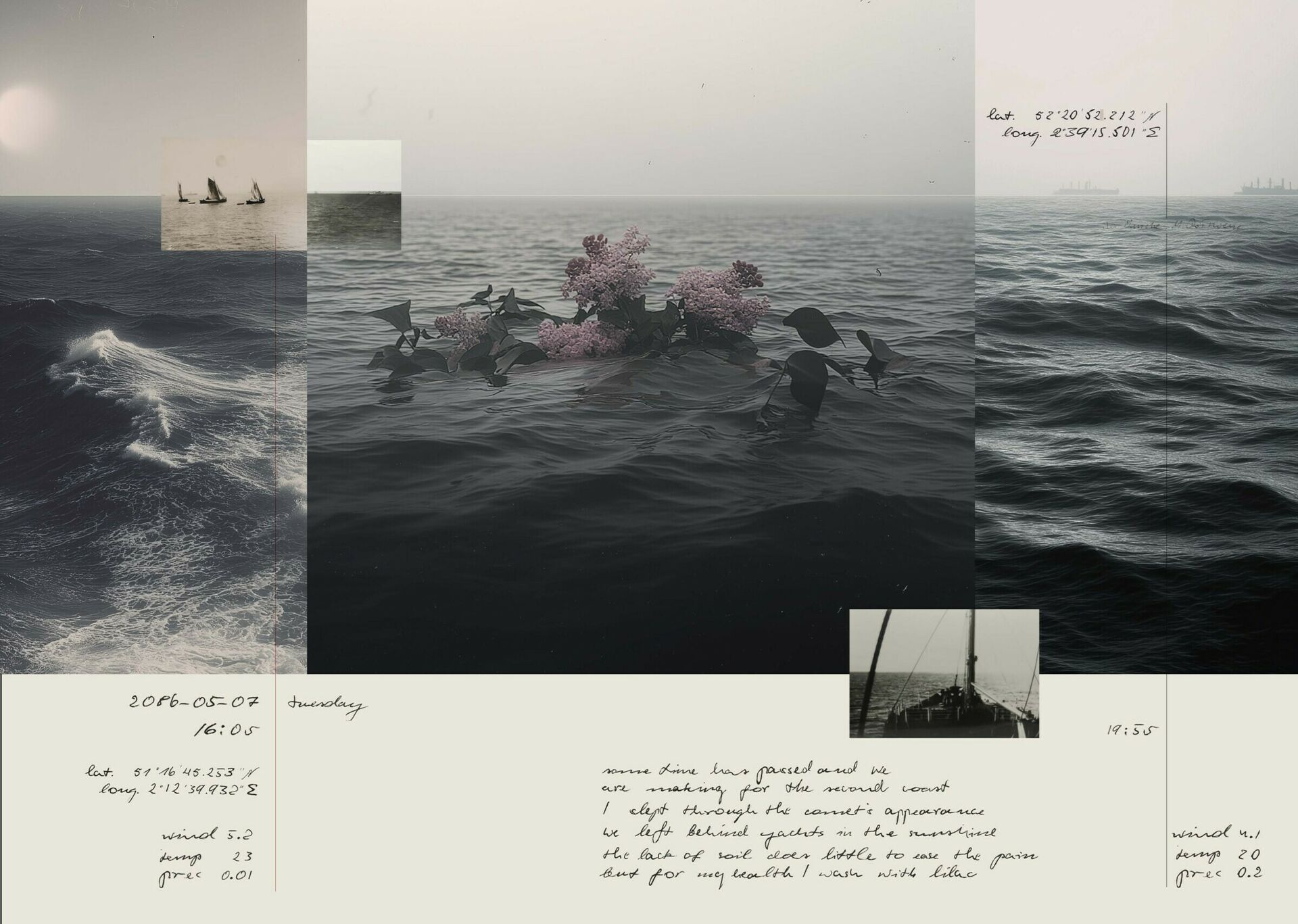
The work later evolved into Soul of a Sailor: The Séance, a participatory experience in which audiences encounter projected ocean conditions and enter into dialogue with an AI-mediated maritime presence assembled from my father’s archive. In my contribution, the images are framed by the predicted weather of the English Channel in 2086—one hundred years after his final handwritten logbook. I ask, ‘Tato, do you remember the scent of soil after rain?’ The responses move through the rhythm of a ship’s watch, from bridge to porthole, from the hull struck by the anchor in a heavy swell to the shifting surface of a future sea. Small details, such as lilacs drifting across the water, emerge from the emotional language of my father’s diaries and the seasonal conditions of the North Sea, where memory and weather begin to blur.
These images provide form to what’s otherwise difficult to hold: the emotional life of climate futures, the hidden labour of sailors, and the presence of someone no longer here yet still speaking through what he left behind. Photography here doesn’t simply document; it becomes a vessel for memory, speculation, and mourning. These images aren’t evidence in a strict sense, nor are they pure fiction. They exist somewhere in between—imagined photographs from my father’s vantage point, carrying his gaze into a future he never lived to see and bringing it back to us as a way of feeling climate change not only as data but also as loss, intimacy, and human dependence on the sea.
This online contribution is part of Trigger #7: Ocean, the wider project accompanying the printed book published by FOMU and Fw:Books. Extending the book beyond its printed pages, the online series follows further conversations, works and perspectives that explore the ocean as an environment, a force and a way of thinking with images. Each contribution takes its own route through these questions.