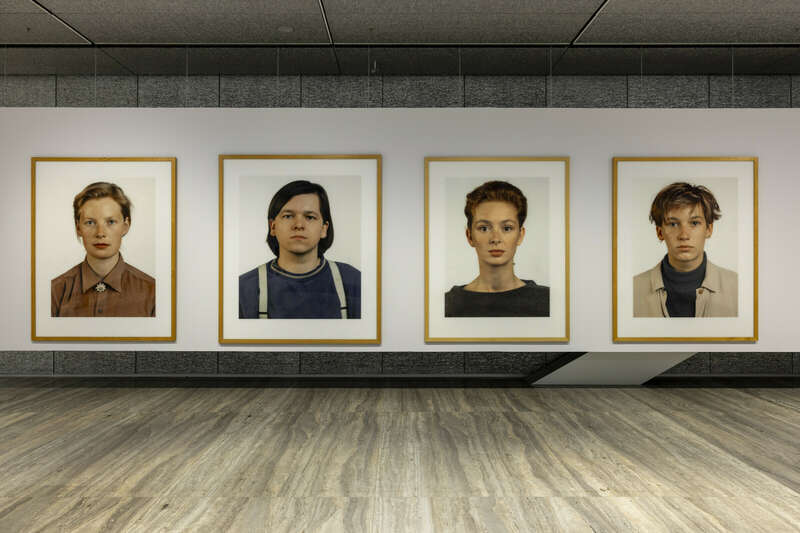
In an era defined by deepfakes, algorithmic filtering, and the radical instability of the photographic image, ‘clarity’ has ceased to be a mere formal quality and has become a survival strategy. Today’s photographic field is defined by a striking tension: while the digital world fractures under the weight of post-truth politics, the museum is retreating into a sanctuary of rigid, serial order. In this landscape, objectivity has resurged not merely as a historical style, but as a normative benchmark – a clinical aesthetic manufactured to provide a sense of security against contemporary visual culture. This shift became acutely visible to me during the 2025 surge of anniversary programming across Europe. What was framed by institutions as a return to formal clarity is better understood as the consolidation of a singular objectivity regime that shapes institutional reception and market value. Within this regime, photographs that appear precise, neutral, or indexical are valorised as inherently legible, setting a standard against which ambiguous, affective, or hybrid visual strategies are judged as less valid.
I argue that the dominance of this objectivist idiom is an operative mechanism of valuation: a filter through which images earn legibility and exchangeability. In this environment, adherence to typology and visual restraint functions as symbolic capital, while any photographic practice that embraces subjectivity or rupture risks being marginalised. Ultimately, the institutional return to objectivity is not a neutral revival, but an operative mechanism of valuation and a filter through which images earn legibility and exchangeability.
This became clear to me during the surge of anniversary programming in early 2025. I began to notice a striking dissonance: while the digital world outside was fracturing under the weight of AI deepfakes and other forms of image manipulation, the museum was retreating into a sanctuary of sober realism. European institutions staged a series of photography exhibitions that revisited New Objectivity not merely as a historical phenomenon in its 100-year celebration but as a contemporary curatorial lens. In Mannheim, the Reiss-Engelhorn-Museen’s Sachlich Neu presented century-old work by August Sander and Albert Renger-Patzsch, foregrounding typology and social portraiture at the heart of Neue Sachlichkeit. In Milan, Fondazione Prada’s Typologien: Photography in 20th-Century Germany traced the lineage of German photographic typologies into later conceptual practices, bringing Bernd and Hilla Becher and their successors into dialogue with the legacies of objective description. Other platforms, such as O, Ihr Menschen in Germany and photographic intersections with Neues Sehen at the Staatsgalerie Stuttgart, further illustrate how objectivity circulates through varied photographic and modernist genealogies in 2025, while fairs like Photo Basel underscore the market’s active engagement with documentary and serial photographic strategies. Meanwhile, PHotoEspaña 2025 featured After All: Photography in the Helga de Alvear Collection, juxtaposing early modernist figures such as Sander and Renger-Patzsch with the Düsseldorf School to highlight objectivity’s enduring influence on European visual culture. Last but not least, Pinakothek der Moderne in Munich highlighted New Objectivity photography and the documentary conceptual photography of the Bechers and their students in the Collection of Photography and Time-Based Media as focal points of the On View exhibition. This institutional momentum extended to Switzerland, where Swiss Photomonth 2025 featured exhibitions engaging with seriality, archival practice, and documentary restraint, situating objectivity within contemporary debates around classification, memory, and visual systems. Collectively, these exhibitions reveal how, a century later, objectivity has become both a curatorial framework and a critical lens: one through which institutions and markets negotiate photography’s ongoing tension between documentation, authorship, and value.
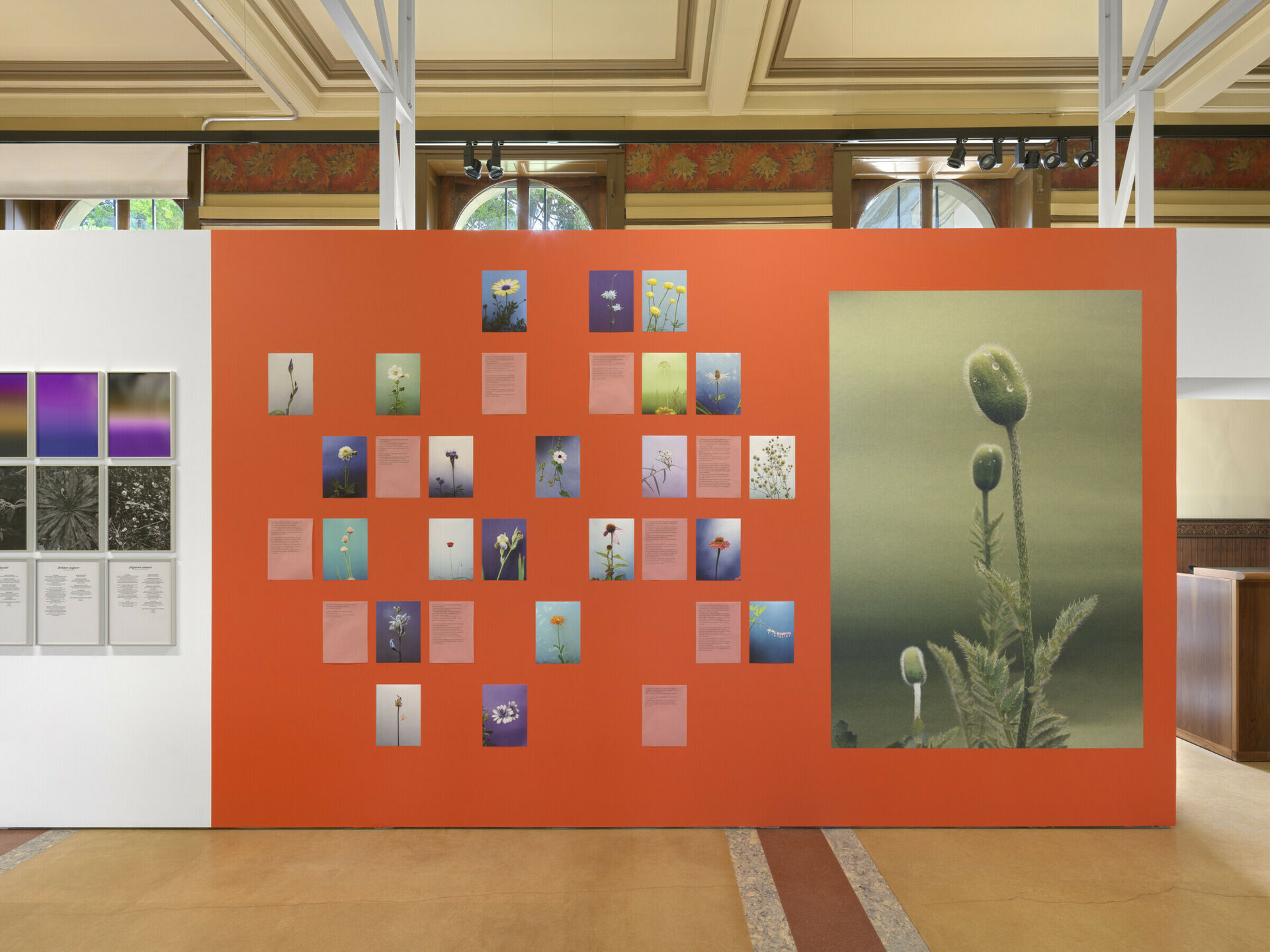
1.
Exhibition view of "Swiss Photomonth".
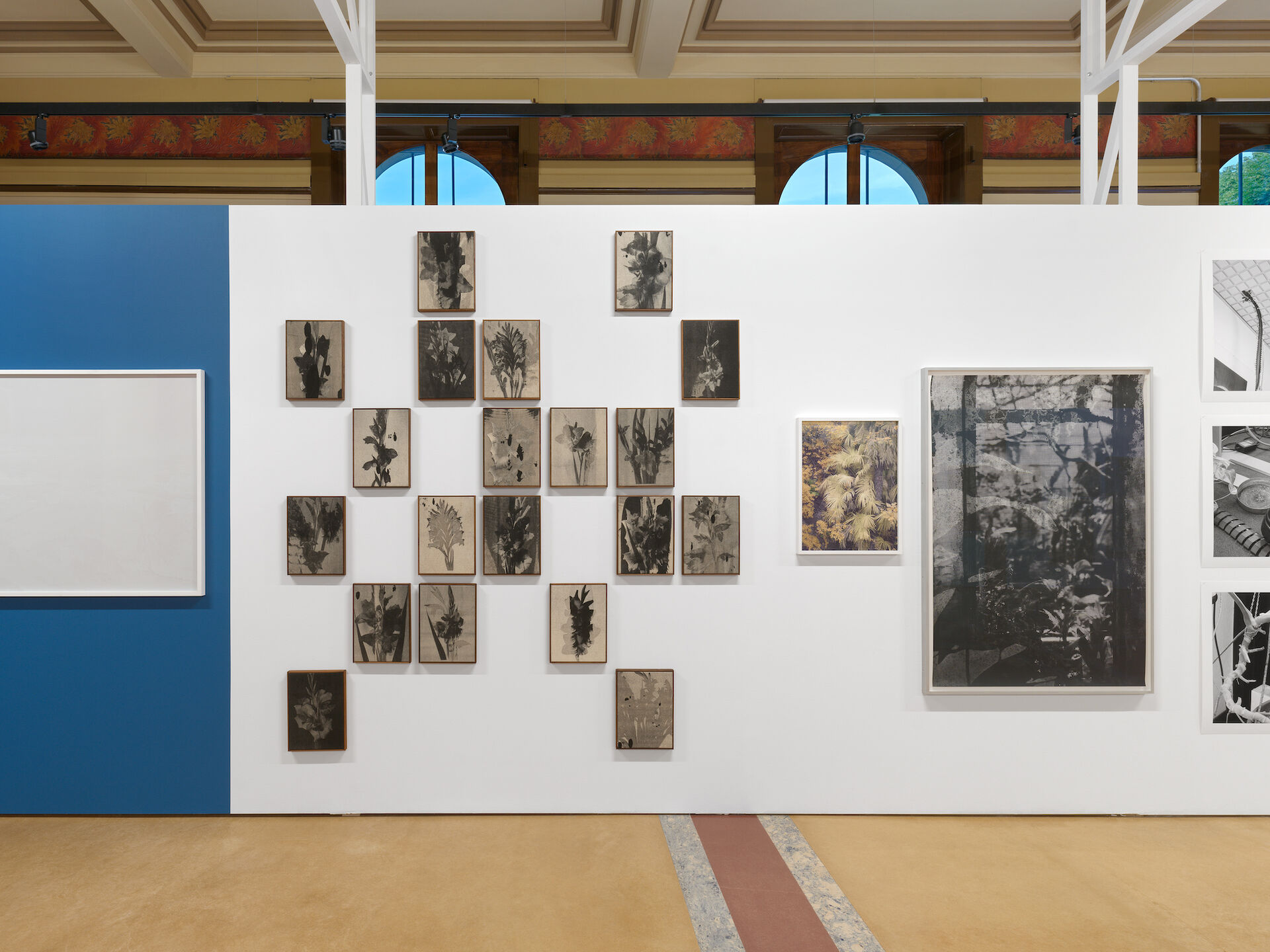
2.
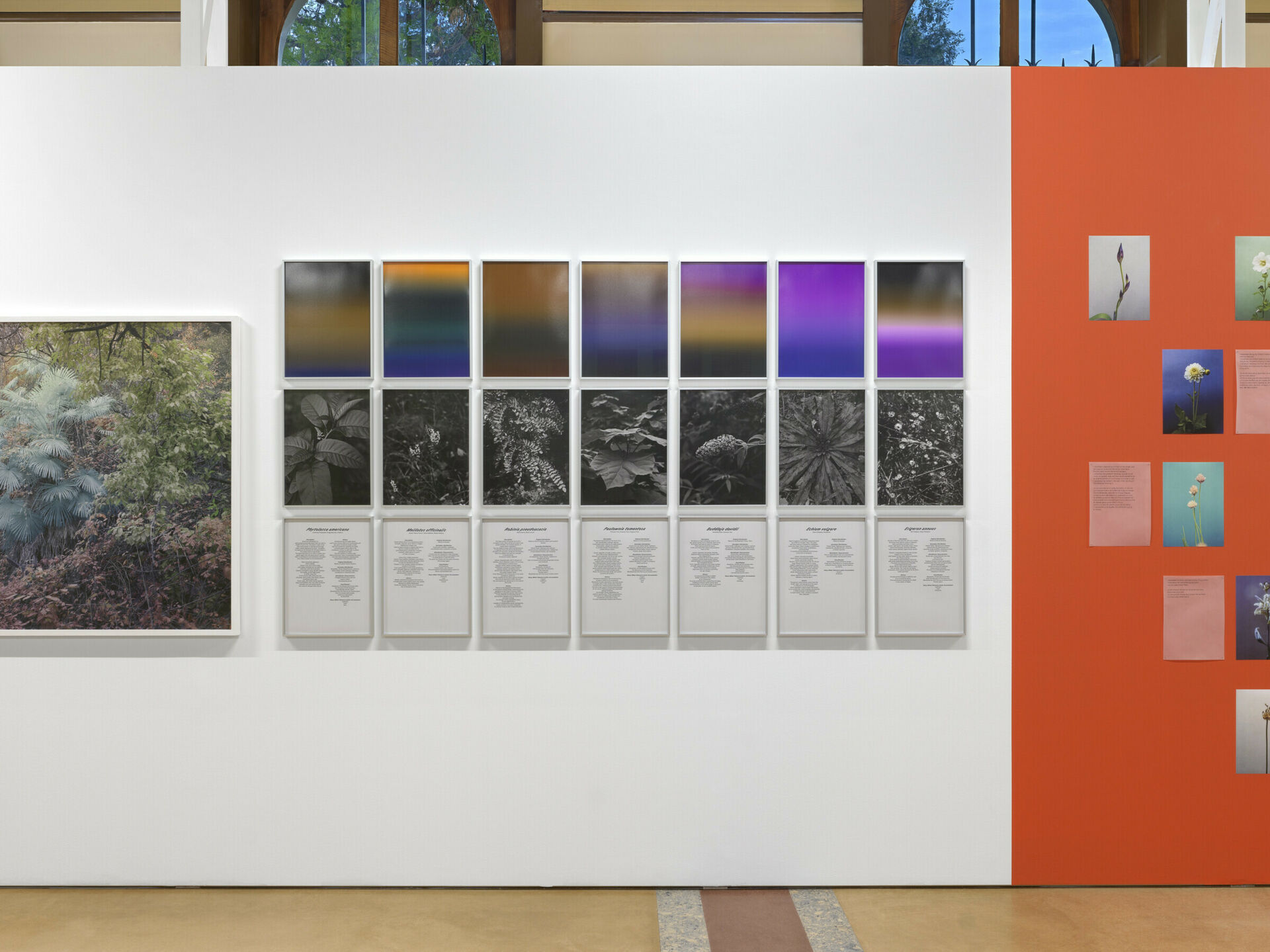
3.
Such exhibitions do more than revive historical objectivity; they institutionalise its legacy, reinforcing its currency in contemporary value systems. Drawing on a theoretical framework anchored in visual studies, political economy, and curatorial critique, this paper reads photography as a site where objectivity circulates as currency. By situating photography at the intersection of circulation, market logic, and visibility, the study reveals how objectivity is not a neutral ideal but a contested infrastructure of what is seen and what is worth seeing. In an era saturated by images, algorithmic filtering, and attention economies, the return of New Objectivity invites us to ask: which forms of clarity are rewarded, which are eclipsed, and by what means does the photographic field regulate visibility and value? Objectivity here operates as ‘symbolic capital’: a form of recognition that confers legitimacy, visibility, and value within institutional and economic systems. Rather than restoring truth, this regime produces recognisability. And recognisability, in an age of image saturation and post-truth politics, is a powerful form of currency. However, the current ‘market liquidity’ of this aesthetic is not a spontaneous phenomenon; it is the culmination of a century-long evolution in which objectivity was gradually decoupled from scientific truth and reattached to institutional authority. To understand why the objective gaze of the 1920s or the 1970s has become the stable asset of the 2025 market, we must trace how its meaning shifted from an ethical posture of neutrality to a strategic performance of credibility.
In the nineteenth century, photographic objectivity was closely tied to the ideology of mechanical reproduction. The camera was understood as a neutral recording device, capable of producing images ‘without the intervention of the human hand’. Lorraine Daston and Peter Galison have shown that this notion of mechanical objectivity emerged alongside scientific positivism, privileging restraint, self-effacement, and the suppression of subjective judgment. By the early twentieth century, particularly in Weimar Germany, objectivity was reconfigured as an aesthetic and social position. Neue Sachlichkeit rejected expressionist inwardness in favour of external description, clarity, and social typology. Figures such as Sander framed objectivity not as neutrality but as a means of revealing social structures. Sander’s typological portraits were deeply embedded in questions of class, labour, and power, even as they adopted a sober, frontal visual language. Renger-Patzsch rendered industrial and natural forms with radical clarity and descriptive precision, while Aenne Biermann utilised close studies of everyday objects and bodies to extend Neue Sachlichkeit through formal rigour.
After the Second World War, objectivity re-emerged in a different guise. In German photography especially, it became associated with distance, seriality, and anti-expressionism, most famously in the work of the Bechers and their students. Here, objectivity is aligned with conceptual strategies of classification and repetition, often presented as anti-authorial and anti-emotive. This reconfiguration had a particularly strong afterlife in Central Europe, where histories of rupture, reconstruction, and ideological surveillance sharpened the stakes of photographic distance. In the post-war decades, objectivity in Central European photography was not merely an aesthetic preference but a political and ethical posture that was shaped by the need to negotiate memory, responsibility, and the legacies of fascism and state socialism.
In Central European contexts, strategies of typology, repetition, and restraint often functioned as indirect forms of critique. Photographers working under conditions of censorship or ideological pressure adopted ostensibly neutral modes of description to register social realities without overt commentary. The camera’s claim to objectivity became a tactical tool: a way to document labour, architecture, and everyday life while exposing the systems that organised them. This is evident in the attention to housing blocks, factories, and public space across Poland, Czechoslovakia, and the former German Democratic Republic, where serial approaches echoed Becherian rigour but were inflected by lived socialist modernity rather than industrial nostalgia. At the same time, Central Europe fostered a parallel tradition in which objectivity coexisted with scepticism toward its own claims. Artists associated with conceptual and post-conceptual practices in the 1960s and 1970s – often operating at the margins of official institutions – used photographic neutrality to question authorship, truth, and documentation itself. Here, objectivity was less about transparency than about exposing the structures through which images acquire authority, whether bureaucratic, scientific, or ideological. By the late twentieth century, this legacy informed a generation of artists for whom objectivity became a reflexive strategy rather than a stable position. In Austria, Germany, and neighbouring regions, photographers and lens-based artists engaged with archival material, vernacular imagery, and re-enactment, foregrounding how supposedly objective images are embedded in regimes of power and historical narration.
What emerges across Central Europe, then, is not a single lineage of objectivity but a dense field of practices in which sobriety, distance, and clarity are continually mobilised as tools for thinking through social structure, memory, and the politics of representation. This lineage extends into Hungary, where photographers such as László Moholy-Nagy and André Kertész contributed to a distinctly Central European rethinking of objectivity. Moholy-Nagy’s commitment to photographic vision as an analytical tool capable of revealing structures of modern life through light, form, and serial experimentation aligned objectivity with systems-thinking rather than detached neutrality. Kertész brought a restrained attentiveness to everyday scenes and social environments, demonstrating how clarity and formal economy could register lived experience without recourse to expressionist subjectivity. By the late twentieth and early twenty-first centuries, critics such as Allan Sekula and Ariella Azoulay were challenging the idea that objectivity could ever be politically neutral. Sekula insisted that photographs always participate in systems of power and exchange, writing that ‘photographic meaning is inevitably social and political’. Azoulay reframed photography as a civil space of relations and obligations, rejecting the fantasy of detached observation. Objectivity increasingly became legible as an institutional form. This historical lineage, stretching from the scientific positivism of the nineteenth century to the tactical neutrality of Central European conceptualism, provides more than just a stylistic blueprint for the present. It offers a proven vocabulary of authority that is being urgently repurposed to meet a contemporary crisis of faith. As the traditional evidentiary power of the photograph dissolves into the digital flux of the mid-2020s, this long history of objective restraint becomes newly relevant, not as a search for truth, but as a mechanism for institutional and economic stabilisation. The transition from a historical mode of description to a liquid asset in the 2025 market is thus driven by a specific contemporary necessity: the need for a visual anchor in an era of total image volatility.
The contemporary reassertion of objectivity is particularly paradoxical when situated within what is often described as the post-truth era. This is a moment defined by disinformation, deepfakes, AI-generated imagery, and algorithmic filtering, conditions that profoundly destabilise photography’s evidentiary status. In this context, objectivity does not guarantee truth; rather, it performs credibility. Hito Steyerl’s notion of the ‘poor image’ is instructive here. Steyerl describes contemporary images as degraded, accelerated, and unmoored from stable authorship or context, arguing that their value lies not in resolution but in circulation. Against this instability, objectivist photography offers the opposite promise: clarity, coherence, and control.
Objectivity thus becomes a visual reassurance strategy. Aesthetics associated with New Objectivity and its post-war descendants – clarity, seriality, frontal composition, and methodological restraint – are rewarded within the contemporary art market, where they are perceived as stable, legible, and historically anchored. At a moment when photographic truth is destabilised by generative AI, algorithmic circulation, and image saturation, ‘new objective’ photography offers a sense of control that translates directly into confidence, acquisition, and price stability even as it reinforces the logic of typologies that serve generative AI training and inspire a categorisation of images for clarity, thus spreadsheets and databases. Works operating within this visual logic are routinely positioned at the upper end of the photographic market: large-scale, meticulously produced prints, often issued in small editions, circulate as long-term assets for private and public collections alike. Galleries emphasise process, archival rigour, and conceptual framing to justify higher price points, while museums favour such practices for their compatibility with conservation standards, didactic narratives, and collection-building strategies. As a result, objectivity functions not only as an aesthetic stance but as a market credential, one that aligns photographic practice with notions of intellectual labour, endurance, and institutional legitimacy.
Crucially, this market valuation persists even when objectivity is mobilised critically. Photographers who interrogate systems of classification, surveillance, or bureaucratic vision frequently adopt the very visual languages they seek to dismantle, producing works that remain highly collectible precisely because they retain the formal markers of seriousness and control. In this feedback loop, critique itself becomes absorbable, and objectivity becomes a flexible, self-renewing style: capable of accommodating scepticism while continuing to generate symbolic and economic value. The contemporary resurgence of ‘new objective’ photography therefore signals less a return to neutrality than a consolidation of trust. Objectivity operates as a stabilising aesthetic in an unstable visual economy, a language through which photography reassures its stakeholders, secures its market position, and reasserts its claim to authority at a time when the conditions of seeing, believing, and valuing images are fundamentally in flux. Historical photographic movements grounded in objectivity, most notably Neue Sachlichkeit and the Düsseldorf School, have achieved exceptional market valuation, with canonical works routinely commanding high six- and seven-figure prices at auction. This sustained collector demand signals not only the durability of these histories but also the market’s confidence in photography that presents itself as rigorous, restrained, and ostensibly neutral. Contemporary practices that reference or extend this logic through seriality, typological systems, or institutional modes of presentation often inherit this confidence, circulating within the upper tiers of the photographic market. Supported by blue-chip gallery representation, museum exhibition histories, and tightly controlled editions, such work demonstrates how visual austerity and claims to objectivity are translated into economic stability, positioning restraint itself as a form of cultural and financial assurance.
As of 2025, the market for objective and New Objectivity–derived photography continues to demonstrate steady confidence across both historical and contemporary benchmarks. Works by Sander, a foundational figure of Neue Sachlichkeit, remain active on the secondary market, with auction data indicating average prices of around $3,300 per lot over the past year, while stronger individual prints regularly achieve higher results. Recent sales at Phillips in 2025 show Sander’s typological portraits trading in the $10,000 to $16,000 range, with grouped works reaching approximately $25,000 – figures that underscore the continued appeal of systematic, objective portraiture. At the upper end of the market, the historical precedent set by Andreas Gursky, whose large-scale, serial practice emerged from the Becher-led Düsseldorf School, remains influential: his photograph Rhein II famously reached $4.3 million at auction, a touchstone that continues to shape expectations around objectivity, scale, and institutional legitimacy in photographic valuation. Interpreting recent auction data suggests that, in 2025, the market for Neue Sachlichkeit photography is defined less by spectacular peaks than by durable, above-average performance. While canonical works are not consistently reaching seven-figure results, sales at major houses such as Phillips indicate that strong examples, particularly those in good condition or with solid provenance, regularly achieve mid–five-figure prices, outperforming much of the broader photography market. This pattern of consistency over volatility distinguishes objective photography from trend-driven sectors of contemporary art and mirrors the aesthetic values of order, discipline, and serial logic embedded in the work itself. Crucially, these market signals are reinforced by sustained institutional attention, including centennial exhibitions across Europe, which consolidate historical significance and translate curatorial validation into long-term collector confidence rather than short-lived auction spikes.
If we shift our focus from individual images to systems of circulation, objectivity appears less as an aesthetic preference and more as an infrastructure of visibility. Photographs that conform to objectivist norms, typology, seriality, visual restraint, are easier to archive, classify, and exhibit. They align with institutional needs for legibility and comparability. They minimise interpretive risk. Jacques Rancière’s concept of the ‘distribution of the sensible’ helps clarify this dynamic. Aesthetic regimes determine what can be seen, said, and valued within a given order. Objectivity operates as such a regime.
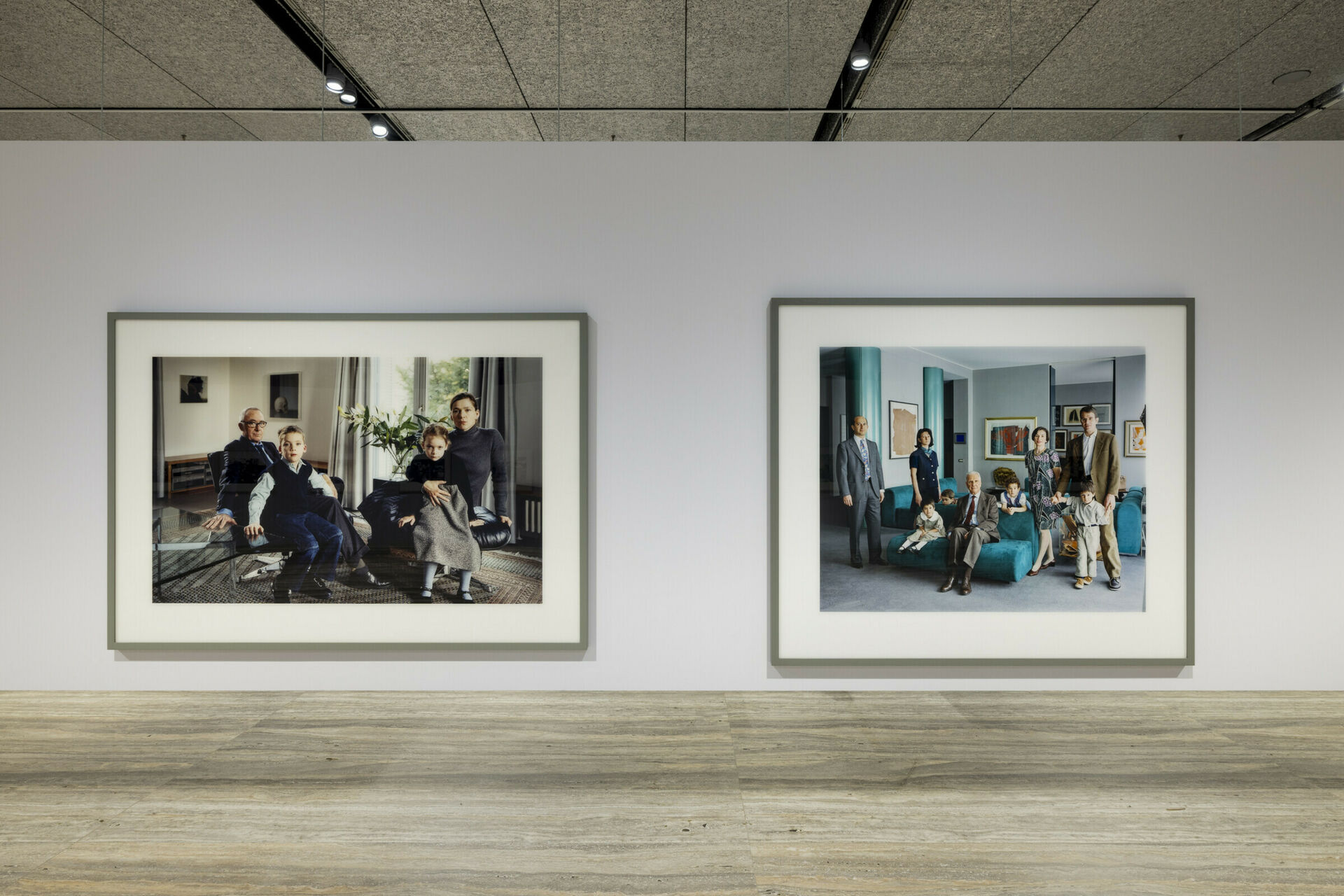
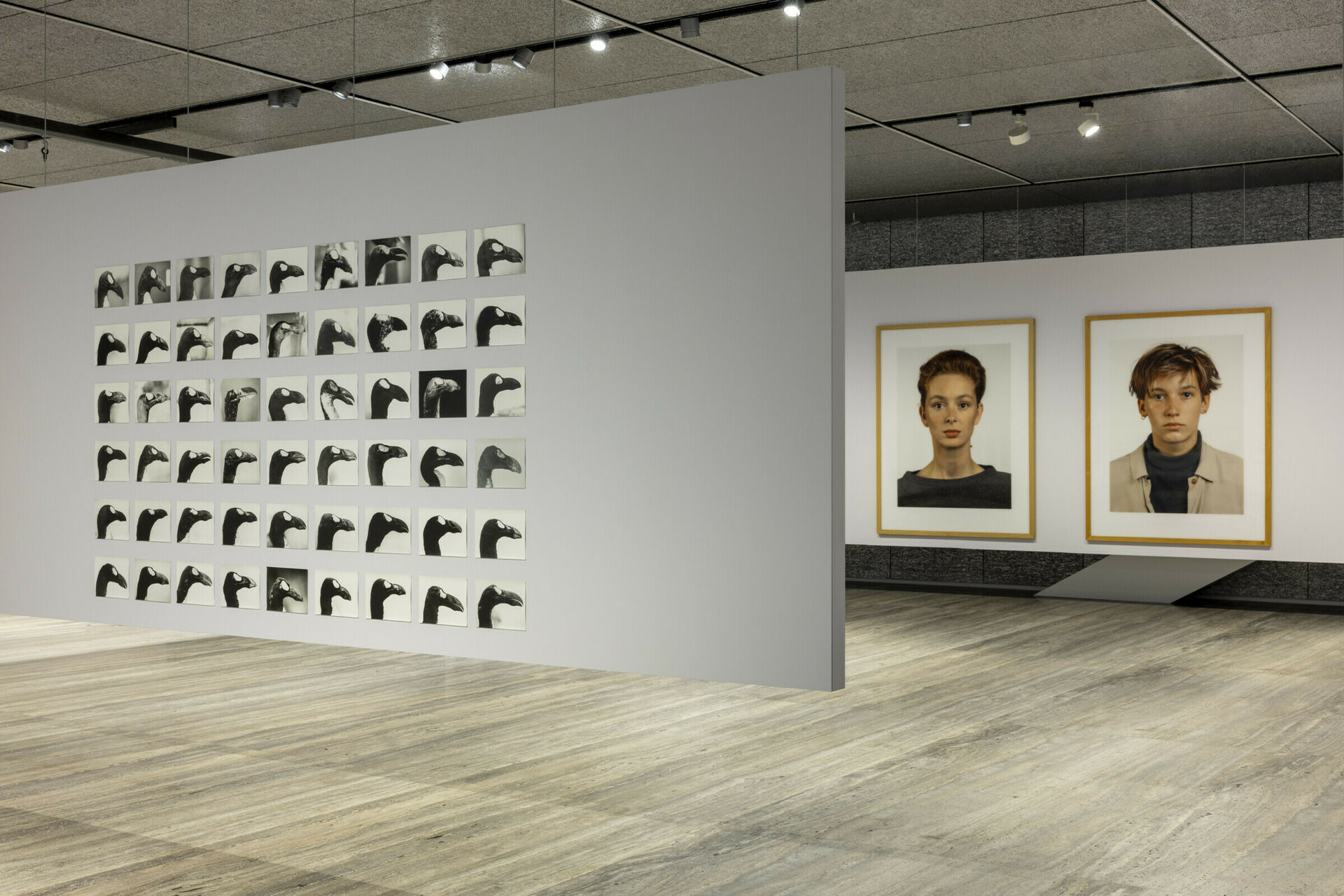
The 2025 exhibition circuit across Europe underscores how objectivity has been re-naturalised as a dominant regime. At Fondazione Prada, Typologien positioned typological thinking not merely as a historical style but as an enduring epistemology. By tracing a century of German photography, the exhibition bridged modernist neutrality with contemporary, data-driven modes of seeing. In the era of algorithmic governance, these typologies function as the visual grammar for machine learning – images are normalised, grouped, and stripped of context to be read as data. Here, typology is no longer a claim to truth; it is a diagnostic tool revealing how systems of classification, from state archives to AI surveillance, participate in regimes of control.
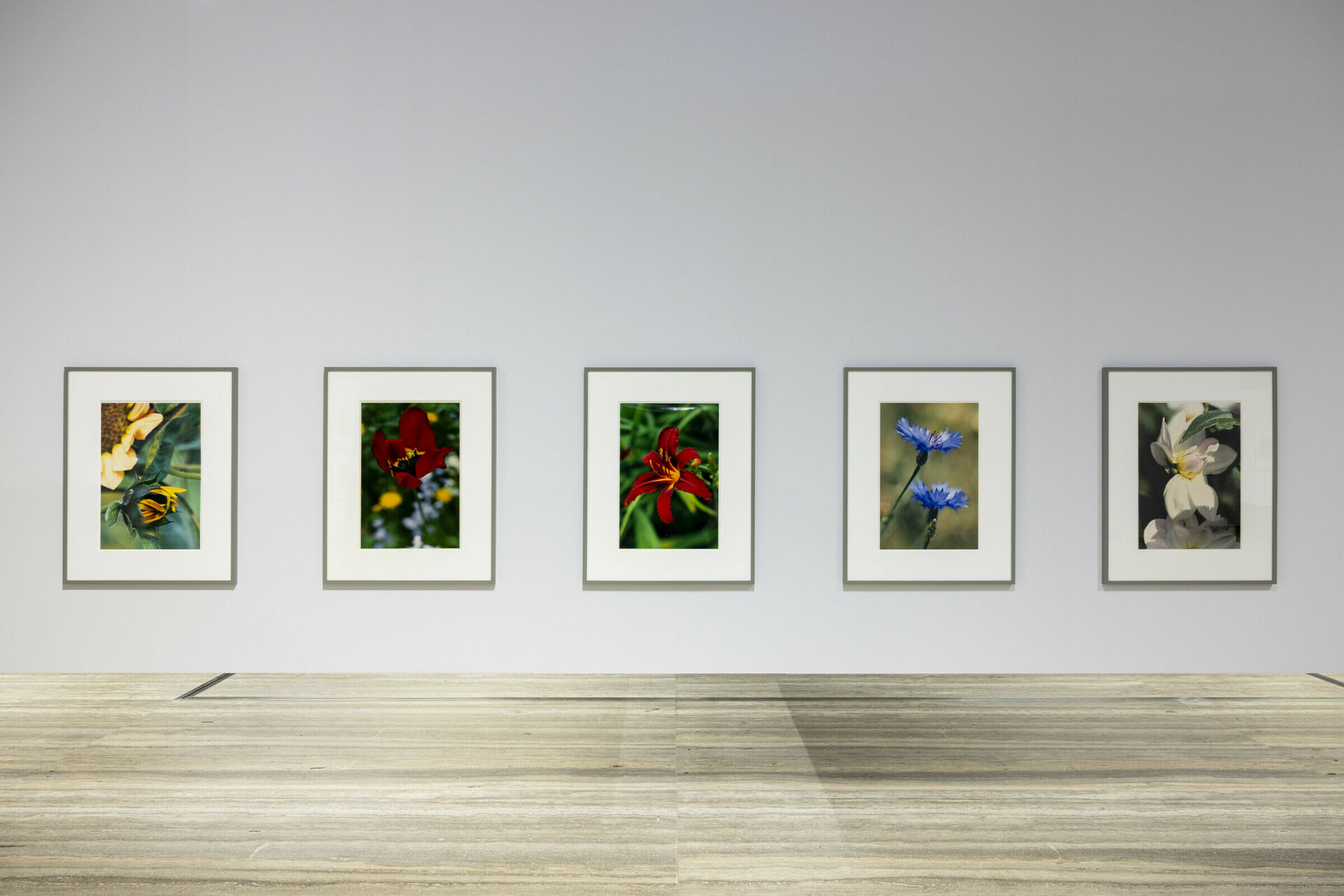
4.
Exhibition view of “Typologien: Photography in 20th-century Germany”
Curated by Susanne Pfeffer
Photo: Roberto Marossi
Courtesy Fondazione Prada
2.
3.
4.
5.
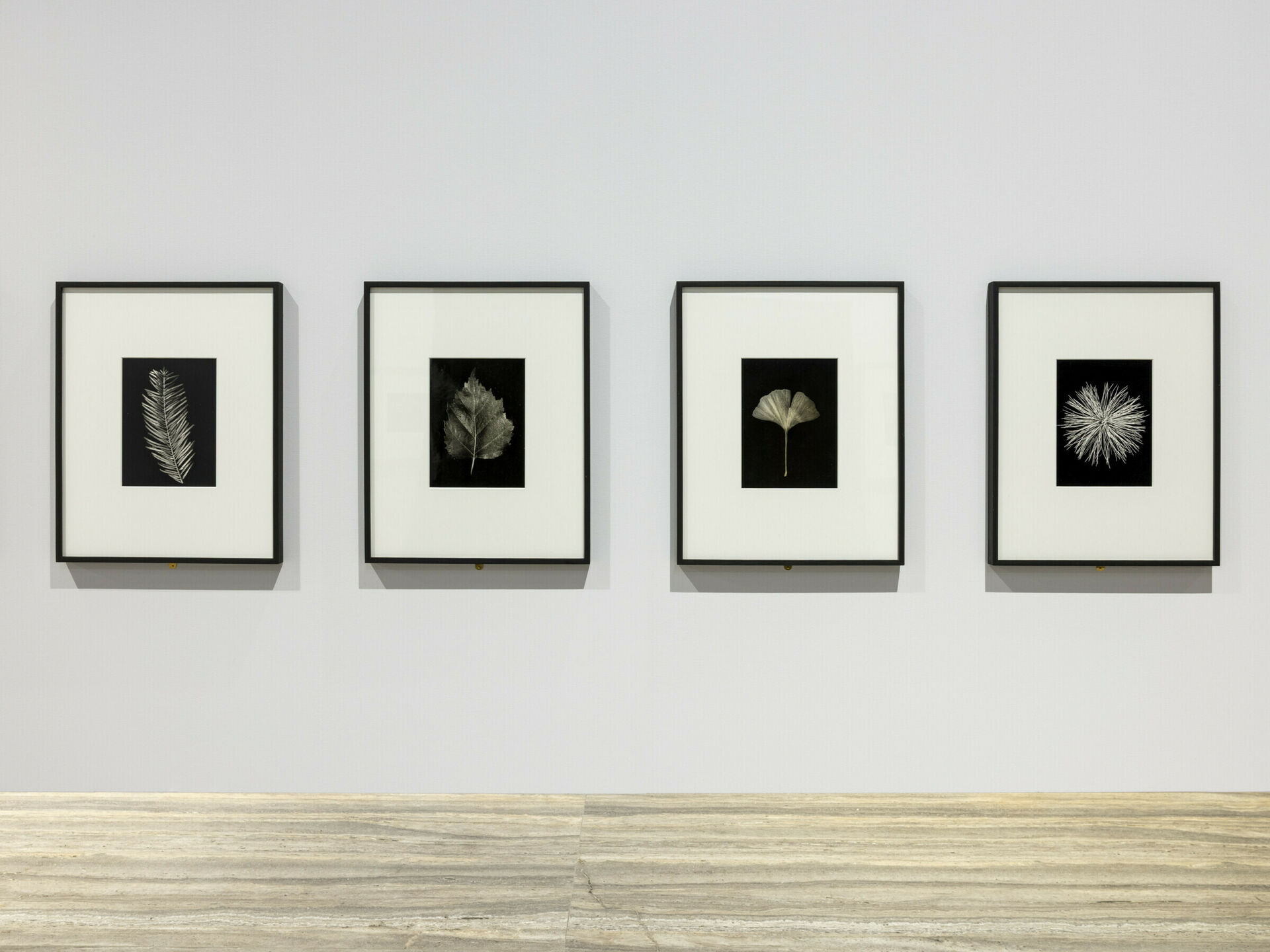
This institutional momentum is further solidified at the Pinakothek der Moderne in Munich. The exhibition On View marked a milestone by jointly presenting the Ann and Jürgen Wilde Foundation alongside the museum’s core collection. By foregrounding the lineage of Neue Sachlichkeit (Renger-Patzsch, Karl Blossfeldt) and the documentary conceptualism of the Bechers, the museum anchored contemporary practice within a rigorous historical framework. The Wilde collection itself, founded in the 1960s and integrated into the public realm in 2010, symbolises the final consolidation of photography as a pillar of art history. This integration does more than preserve prints; it secures a specific, objectivist research framework as the primary lens through which photographic modernism is reinterpreted today.
While these major anniversary exhibitions provide the most visible evidence, they are symptomatic of a much wider curatorial pattern that has been coalescing across the European landscape. This shift is not confined to the blockbuster retrospective; it is equally present in the ‘evidentiary’ turn found in recent curatorial forums and independent programming, where the focus has pivoted from the poetic or participatory toward the forensic and the archival.
The exhibitions I discuss function as concentrated case studies of a broader discursive mood: one that was already being signalled in recent years through a renewed institutional fascination with ‘the document’ as a counter-narrative to digital disinformation. The institutional dominance of objectivity is reinforced by its compatibility with market logic. Clear, typological images are easier to edition, price, insure, and collect. Seriality offers scalability. Within these networks, objectivity stabilises value. It offers predictability in an economy shaped by volatility. Objectivity thus operates as symbolic capital par excellence: appearing disinterested while facilitating exchange. Objectivity is later reabsorbed by the centre. What begins as a pragmatic or critical strategy at the margins is often canonised, neutralised, and monetised by central institutions and markets. Objectivity, once a response to instability, is now a curatorial and economic anchor. The periphery supplies the language; the centre consolidates the value. Historically, many of the most influential objective photographic practices in Central and Eastern Europe emerged not from dominant cultural centres but from peripheral positions – Weimar Germany in economic collapse, post-war Germany under reconstruction, socialist Eastern Europe under surveillance, and smaller photographic communities operating at the edges of Western art markets.
The renewed prominence of objectivity in contemporary photography demands that we reconsider not what photographs show but how photographic value is produced. In the post-truth era, algorithmic mediation, and attention economies, objectivity functions less as an epistemological guarantee than as symbolic capital. It circulates across institutions and markets, regulating visibility and value. The question is not whether clarity is desirable, but how clarity operates, and for whom. Recognising objectivity as a contested infrastructure opens the possibility for a more plural photographic field that allows uncertainty, affect, and rupture to function not as liabilities but as critical resources.
This article is an adaptation of a symposium presentation first presented on 29 January 2026 at the 4th Work in Context Some Symposium at MOME Budapest.
Selected Bibliography:
Pierre Bourdieu, The Field of Cultural Production: Essays on Art and Literature (Columbia University Press, 1993).
Lorraine Daston and Peter Galison, Objectivity (Zone Books, 2007).
Allan Sekula, Photography Against the Grain: Essays and Photo Works, 1973–1983 (The Press of the Nova Scotia College of Art and Design, 1984).
Ariella Azoulay, The Civil Contract of Photography, trans. Rela Mazali and Ruvik Danieli (Zone Books, 2008).
Hito Steyerl, ‘In Defense of the Poor Image’, in The Wretched of the Screen (Sternberg Press, 2014).
Jacques Rancière, The Politics of Aesthetics: The Distribution of the Sensible, trans. Gabriel Rockhill (Continuum, 2004).
Full Captions:
1. Hilla Kurki
Bruissements végétaux 2025
Annik Wetter
Exhibition view of "Swiss Photomonth"
2. Magdalena Wysocka & Claudio Pogo
Bruissements végétaux 2025
Annik Wetter
Exhibition view of "Swiss Photomonth"
3. Yann Mingard
Bruissements végétaux 2025
Annik Wetter
Exhibition view of "Swiss Photomonth"
4. Exhibition view of “Typologien: Photography in 20th-century Germany”
Curated by Susanne Pfeffer
Photo: Roberto Marossi
Courtesy Fondazione Prada
Thomas Struth
1992]
C-print
Viehof Collection
Small Closed Sunflower - No° 18 , Winterthur 1992
Thomas Struth
1993]
C-print
Courtesy of the artist
Single Dark Red Tulip , No° 31, Düsseldorf 1993
5. Thomas Struth
Winterthur 1992]
C-print
Courtesy of the artist
Single Orange-Violet Tulip - No° 30 , Winterthur 1992
Thomas Struth
Single Red Lily - No° 51 , Düsseldorf 1993
C-print
Viehof Collection
Thomas Struth
Two Cornflowers - No° 63 , Düsseldorf 1993
C-print
Viehof Collection
Thomas Struth
White Magnolia, No° 20 , Winterthur 1992
C-print
Courtesy of the artist
6. Hilla Becher
Weißtannenzweig , 1965 [Silver fir branch]
Pappelblatt , 1965 [Poplar leaf]
Ginkgoblatt , 1965 [Ginkgo leaf]
Kiefernzweig , 1965 [Pine needle tuft]
Gelatin silver prints
Estate Bernd & Hilla Becher, represented by Max Becher, courtesy of Die Photographische
Sammlung/ SK Stiftung Kultur – Bernd & Hilla Becher Archive, Cologne, 2025
7. Thomas Struth
The Richter Family 1 , Cologne 2002
C-print
Courtesy of the artist
Thomas Struth
The Consolandi Family , Milan 1996
C-print
Courtesy of the artist
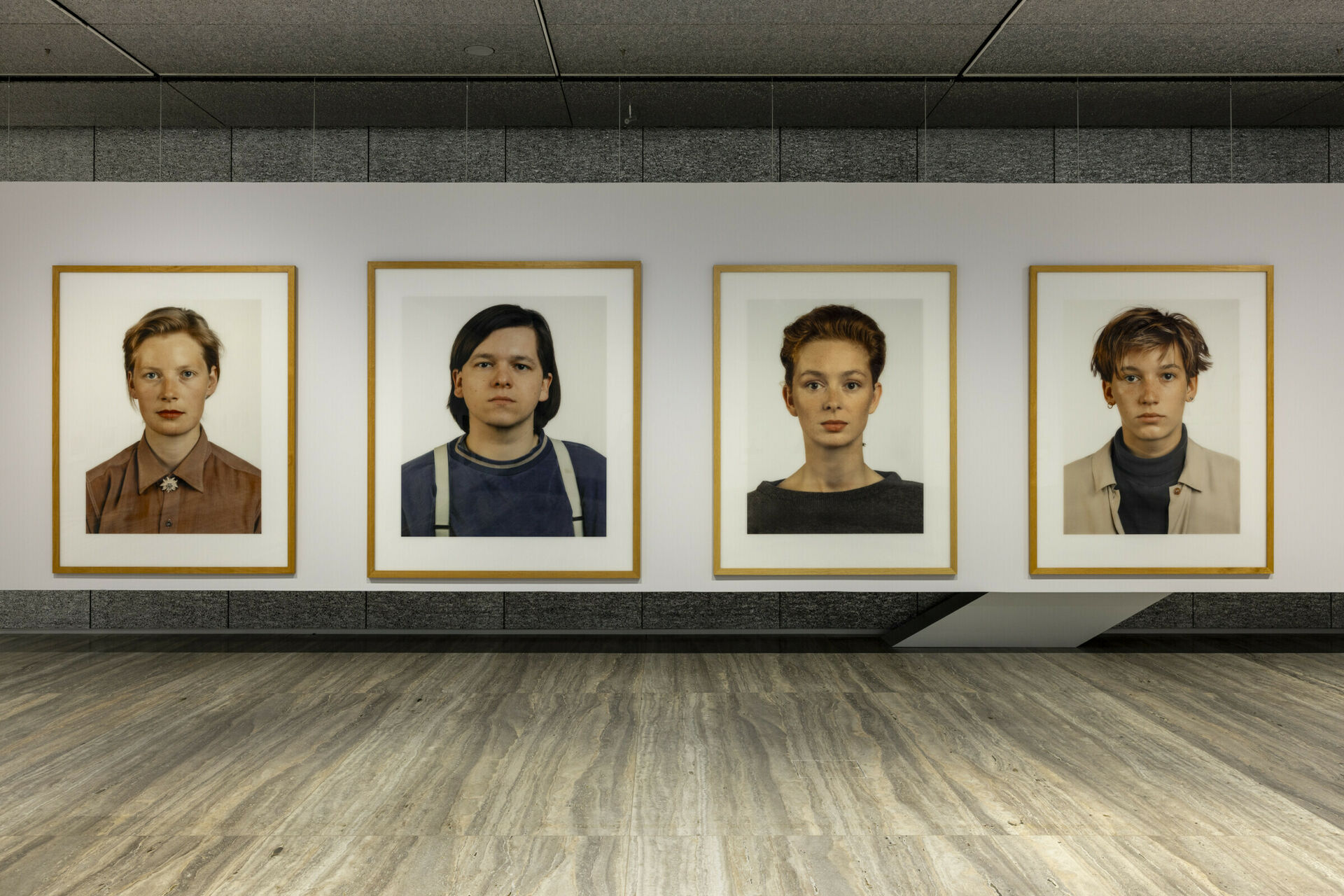
8. Thomas Ruff
Porträt (Pia Stadtbäumer) , 1988
C-print laminated on acrylic glass
MUSEUM MMK FÜR MODERNE KUNST, Frankfurt am Main
© Thomas Ruff, by SIAE 2025
Thomas Ruff
Porträt (Claus Föttinger) , 1987
C-print laminated on acrylic glass
MUSEUM MMK FÜR MODERNE KUNST, Frankfurt am Main
© Thomas Ruff, by SIAE 2025
Thomas Ruff
Porträt (Petra Lappert) , 1987
C-print laminated on acrylic glass
MUSEUM MMK FÜR MODERNE KUNST, Frankfurt am Main
© Thomas Ruff, by SIAE 2025
Thomas Ruff
Porträt (Simone Buch) , 1988
C-print laminated on acrylic glass
MUSEUM MMK FÜR MODERNE
9. Jochen Lempert
The Skins of Alca Impennis , 1992-2022
Gelatin silver prints on bartya paper
54 parts
Artist prints / Edition of 5
Courtesy of Jochen Lempert, BQ, Berlin, and ProjecteSD, Barcelona, by SIAE 2025
Thomas Ruff
Porträt (Petra Lappert) , 1987 / Portrait (Petra Lappert)]
C-print laminated on acrylic glass
MUSEUM MMK FÜR MODERNE KUNST, Frankfurt am Main
© Thomas Ruff, by SIAE 2025
Thomas Ruff
Porträt (Simone Buch) , 1988 / Portrait (Simone Buch)
C-print laminated on acrylic glass
MUSEUM MMK FÜR MODERNE KUNST, Frankfurt am Main
© Thomas Ruff, by SIAE 2025