When you realize you are mortal you also realize the tremendousness of the future. You fall in love with a Time you will never perceive.
– Etel AdnanJourney to Mount Tamalpais (The Post-Apollo Press, 1986)
As we slowly walk together through the exhibition, artist Katja Mater gestures to our two o’clock and remarks, ‘This is the grief-related section.’ We’ve known each other for a few years now, but it feels longer. I received a tour but soon realized it wasn’t long enough. No Longer Not Yet is the kind of exhibition you’d like to spend a lot of time with because of the amount of time devoted to it. Katja selected objects from FOMU’s collection and created new artworks to compose the year-long No Longer Not Yet with the museum's curatorial staff and other collaborators. While the project centres on time, a recurrent theme of the artist’s practice, it’s just as sensitive to the politics of collecting, presentation, and engagement as it is concerned with the vulnerability of human life and fragile materials. The images and photographic methods on view illustrate how marking and telling time is always shaped by perception, knowledge, and the given conditions of experience. Katja emphasizes loops of time, like the returning sun, sleep, and other circadian rhythms. So too does the artist magnify points in time, like stars in a constellation, or singular events that feature choice and decision in response to one’s reality, such as the choreography of being here now, making a photo. As visitors to the exhibition, we inhabit the space between ‘no longer’ and ‘not yet’ as we explore, with the artist’s guidance, what can be known and what it means to be present to transitions when ‘now’ is sometimes evident and sometimes elusive. Ambitious and attentive, Katja emphasises people and their intentions, and thus the presentation is an outcome that illustrates an earnest desire, even a duty, to witness life with a discerning eye. There is awe to be found in the subjects, content, and materials within the exhibition, because to be here – alive, mortal – is to be shaped by connections and conditions. Knowledge grows and decomposes across the time available to us, and we become students of change and loss.
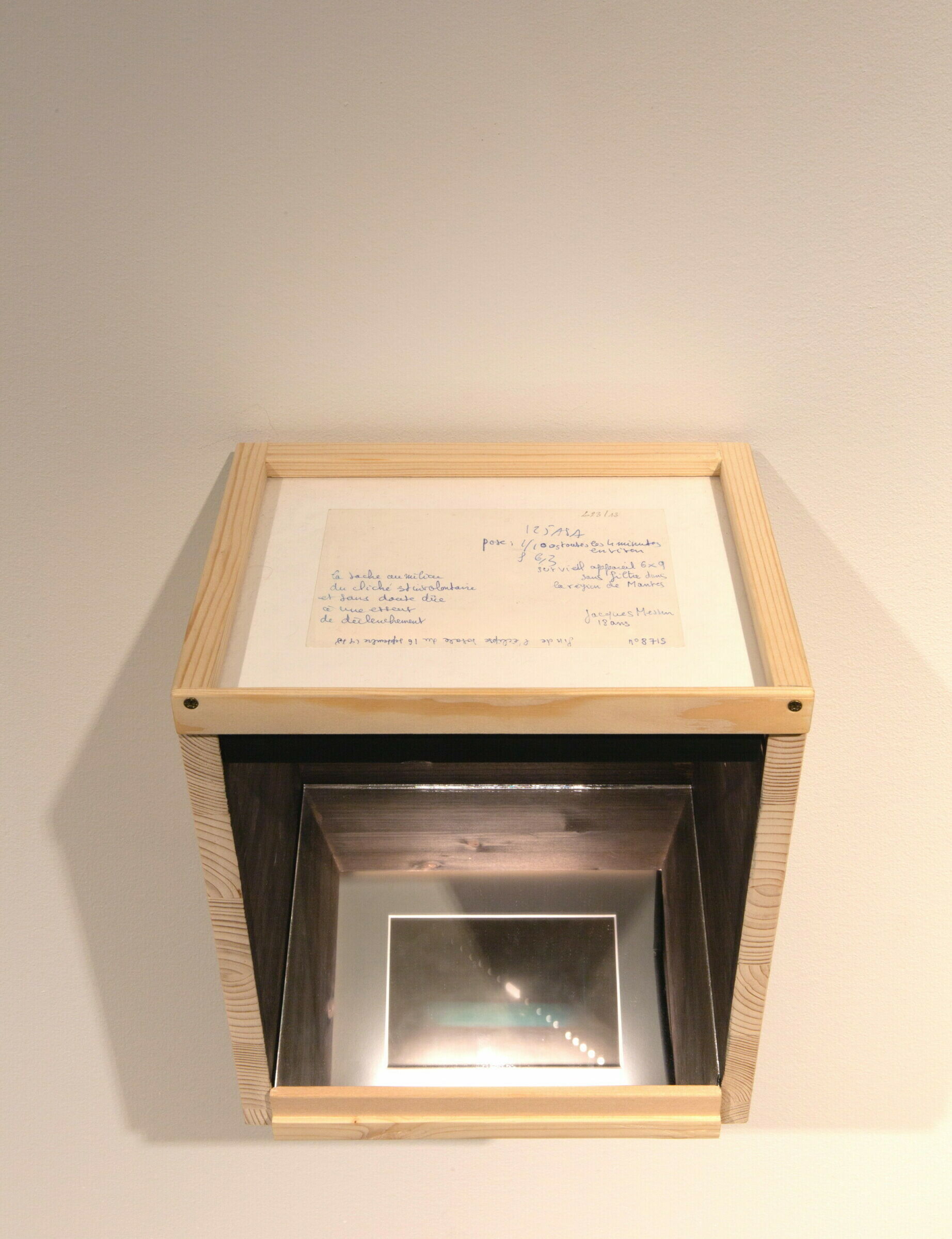
Jacques Messin
Ending of the total eclipse of 16 September 1978
1978
gelatin silver print
| Collectie FOMU 2023/13
‘But the whole exhibition is grief-related’, I joked back, and we shared a glance of mutual understanding. I recognise the way Katja honours our shared mortality through this project, but I am not an unfamiliar visitor here, or to Katja’s life. In 2022, through my practice as a death doula, I supported Katja between the deaths of both their parents, two months apart from one another, and especially for the timed death of their mother, Carla. Since then, I’ve continued to offer guidance in grief care for Katja, but our relationship holds a collaborative dimension. As my own practices as curator and doula swirl and blend between domains of living, we’ve been involved in one another’s artistic and curatorial projects throughout the years as we process the event of Carla’s death and the care that was generated from it. While Katja’s artistic practice is decades long, worthy of extensive study on its own, it's from the perspective of tending to death and grief that I share my view of this exhibition. Because undoubtedly, for Katja and for all of us – if we allow it – our maturation as creative practitioners is partly shaped by the profound reality of encountering death and experiencing life-altering grief.
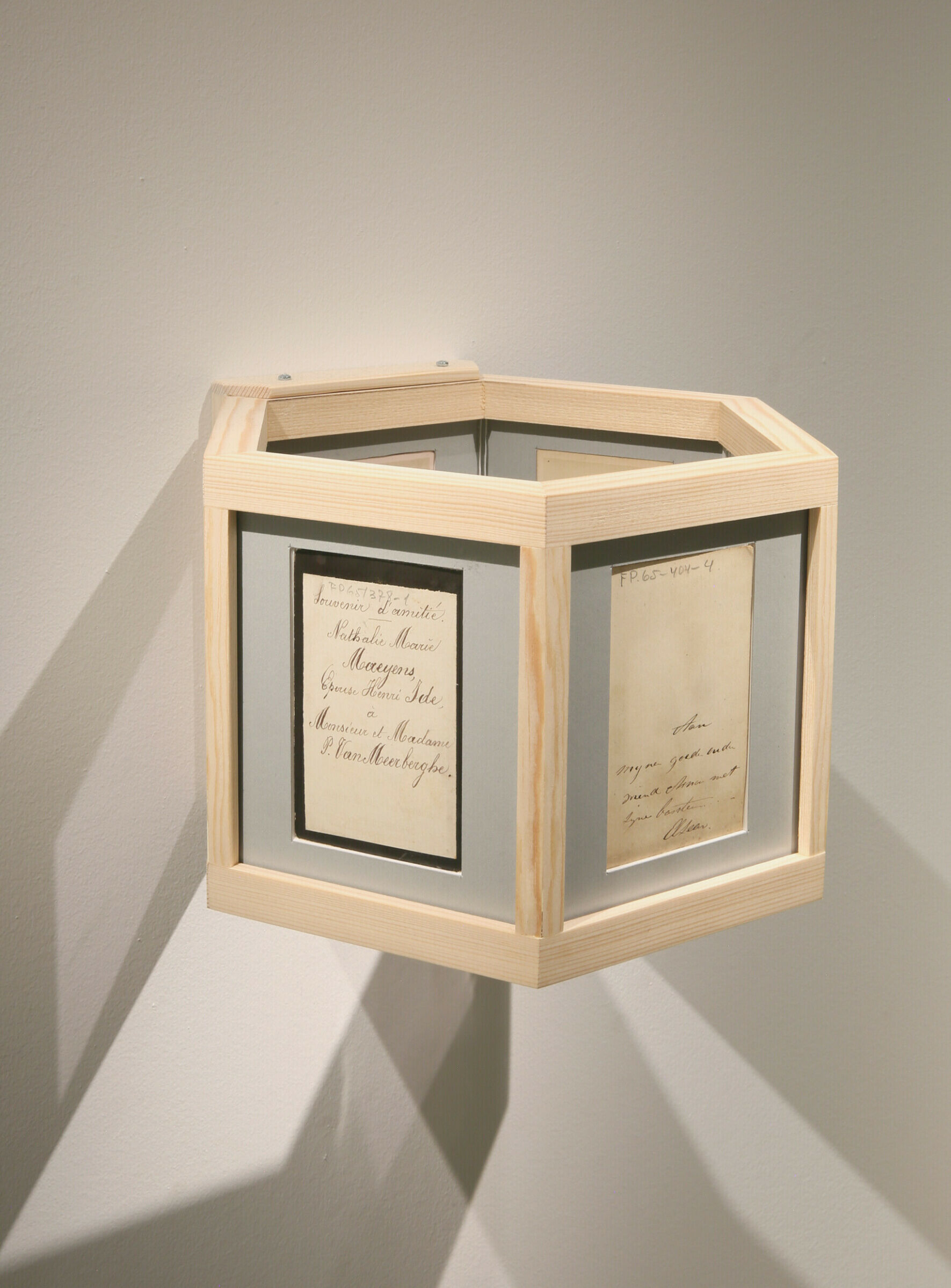
(right card in the carousel)
Anonymous
To my good old friend ... with his bass
voice. Els...
ca. 1870
albumen print carte de visite
| Collectie FOMU P/1965/404/4
There’s an intense inner transformation that happens when reckoning with the outer truth of the death of someone close to us, be it a parent, partner, child, friend, or pet. To grieve is to be bewildered. Our perception of reality is turned upside down, because the brain has a problem understanding absence when our relationships are very much present within us. Many readers will know this from first-hand experience. The pain shatters our heart, and it takes diligence to rebuild the fence around it in order to protect the love that we don’t want to end. This means that grieving, the adaptation to loss and the pain of grief over time, ushers us into a learning curve where we have to weave a new braid of understanding that comes to terms with life as it is now: who we are without a loved one on this earthly side. To lose a parent is a particular rite of passage that brings to bear an awareness of your own mortality. (Those who have given me life have died, so it is no longer a theory that I will die too.) Death awareness is also a distinct journey in learning to find the fruits that come from turning towards death so that we might turn more intimately to our own lives. Most people don’t want this, but everyone must confront it at some point. Readers who don’t yet know this in practice: I share it not as a foreshadowing of misfortune but as a harbinger of informed and intentional possibility for what’s guaranteed. We do not have many places to turn or return to in order to be with this truth, but Katja offers it. While firsthand experience uniquely alters our sensing and knowing, here the artist reminds us that we can start preparing now, beginning with how we look at and regard our relationship to who and what we love.
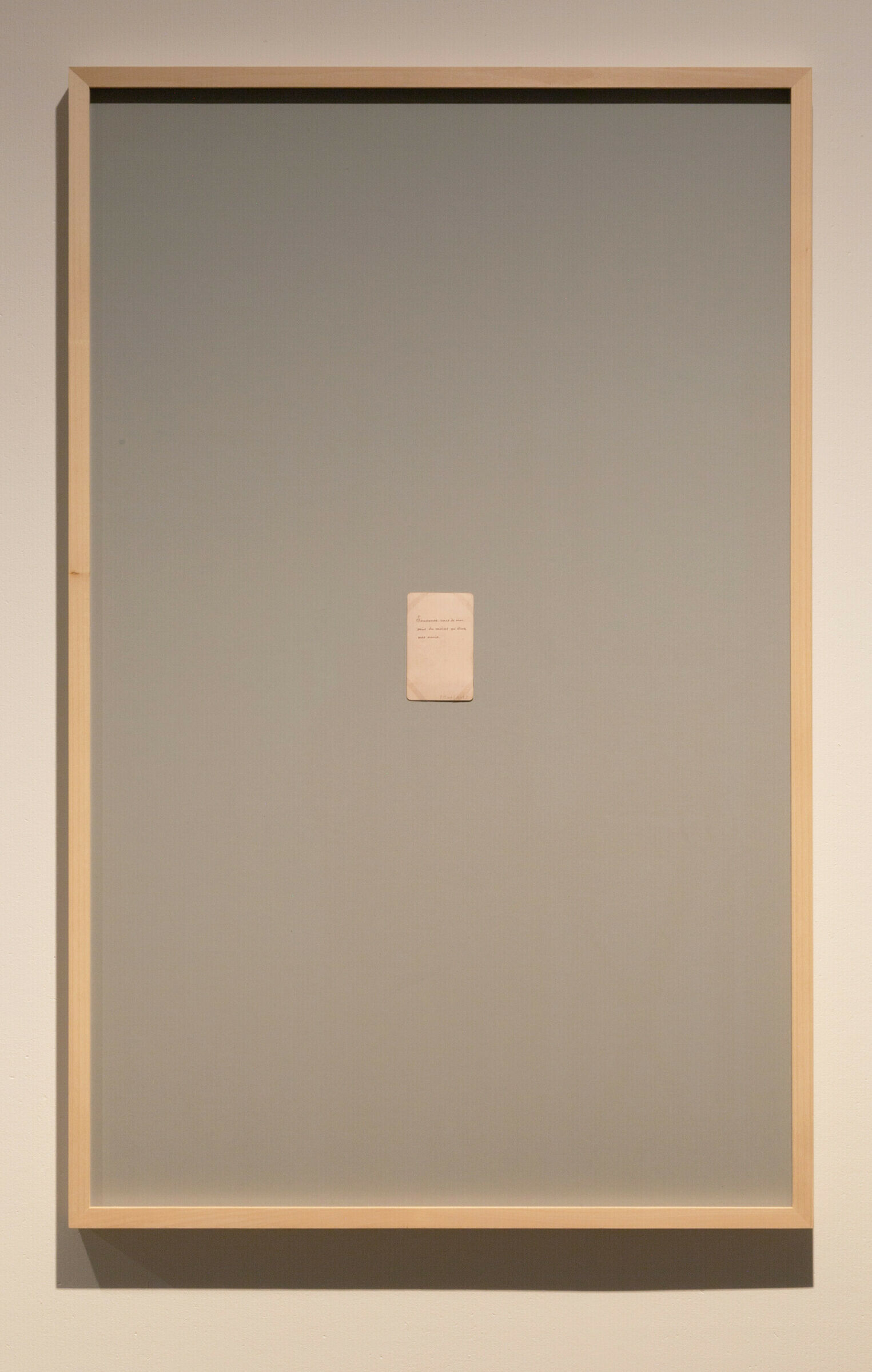
Anonymous
Remember me, you at least who were my friends
ca. 1878
albumen print carte de visite
| Collectie FOMU P/2002/1123
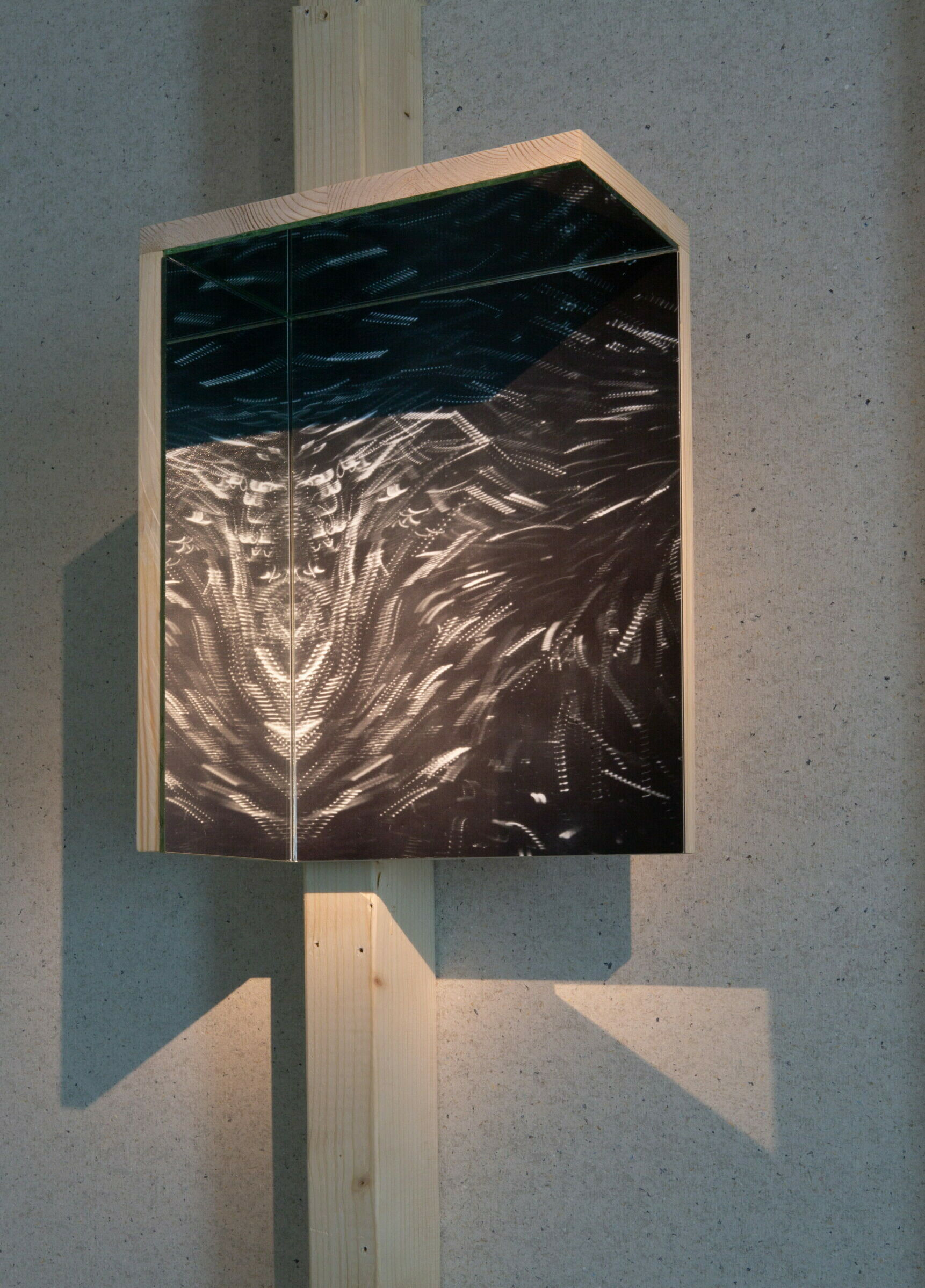
Joseph-Maurice Bourot
Photographic visualization of an air movement
1955 ( 2024)
replica of a gelatin silver print
| Collectie FOMU P/1983/100/1, P/1983/100/5-8
Curating and editing are not new practices for Katja, but this is the first museum collection that the artist has worked with. It might be obvious that the presentation of a collection is the result of informed selection, but the objects included in No Longer Not Yet radiate with a purpose that weighs deeply, suggesting careful consideration for their content, form, and idiosyncratic quality. Katja explores celestial movements and photo-making technologies as a basis of our objective conceptions of time. With overlapping and colliding timeframes, the selection demonstrates how life and great biological rhythms – birth, growth, death – form our intimate consciousness of time and duration, as well as social or collective elaborations of temporality and ways of belonging to time. Photography, our main discipline here, emerges from the Euro-American culture that arose out of the late Enlightenment period. While accessible and democratic, it’s also beholden to left-hemisphere thinking – reason, logic, control, measurement, efficiency, etc. – all characteristics of capitalist modernity. To function in the artificial worlds, we force our bodies on clock time, rather than in accordance with the seasons, states of health, or physical sensations like hunger, thirst, and fatigue. Grief is another basic human response to loss that reveals our hot-blooded, mammalian temperament, and like other strong emotions, it’s often viewed as disruptive to business as usual. Katja doesn’t take this up directly but instead approaches photography and time playfully and dynamically, like living things. I’ve been thinking about Katja’s practices in terms of ‘the artist as chronosophist’, someone who thinks deeply about time, and in this context particularly, the chronosophy of grieving time. It’s not the passing of time that heals grief; it’s the experience of time where you’ll have learned a great many things without your beloved. Time that updates your virtual map to know that your loved one is not where you thought they would be in space or time, but somewhere new, somehow everywhere. Actively grieving (allowing and supporting, not suppressing it) doesn’t necessarily speed up healing, but it does strengthen resiliency. Like a deep-sea diver who has returned with a pearl that was anyhow hers to begin with, grieving creates a new time where our loved one is somehow everywhere at once, and there are different ways to find them.
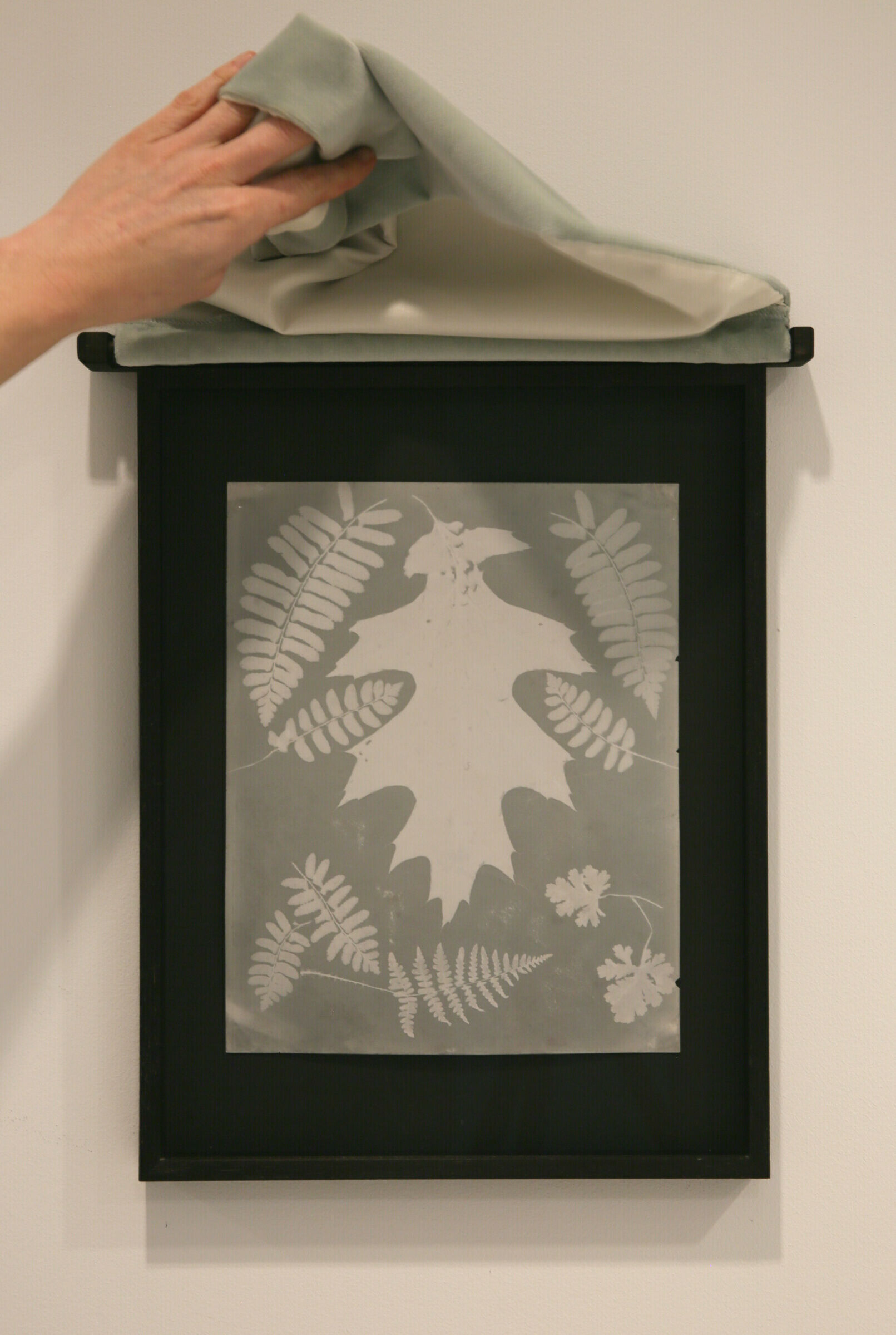
Amelia Bergner
Photogram of Leaves
ca. 1877
gum print
| Collectie FOMU 2023/37
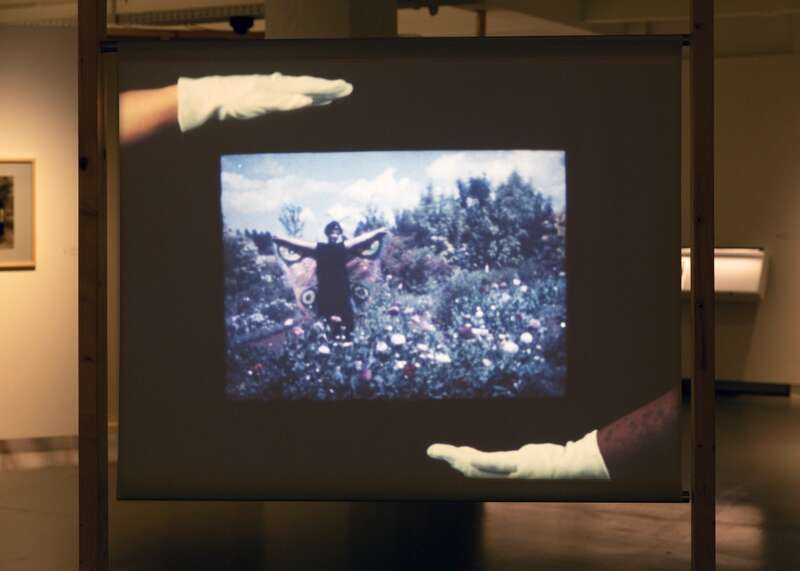
There are four works Katja created for this project that stand as lighthouses around the artist’s harbor of time. In Their Own Sweet Time, the politics of collecting, preserving, and presenting are directly but gently confronted. Two sixteen-millimetre film projections rhythmically rotate between and overlap early twentieth-century colour photographs and the white-gloved hands of the museum’s curators, which serve as a frame. These autochromes can only be viewed using a light box or by holding them against sunlight, but too much light will cause them to fade. The contradiction laden in their condition rhymes with other fragile material processes, like how the human immune system works to protect us but can damage us too. A curator’s care balances a need to preserve an object’s life with the desire to share it. (What a tender metonym for how we need each other to survive but also intervene in health in order to extend our lives.) The early autochromes depict leisure activities shot by affluent amateur photographers in lush gardens and in elaborate dress. Like the fruit in late summer, they depict, however choreographed, ripe and vibrant life. There are many significant, professional artists in the exhibition (Suzy Embo and Marie-Françoise Plissart, to name just two), but the figure of the ‘amateur’, with the root of the word meaning ‘love’, plays a significant role throughout. The amateur might be a hobbyist or a beginner, but she has intuitive motivations. We are drawn to what we love, and we are amateurs when confronted with grief.
Katja extends the life of these photographs in the making of this work, and in other areas of the exhibition, they treat objects with similar gestures of care that invite us to think about what is seen and how the seeing is done. The artist designed object-specific and unconventional frames for many of the collection items on display. We see the writing on the back of a photograph, where the photographer (Jacques Messin) describes the materials and method for how he got the shot, then below it, via a mirror, we see multiple phases of the ending of a total lunar eclipse on 16 September 1978 in a single gelatin silver print. Likewise, Katja presents a selection of nineteenth-century portrait photographs so that viewers can see first the messages written on the back – again, intent – and then the portraits themselves using a carousel-shaped frame. Elsewhere in the exhibition, we see another backside of a portrait photograph but with a message particularly resonant for the artist: ‘Remember me, you at least who were my friends’ (Anonymous). This was made to matter more with a frame and mat ten times its small size. Different photo albums from the collection are also dotted through the exhibition but remain closed. Sensitive to the private nature of an album, which are often personal possessions left and engaged with after death, Katja invites us to consider the artifact of their titling instead: Photo album with 48 amateur shots from WW1 and Postmortem of a girl. Both anonymous collections are framed and resting on velvet cushions, gesturing to their ongoing, necessary care, like keeping the sheets clean for a loved one sick in bed.
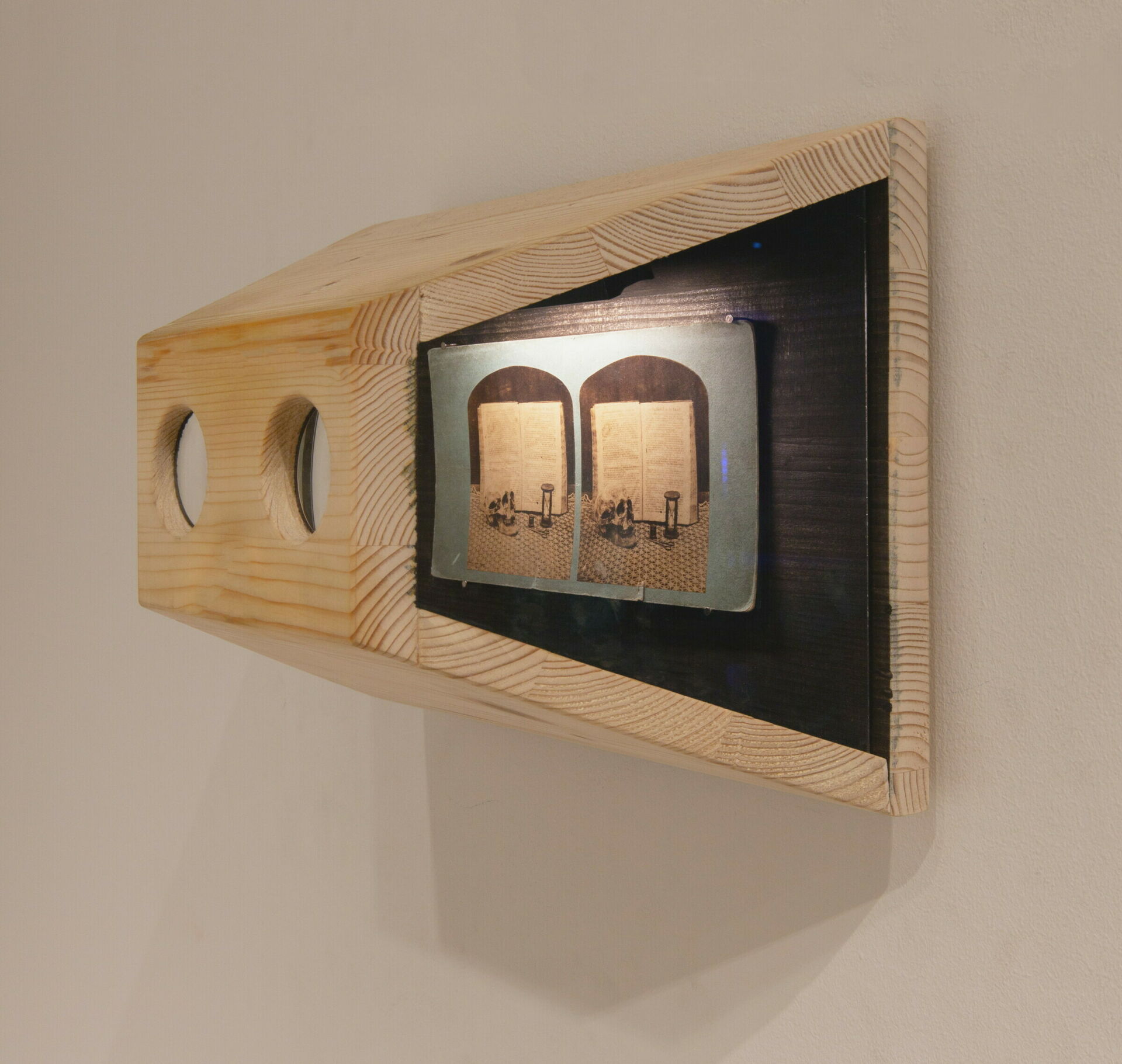
Anonymous
Memento mori
ca. 1870
albumen print stereo card
| Collectie FOMU 2022/91
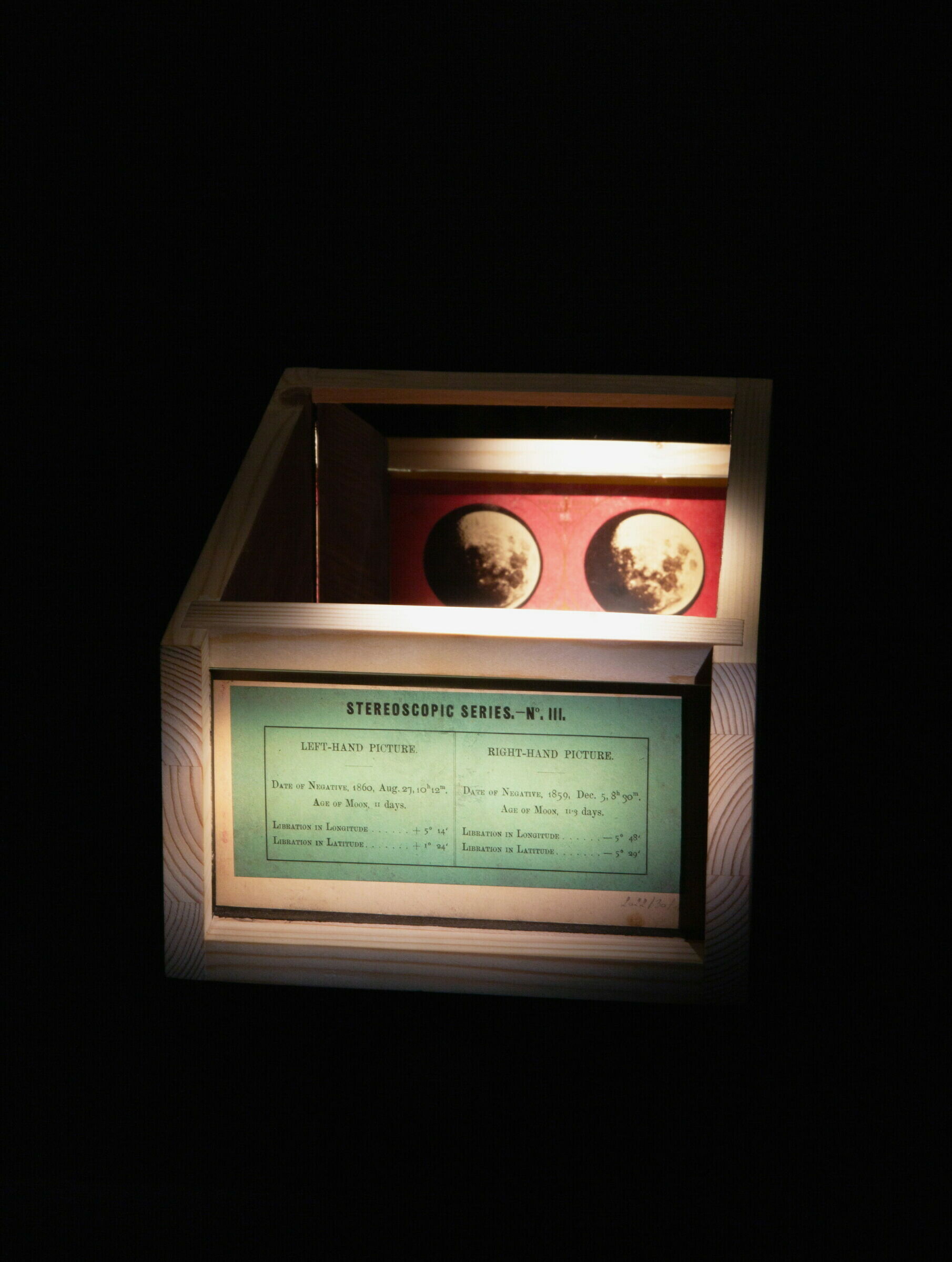
Warren De la Rue
Lunar photographs
Stereograph of moon 11 days old
Date of negative: 1859, 5 December, 8 hours and 30 minutes, age of
moon 11.3 days
Date of negative: 1860, 27 August, 10 hours and 12 minutes, age of
moon 11 days
1859-1860
albumenprint stereo card
| Collectie FOMU 2022/30/1
It's only because we perceive change that we’re able to observe the passing of time, but we must also deliberately intervene in time to acknowledge what has changed. Sometimes we’re too far ahead, sometimes we have to catch up. There are many instances where Katja is trying to get us to notice details that we may overlook, to see the unseen, but has also selected works that directly address the attempts to break down moments into parts or slow down time. Time does slow down for novel or fight-or-flight experiences, our perception becomes hyper-detailed, like we’re processing more information. If we get to witness events like birth and death, they’re as novel as it gets for how common they are, and certain details become sharp in our memory while others are blurred. Katja’s meditations on transitions are seen in examples like the precise millisecond of a bullet in the middle of piercing three balloons (Harold Eugene Edgerton); a waterfall not in a sharp focus but as a soft, blanket-like blur (Frans Van de Poel); microscopic particles, which the naked eye cannot see, found in the movement of air (Joseph-Maurice Bourot); and a unique chromogenic print made from ice melting (Laure Winants). Examples like these and many others demonstrate Katja’s commitment to intimate collaboration in the immediacy of living – between artist and method, viewer and encounter, material and time. Other selected works emphasise a matter-of-fact quality of natural processes – a friendly ‘what you see is what you get’ – and the collaboration between nature and photographic methods, like a photogram of leaves made not with a camera but with light-sensitive paper (Amelia Bergner), time-lapse photographs of muscle growth (Cassils), and moments in time like a caterpillar on a branch (Paul Sano) that are designed, like us, to not last.
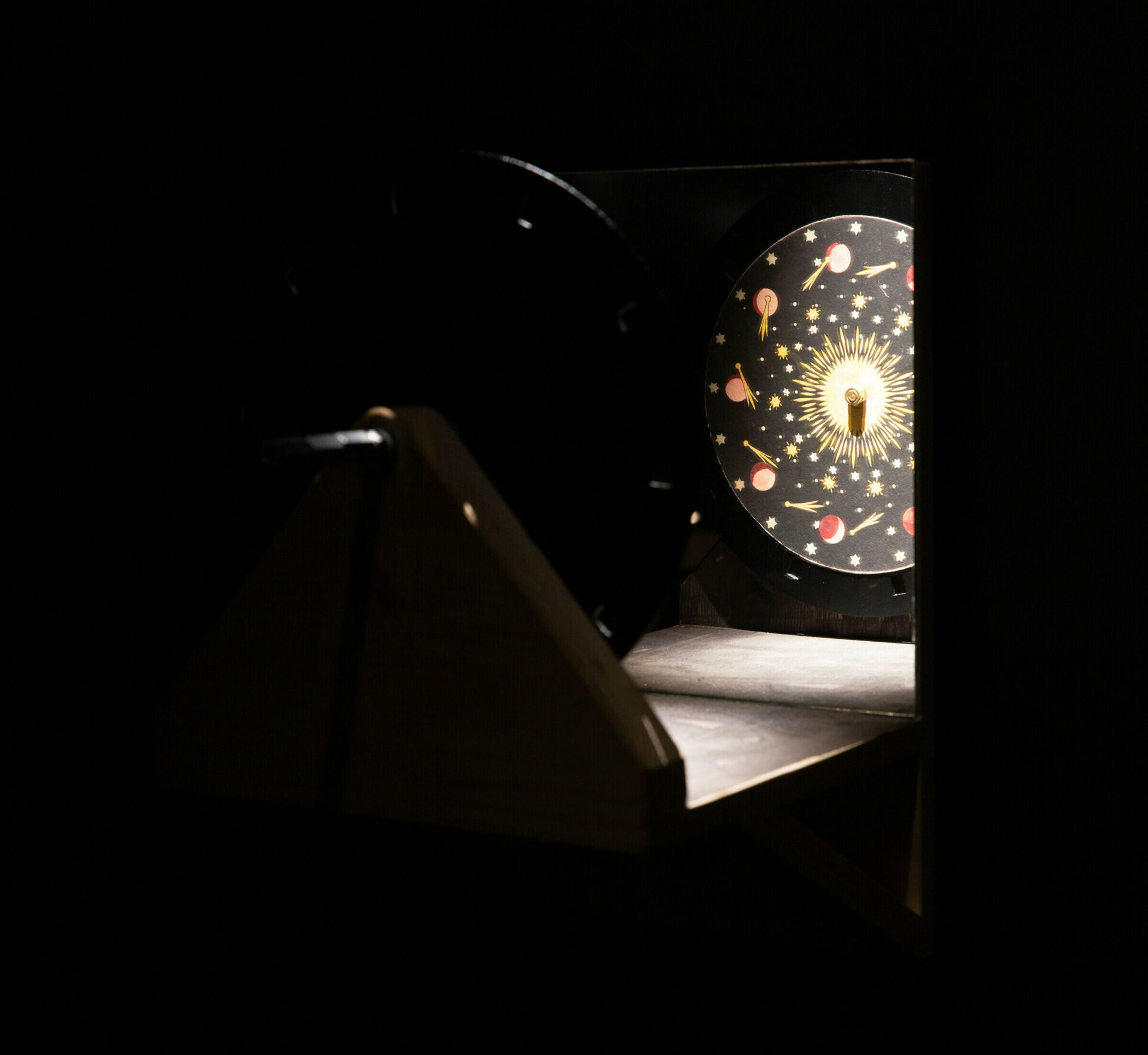
Alphonse Giroux et Cie. (publisher)
Phenakistiscope
ca. 1833 (2024)
belonging to a set of twenty discs
| Collectie FOMU F/1973/692/b7
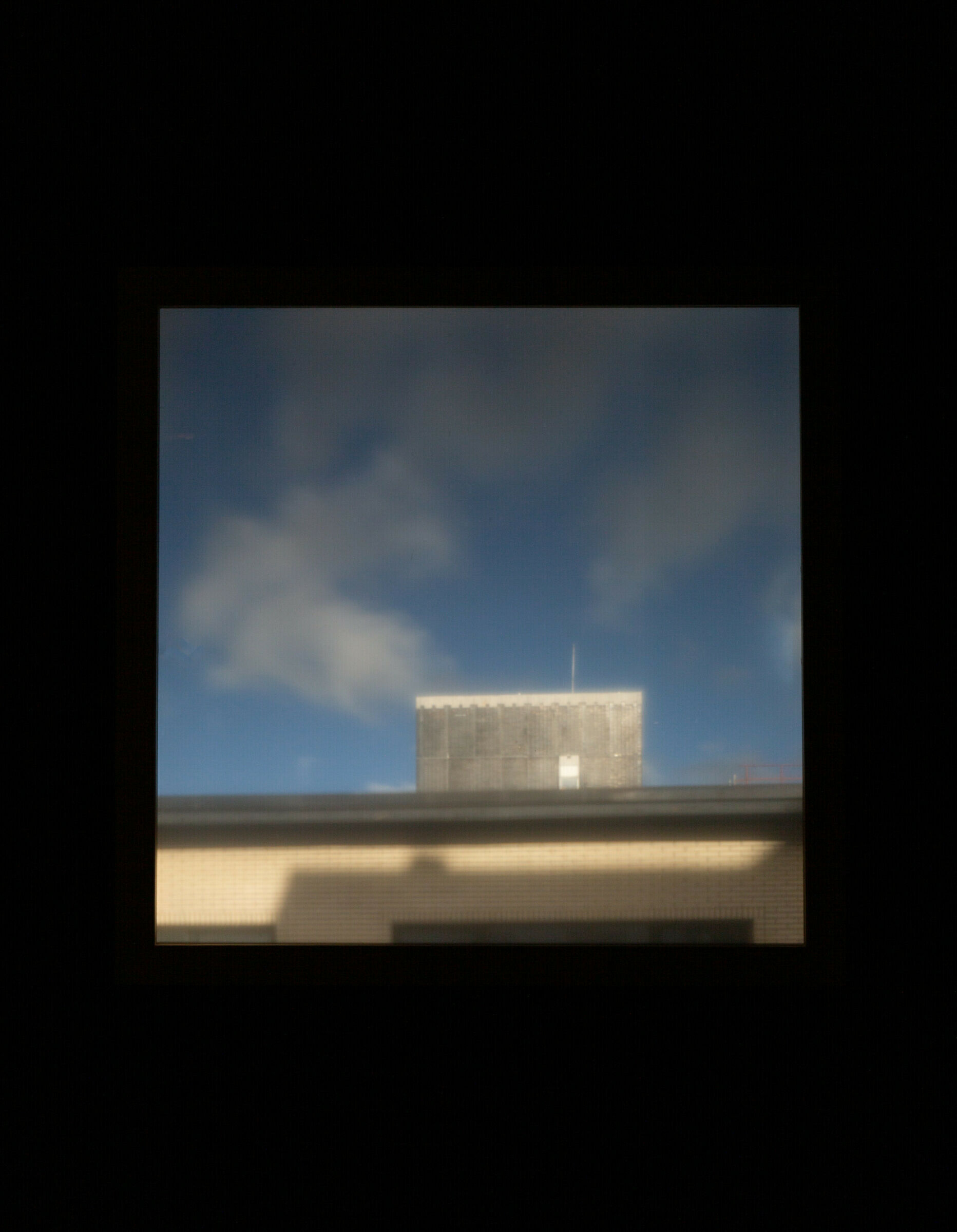
Katja Mater
Camera obscura
2025/2026
Inspired by the creation of images through movement and light, next to devices like the Magic Lantern and the phenakistiscope also on display, Katja created a work especially for the Kaiserpanorama, an amusing, early twentieth-century parlour trick that resides in FOMU. Kijk met Beide Ogen (Look with Both Eyes) consists of fifty stereo glass plates made to be viewed through this special 3D viewing carousel. When looking through the lenses, two images fuse into a new image that only exists within your specific viewpoint at that moment. The stereo plates comprise a sculptural poem with letters created by various coloured ribbons against a black background commonly used in photography, reflecting both Katja’s artistic sensibility and their technical skills. The poem as a whole is a condensed thesis of Katja’s approach to this project in their own words: ‘Slow down… A Time Outside of Now… What Once Was… Let Go…’ While it can be read partially by looking into the viewfinders, the poem can be fully experienced only every first Sunday of the month when the carousel is in operation. The fragmented, partial, and multi-perspectival nature of this work is part of the plan – it depends on where you are and when you’re doing the seeing. Compelled by magical thinking but demystifying the process, Katja chose to remove the title plates and fabric around the legs of the machine so that we see the carousel’s inner workings and mechanism. Katja shows us how things work, like in revealing to us the exact passage of time between two photos of the moon to make a stereoscopic image of it (Warren De la Rue). As there’s already enough sleight of hand to reality, this is another example within the exhibition where it seems Katja wants to show us just how much we have a hand in guiding our own experience when we know how things work.

Anonymous
The portrait. A faithful remembrance of one so dear.
ca. 1862
albumenprint stereo card
| Collectie FOMU 2022/57
In the more ‘cosmic’ area of the exhibition, where we might feel we’re timeless, everywhere and nowhere at once, we’re brought back to right here and now through a tiny hole that shows the outside world, upside down. Katja invites us to meet the absolute present through the making of site-specific camera obscura. I don’t know how often Katja has made a camera obscura using a building before, but I’ve seen two they’ve created while grieving (here and at Landhuis Oud Amelisweerd). In this case, it captures the view across the street from FOMU, building tops and the expanse of sky. This precision in time and place so we might witness gradual change or the novelty of an event is demonstrated often in Katja’s work. Because of the diversity in materials, processes, and people within the exhibition, there’s a true celebration of difference – a queer and mixed-ability perspective – and a recognition of our shared dependence on time. Alongside the play between transparency and omission, there’s a salt print by Guillaume Weber-Chapuis – an example of the earliest photographic procedures – that’s included in the exhibition but not there: the light life of this portrait has reached its end, so the work was presented for one day only. The rest of the time, a visual description text of the work, an accommodation for blind and partially sighted visitors, is framed and on view. It stands in like an obituary for a small spark of life.
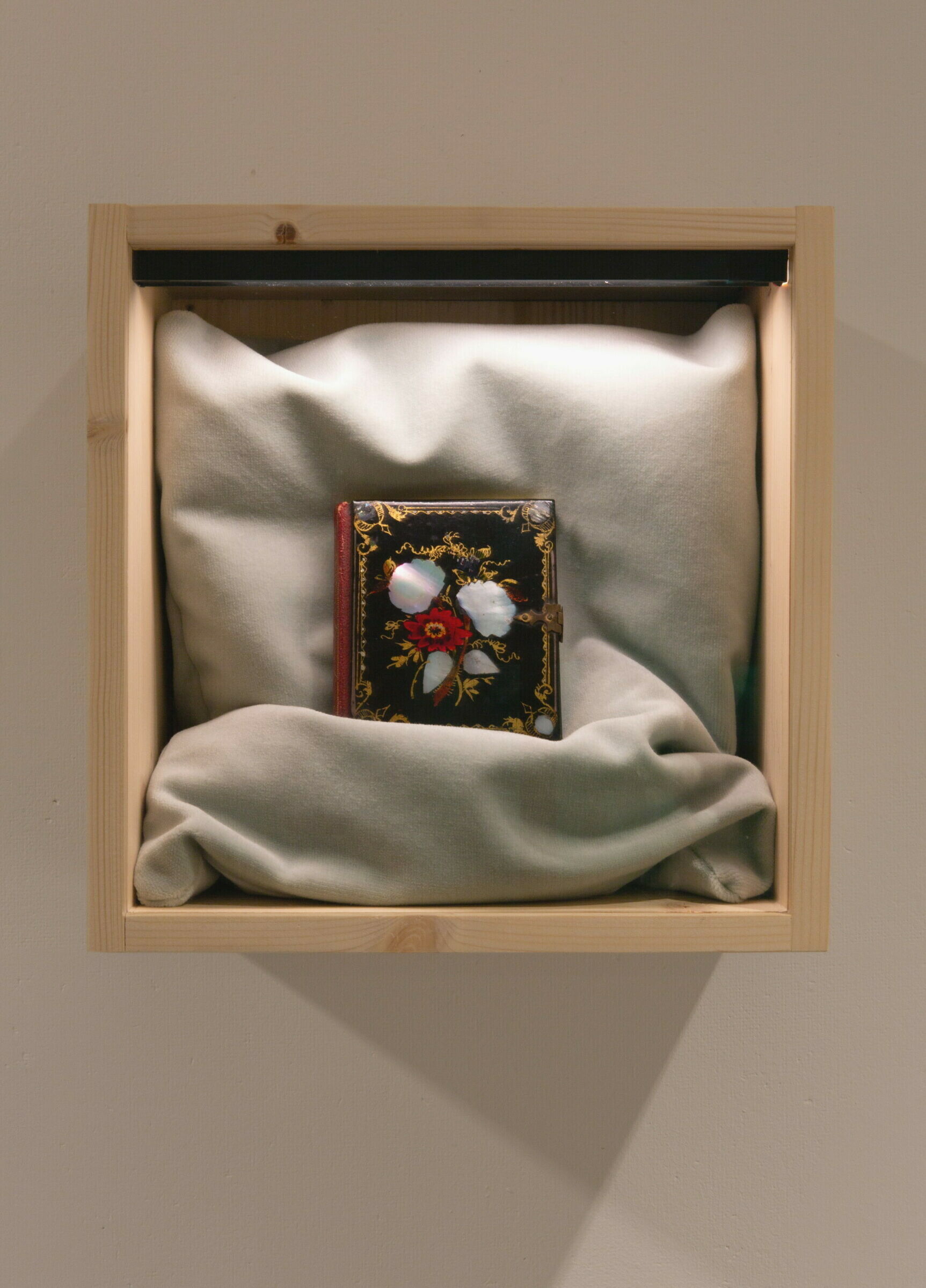
Anonymous
Postmortem of a girl
ca. 1850
daguerreotype
| Collectie FOMU 2022/36
Photography has been a node for expressions of the metaphysical and a tool for rendering myth and rationality, symbol and science, truth and imagination. It’s no wonder that it’s been an important technology for communing with the dead, whether for documenting spirits or remembering loved ones through postmortem portraiture. The ‘grief section’ mentioned earlier includes works that directly engage with death and grief. A portrait. A faithful remembrance of one so dear (Anonymous) shows a young woman holding a photograph of someone who is no longer there, an early example of what’s now called ‘conscious grieving’ to denote that while grief arrives regardless of our choosing, grieving is a choice. Nearby, photographer Lebohang Kganye reenacts photos of her deceased mother by posing in the same position while wearing her clothes and to create new memories by ethereally uniting with those of her mother. A memento mori print, a classic still-life motif complete with an hourglass, skull, and yarn with scissors, simply reminds us that we will die (Anonymous). A large photo of a tree stump with an incalculable amount of coins hammered into it, a ‘wish tree’ dating back to eighteenth-century Great Britain, shows a collective ritual we commonly participate in (offering money to unseen forces in exchange for good fortune) while giving a sense of how time is truly colossal (Geert Goiris).
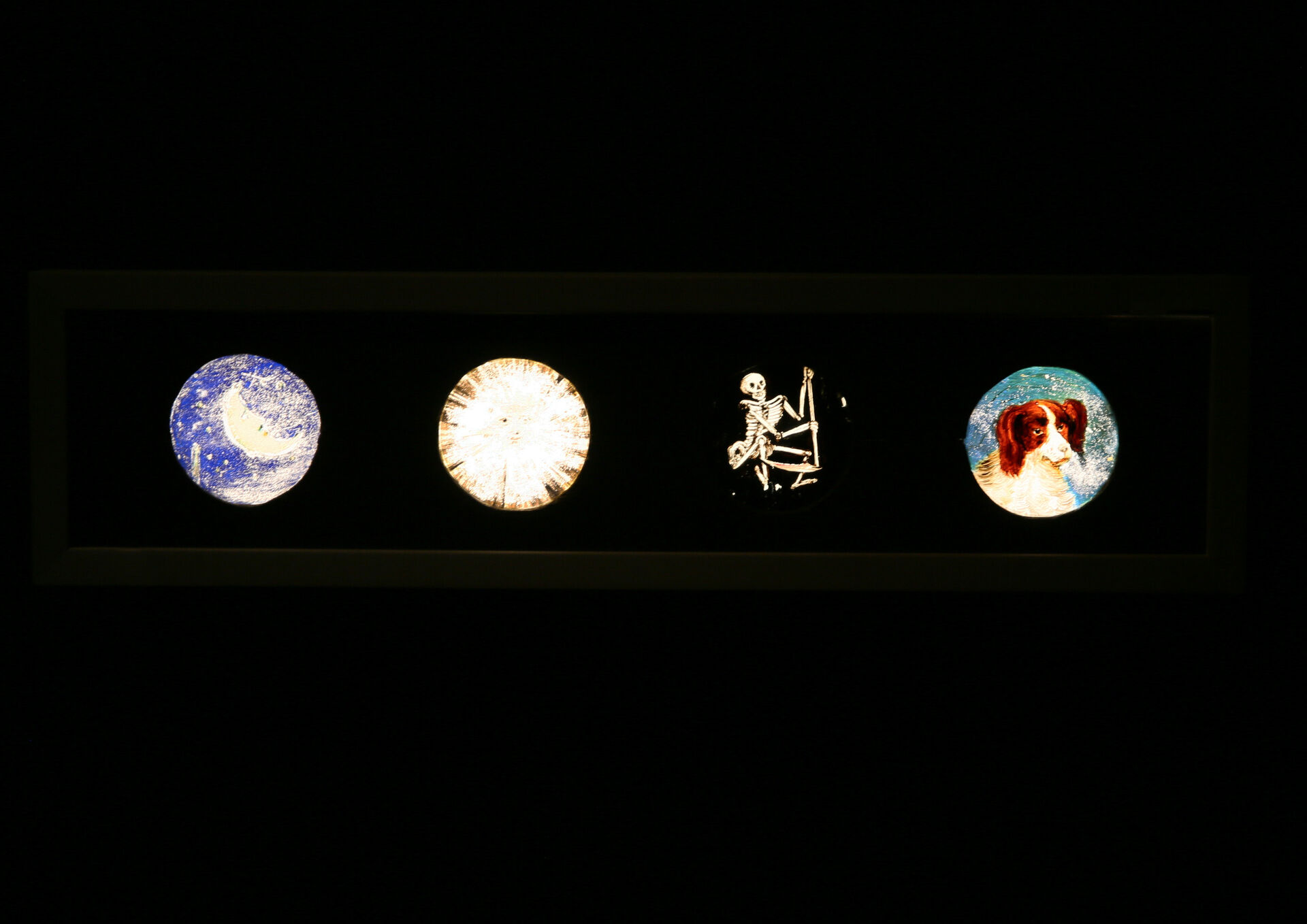
Anonymous
Moon, sun, skeleton, dog
s.d
panoramic magic lantern slide
| Collectie FOMU PRE/1963/410
The thought of death accompanies every encounter I have with art. And for once, I felt like an exhibition was a cemetery, remodelled and tended to by a devoted groundskeeper. One of the most ambitious works that Katja created for this presentation is Anonymous, a nearly nine-hour recording in which they read the very sparse descriptions linked to images in the museum’s catalogue created by those deemed unknown. The listening space is dimly lit so that we can project our own images created from visual language. While it’s impossible to listen to the recording in full, the sheer amount of life is evident, and it didn’t take long before I felt, truly, that all of us matter. The work is a humanising monument to the dead and a refusal to forget them. It brings to heart those who have slowly stitched in fabric the names of the tens of thousands of children who have been killed in Gaza by the IDF, or those who read out the names of their loved ones who died of AIDS on the front lawn at the US Capitol. This persistence and fierce valuing of life, so characteristic of Katja’s practice but more so in the immediacy of their grief, is something we can all learn from, especially while imperial and military violence remains reckless and inflamed. For the many years in which FOMU has been collecting, the anonymous have now been given a dignified place, even if we’ll never know their names.
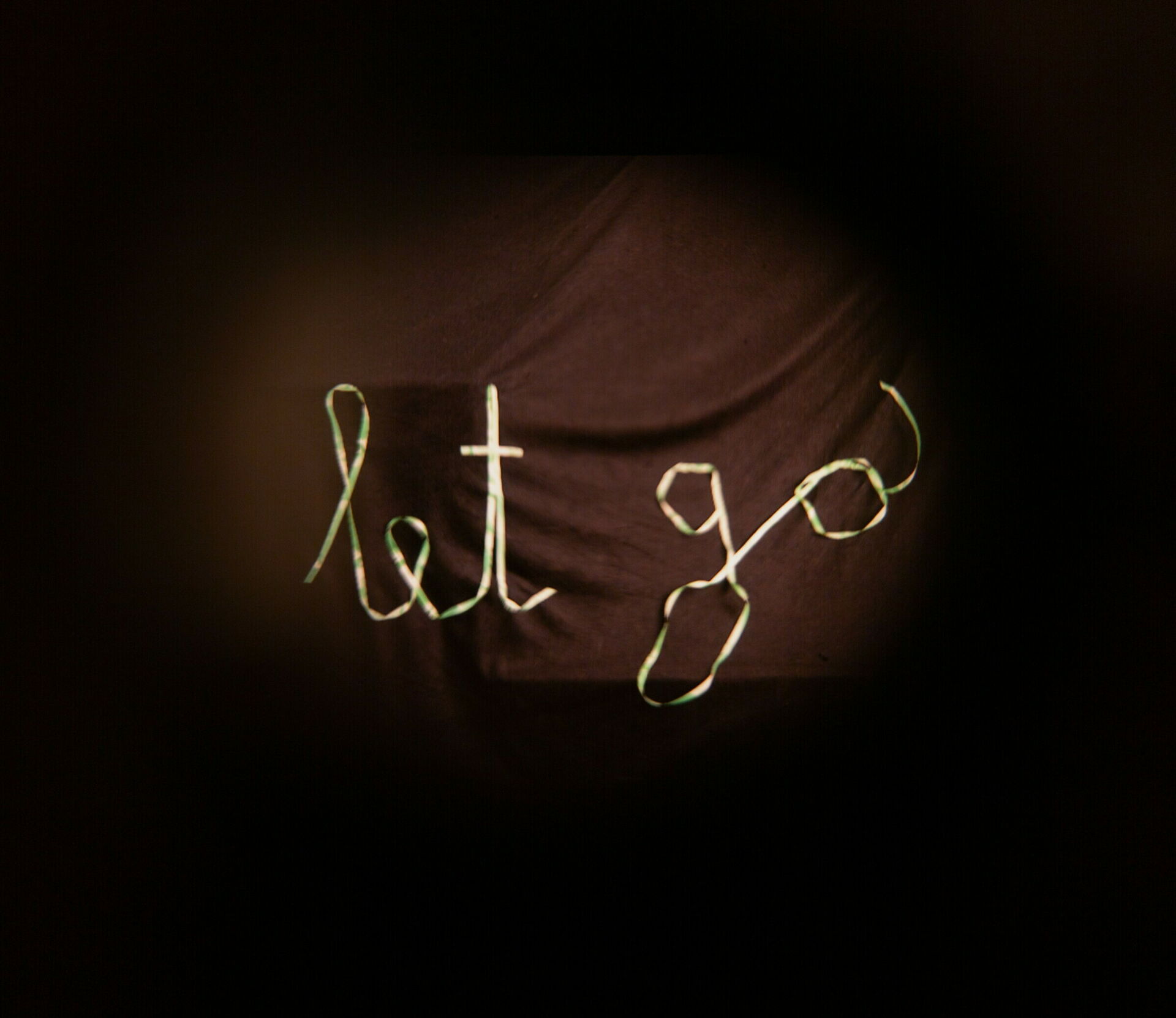
Katja Mater
Kijk met Beide Ogen
2025
50 stereo glass plates for Kaiser Panorama
There’s a lot to be said about how making and experiencing art helps the grieving process. In short, the skill-building of expression helps convey oceanic depths of feeling. Would you have known that the artist is a griever in No Longer Not Yet had I not shared it? Or did you know it already because you’re a griever too, and it takes one to know one? Through time and experience, we learn to practise ways to carry the love-light of those no longer with us. That’s how we make a future with them in it. If we choose to study, death and grief can inspire an intimate gnosis – a special, intuitive insight – that comes from a commitment to understand reality, arms also open to the unseen and unknown. The remaining question is one of personal framing: ‘How can I meet this love, close, here and now?’ For Katja, it’s less about calculating volume and more about felt density: to be here is to be not done loving, and there’s care and healing that can take place wherever you stand. While there is no ‘return’ after loss, No Longer Not Yet is a place where Katja has distilled wisdom from honest grief, and refined it as potent medicine that we can use in this time.
Images of the installation were captured by Katja Mater.
Editor’s note
No Longer Not Yet: Katja Mater & the FOMU Collection was on view at FOMU – the Museum of Photography Antwerp from 28 February 2025 to 22 February 2026.
Invited by the museum, artist Katja Mater explored the FOMU collection and created a spatial exhibition around different experiences of time, juxtaposing historical photographs with newly produced works and installations.