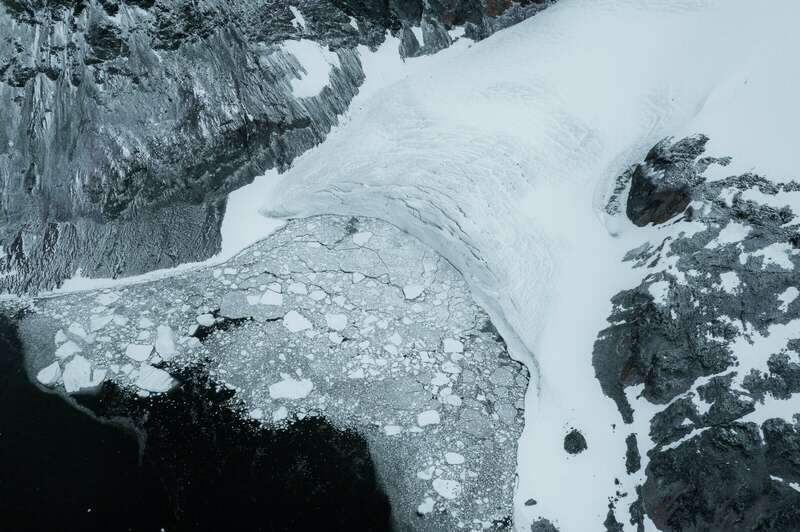
An aerial view of a marine-terminating glacier in Blaiklock Island (Marguerite Bay, Antarctica). The crevasses are visible as darker coloured lines in the glacier front, and they are a visible sign of the glacier seaward flow. Ice floes (a few tens of meters in length/width) are visible on the dark surface waters facing the ice front. Image taken by Francesca Pasotti by means of a DJI Mavic 2 Pro drone at 500m altitude (TANGO I expedition, 2023).
May We Not Forget the Ice
Francesca Pasotti
27 okt 2026 • 12 min
I’ll never forget the first time I saw the shorelines of Antarctica.
In the austral summer of 2010, I was part of a scientific crew travelling from Río Gallegos, Patagonia, to King George Island at the northern tip of the West Antarctic Peninsula, where I would begin my research at the Argentine Carlini Station. We crossed the Southern Ocean aboard a military C-130 Hercules aircraft, flying for hours through clouds and turbulence before beginning our descent.
A few hours into the flight, I was invited into the cockpit. Beyond the windows, there was only white. Then the clouds began to break. Below us appeared the Southern Ocean, its immense, dark waters scattered with drifting icebergs. Some carried tiny black specks that gradually revealed themselves to be seals and penguins resting on the ice. Along the coastline, albatrosses glided through the wind, fur seals moved across the shore, and lines of penguins traced narrow paths through the rocks.
But one detail immediately unsettled me. The landscape was largely free of snow.
Dark volcanic soil and exposed rock stretched across the island. Everything I’d studied in preparation for my project suddenly stood visible before me. The Antarctic Peninsula had already warmed by as much as 3°C since the 1950s, making it one of the fastest-warming regions on Earth. I was witnessing the consequences during my very first visit to the continent.
And the absence of snow was only one part of the story.
Glaciers along the Antarctic Peninsula had been retreating for decades. In 2010, more than 87 percent of marine-terminating glaciers in the region were already in retreat. Today, this retreat has accelerated dramatically.
Only a few hours after landing, I saw a glacier for the first time. We were approaching Carlini Station by zodiac when the Fourcade Glacier emerged before us. Faced with that enormous mass of ice, I could think only of its disappearance.
Glaciers seem eternal. They embody permanence.
And yet, they’re vanishing.
The thought was difficult to grasp.
The purpose of my PhD was to understand what this retreat meant for life beneath the water’s surface. As air temperatures rise, increasing amounts of meltwater and fine sediments enter Potter Cove, reducing salinity and making the water more turbid. At the same time, glacier retreat alters patterns of iceberg disturbance and exposes new seabed that had previously remained beneath an icy roof. These changes affect primary production and, ultimately, the composition, structure, and functioning of the communities living on the seafloor.
I’d arrived in Antarctica to understand these processes.
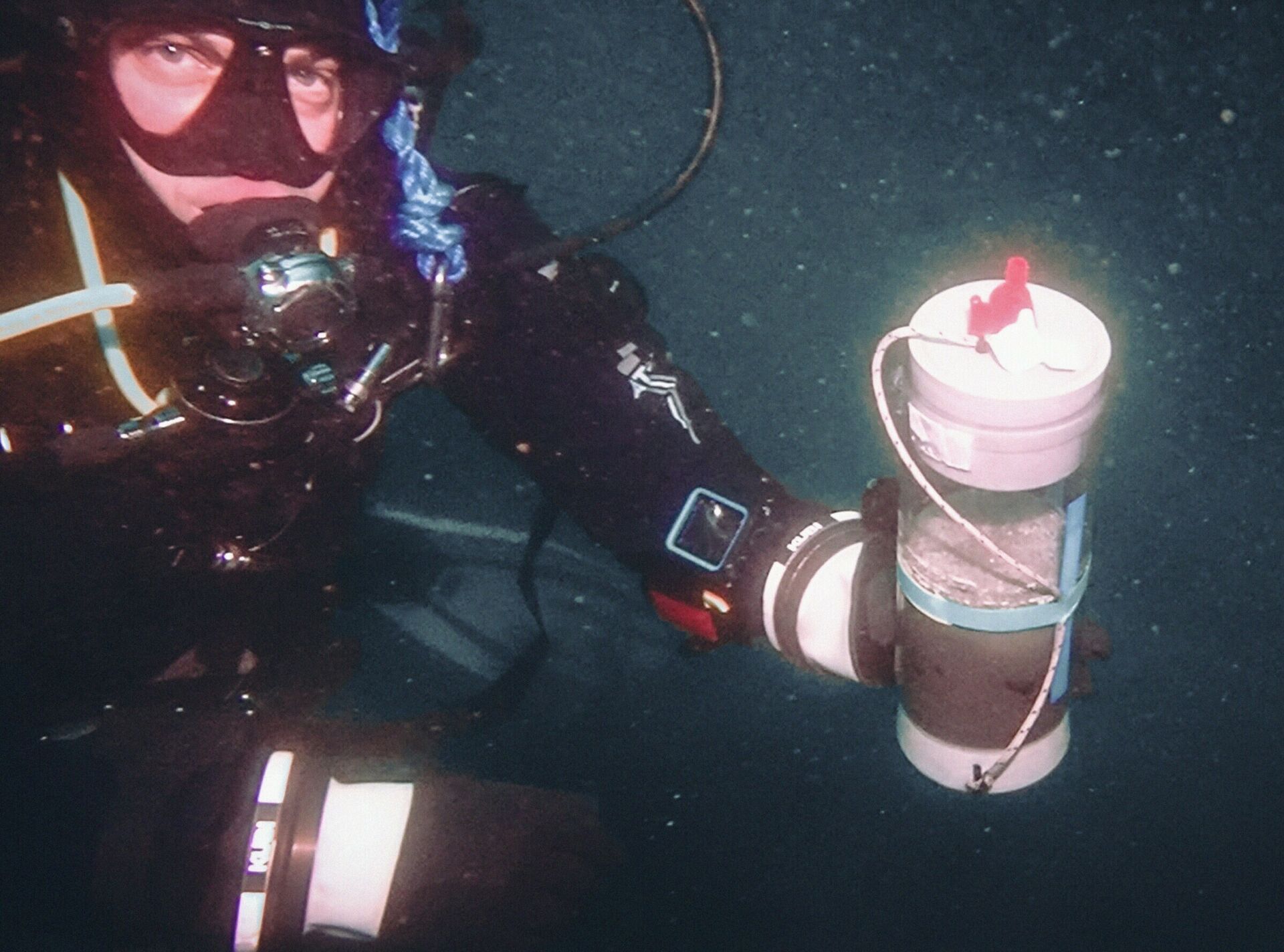
Francesca holds a sediment core which allows scientists to retrieve an almost undisturbed sample of the seafloor. (picture taken by Lea Katz during the TANGO I expedition, 2023).
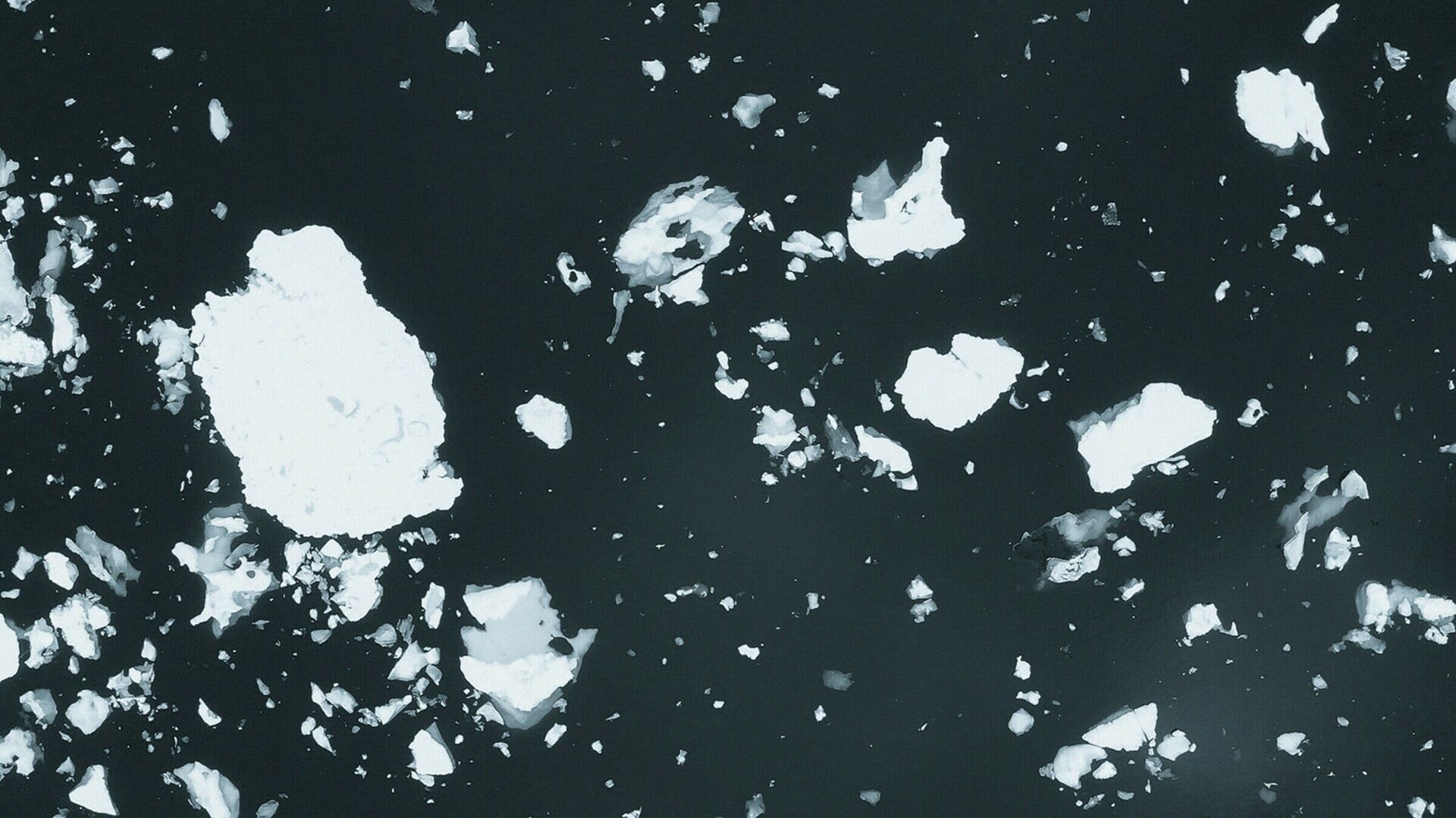
Wandering growlers off the coast of Dodman Island. Picture taken during the TANGO I expedition (2023).
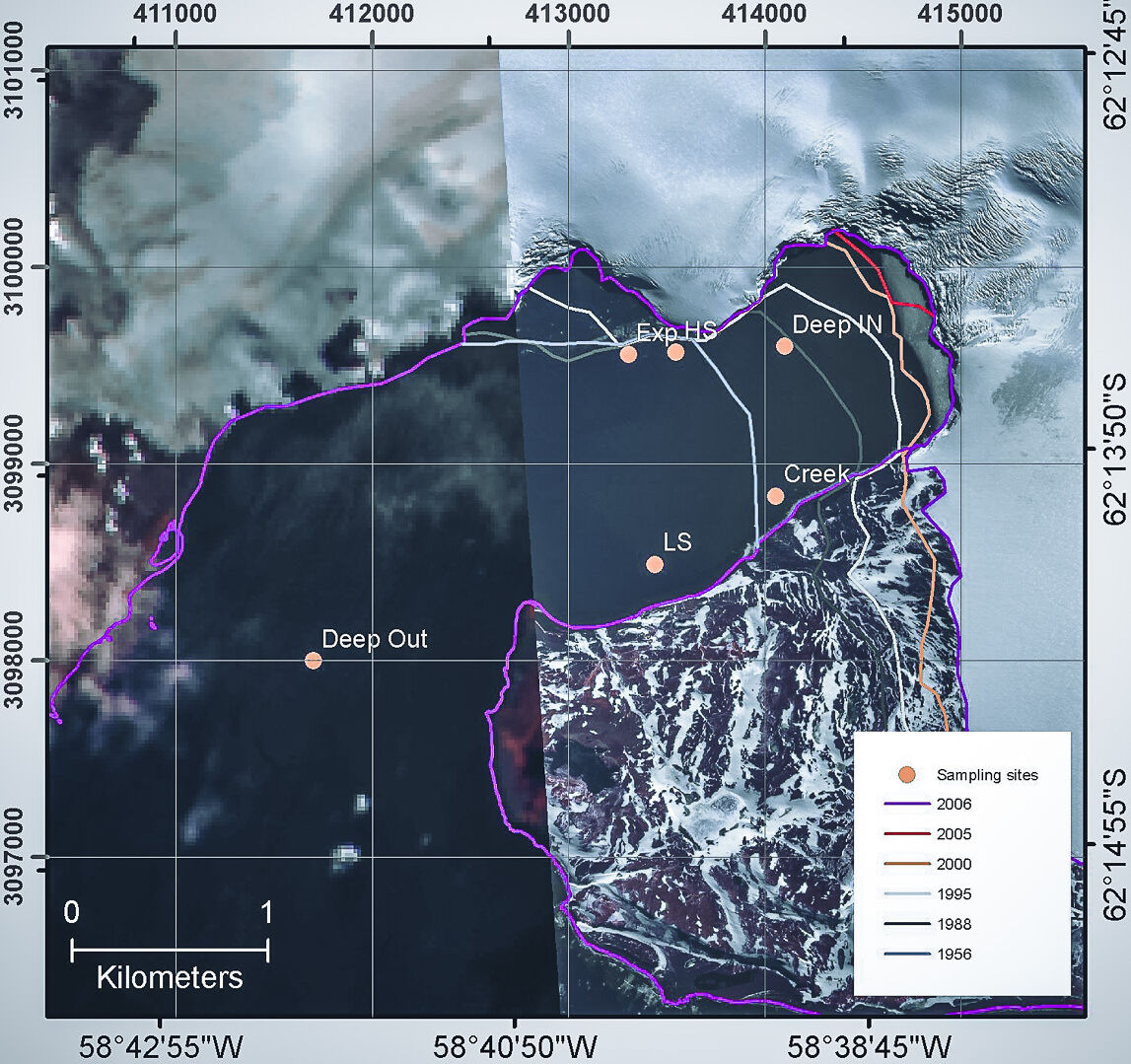
A Google Earth map of Potter Cove with visible the Fourcade glacier front and the island's ice cap. Overimposed on the map are the glacier front retreat lines as georeferenced from historical satellite data. The Fourcade glacier has been observed to be actively retreating since the record began in the 1950s. The glacier has shifted from being a marine-terminating glacier to a land-based glacier with important consequences for the shallow marine habitats present in the cove (map modified from Pasotti et al. 2014, Marine Ecology, doi: 10.1111/maec.12179).
Reading the seafloor.
Glacial retreat can be observed not only above the water but beneath it as well. As a diver by passion and profession, I know that understanding the effects of glacial retreat requires direct observation of the seafloor. Soon after arriving at the research station, I began diving in different areas of the cove. From the surface, these areas appeared to be shaped by different degrees of glacial influence—or so I suspected.
I was searching for clues, a way into my research questions. Underwater, I encountered what felt like distinct zones. Over time, I would describe them in terms of the kind (e.g., iceberg scouring versus turbidity), intensity, and frequency of the disturbance they experienced. My intuition proved useful. The investigation had begun.
The first zone was located in the inner cove, closest to the retreating glacier front. This area had become ice free only recently, between 2000 and 2006. The seabed was almost devoid of visible life, and the assemblages were relatively young, consisting largely of juvenile organisms. The sediment was extraordinarily fine, almost like fluff. I could literally sink my entire arm into it with barely any resistance.
This fluff was subglacial sediment: fine material produced by the weathering and abrasion of bedrock beneath the glacier as it slowly moved towards the sea. Underwater, even the slightest movement of a fin could bring this sediment into suspension, causing visibility to collapse almost instantly and remain poor for extended periods. Working close to the glacier front was therefore both challenging and, at times, unsafe.
Conditions were further complicated by the frequent calving of icebergs from the glacier front, particularly during the summer months, when we carried out most of our fieldwork. The regular presence of ice growlers keeps the seafloor in a constant state of disturbance. For young recruits—larval and juvenile organisms that need to settle on the sediment to continue their development—this is a precarious environment. More often than not, these organisms are dredged away by the moving ice before they can establish themselves and reach adulthood.
Further away from the glacier front, upstream of the main surface current and along the north-west coastline of the cove, I identified a second zone where sediment communities appeared less affected by iceberg scouring. This area had become ice free much earlier, during the 1970s, and the sediments showed signs of colonisation by functional groups indicative of more stable conditions.
With my underwater lamp in hand, I descended to about 15 metres and encountered a seabed rich in sessile species, organisms that remain fixed in place. Their presence suggested that the sediments hadn’t been disturbed by icebergs for long enough to allow them to grow and establish themselves.
Among the organisms visible to the naked eye were filter feeders, species that feed by extracting plankton from the water column. One of the most striking was the brightly orange-coloured seapen, a colonial organism related to corals and known to be particularly sensitive to sedimentation and iceberg disturbance. Seeing large numbers of seapens covering the seabed confirmed what I’d suspected: this zone was characterised by clearer waters and less frequent iceberg scouring, conditions that allowed longer-lived assemblages to thrive.
Finally, I decided to investigate the southern side of the inner bay, farther away from the glacier, downstream the main current direction. This location was experiencing both iceberg scouring and a large input of sediment from the coastal zone. Known as the Potter Peninsula, this part of the land is typically covered in snow during the winter, but in spring and throughout the summer months, small creeks form, fed by snowmelt, and they deliver large amounts of fresh water loaded with sediment into the facing sea waters to finally settle like a blanket at shallow depths.
Here, filter feeders (such as the seapens I mentioned earlier) were absent in the shallower waters, as they couldn’t survive because their filtration system would’ve been clogged by the fine particles suspended in the water. What struck me in this area was the agility of the species I found in abundance. They moved quite rapidly, and I therefore figured they could potentially escape the destruction of the occasional ice growler, which are typically slow. Other organisms, such as the alien-looking scale worm, were adapted to scavenging on the dead carcasses of the victims of the icy dredges, hence contributing to local organic matter remineralisation. It seemed once again that by looking at the community composition, I could predict what disturbances were present here.
Climate change, I realised, doesn’t reshape ecosystems uniformly. It creates gradients, mosaics of disturbance and resilience.
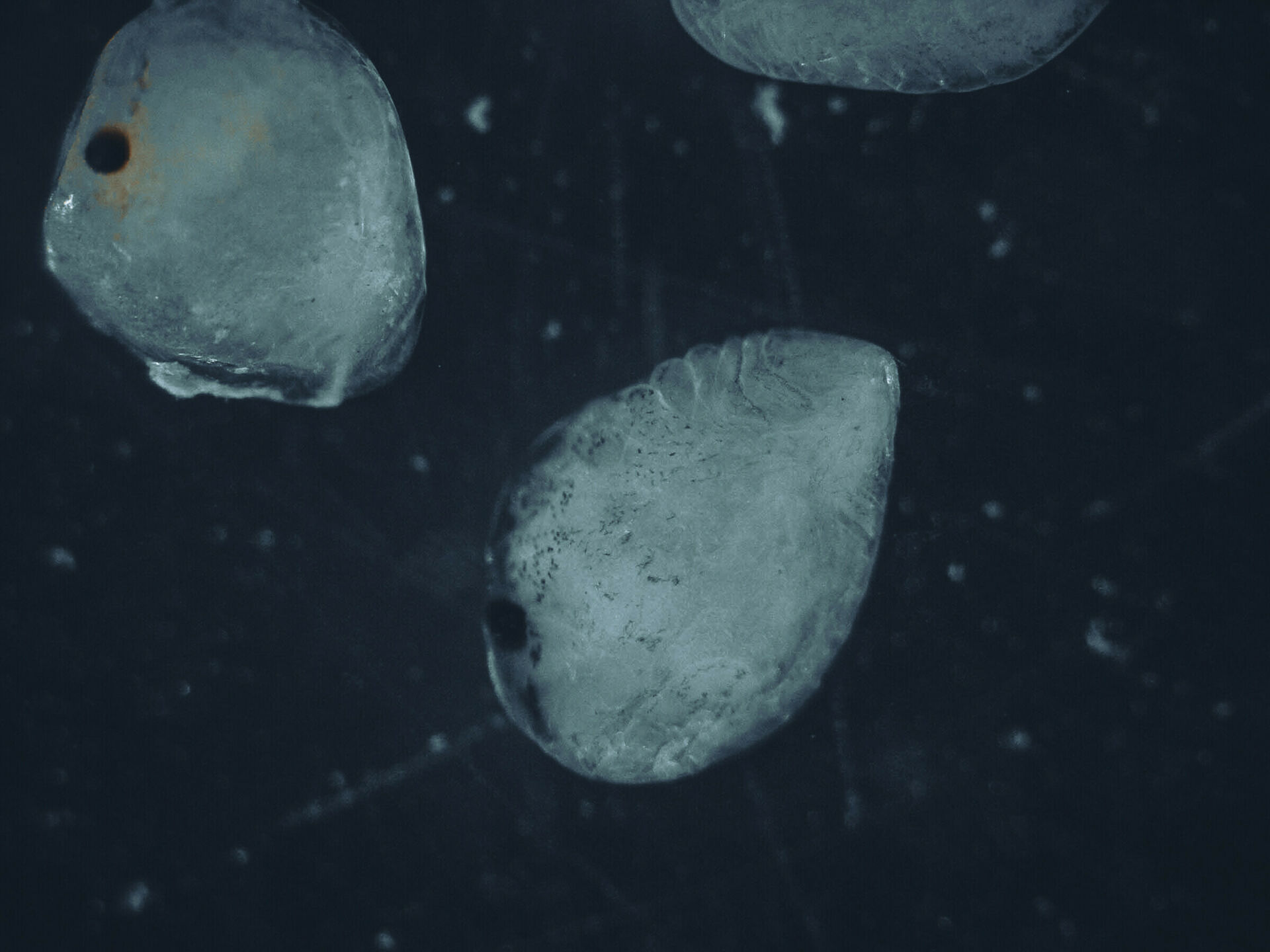
A late-stage serolid isopod embryo. Serolids are small, ventrally flattened crustaceans that brood fertilized eggs in ventral pouches (marsupia) until they develop into self-sufficient juveniles. This reproductive strategy increases offspring survival in the highly seasonal Antarctic environment, although brooding may last up to twenty months and requires a substantial energy investment. Visible here are the early stages of body segmentation and eye development.
Invisible engineers.
One of my scientific obsessions couldn’t be seen while diving. My main focus was in fact a very important player in Antarctica sediments: the meiofauna. These microscopic animals inhabit the tiny spaces between particles of sand and mud on the seafloor. Invisible to the naked eye, they form one of the fundamental engines of the Antarctic carbon cycle.
To study them, we collected, by diving, sediment cores: intact vertical columns of seabed that preserve the delicate structure of the sediment layers. Each centimetre reveals a different microhabitat and its associated organisms, allowing us to understand how the sediment processes vary along the sediment depth. This is a bit like studying the soil of a crop field to understand how well your crop will yield in coming seasons. Furthermore, we wanted to know more about how biodiversity had changed across gradients of glacier influence within the inner cove so we could link meiofauna diversity and function to different glacier disturbance regimes. These meiofauna organisms are very important because they recycle organic matter trapped within the sediments, returning nutrients and carbon back into the ecosystem. Rising temperatures and the rapid retreat of glaciers were already reshaping Antarctic fjords like Potter Cove. Icebergs were scraping the seafloor more often, increasing the amounts of fine organic sediments that settle over these fragile communities, gradually disturbing them and altering the balance between productivity and decomposition. In many places, repeated iceberg scouring created constant cycles of destruction and recovery—local extinctions followed by recolonisation and succession—forming a patchwork of very different communities only a few hundred metres apart.
The chain of effects became visible:
Warming temperatures lead to glacier retreat.
Glacier retreat increases iceberg scouring frequency, water column turbidity and sedimentation.
Sedimentation and turbidity hinders the functionality of sediment primary producers.
Iceberg scouring kills benthic species and affects the stability of meiofaunal recyclers assemblages.
Changes in climate become changes in the functioning of life itself.
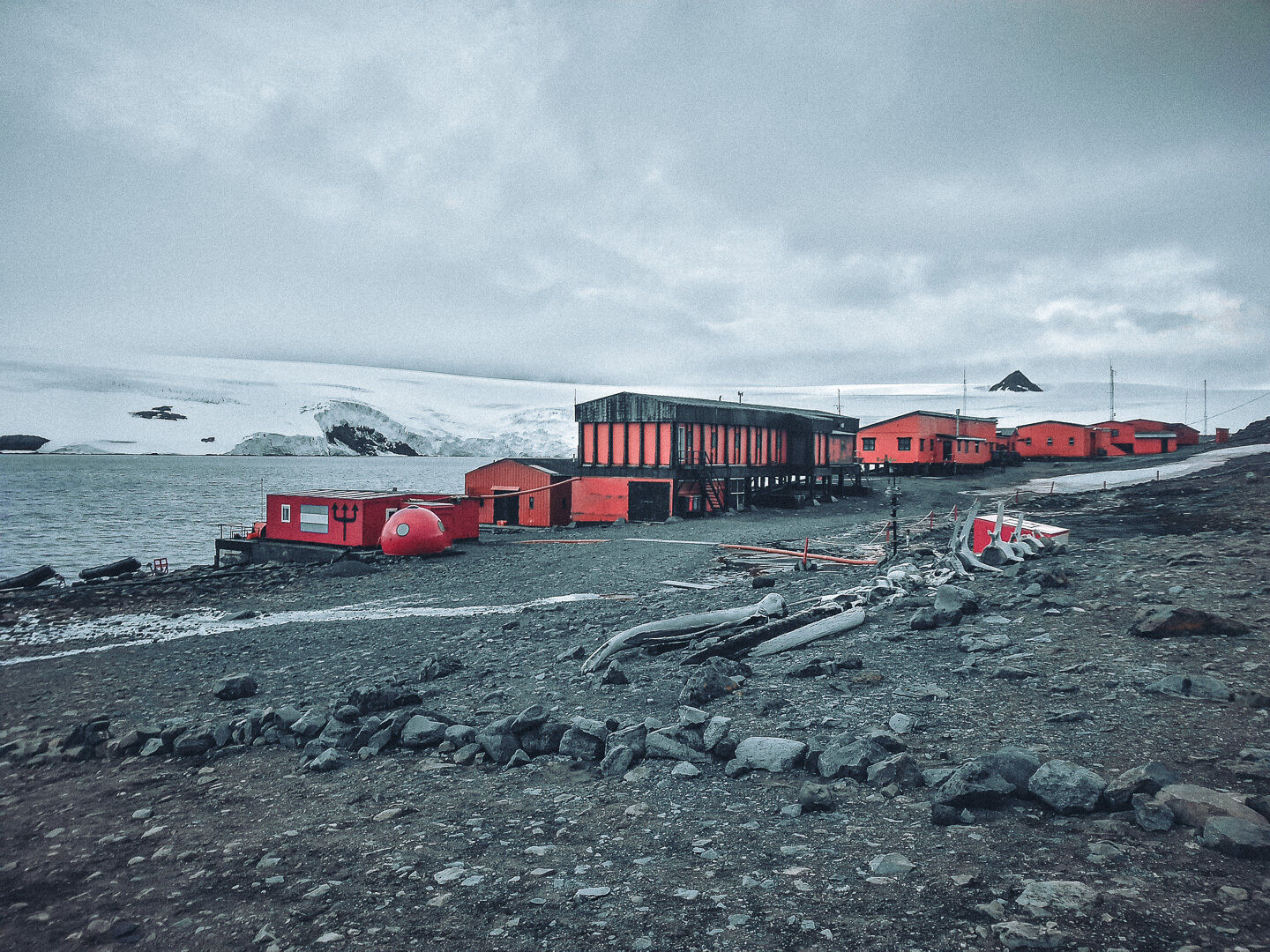
The iconic orange containers of the Argentine Antarctic Research Base Carlini (former Jubany) in Potter Cove (King George Island, South Shetland Islands, West Antarctic Peninsula). A whale skeleton appears on the dark bare ground near the base, freed from its snowy cover by the summer melting. Noticeable is the diving locker displaying the Argentinian flag and the mythological trident of Neptune.
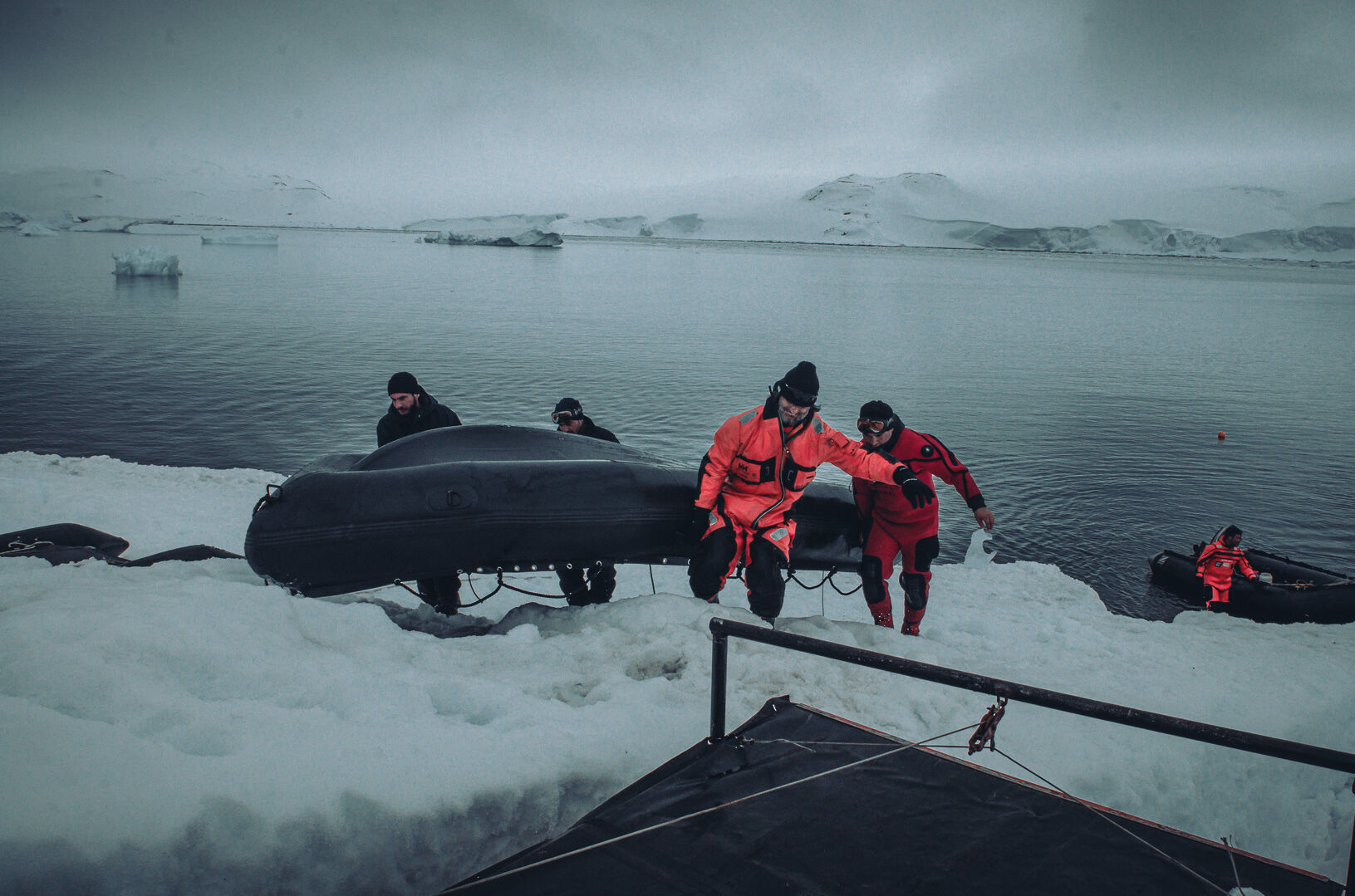
The divers carry the zodiacs back on shore after a day of work (picture taken during the spring of 2016 in November).
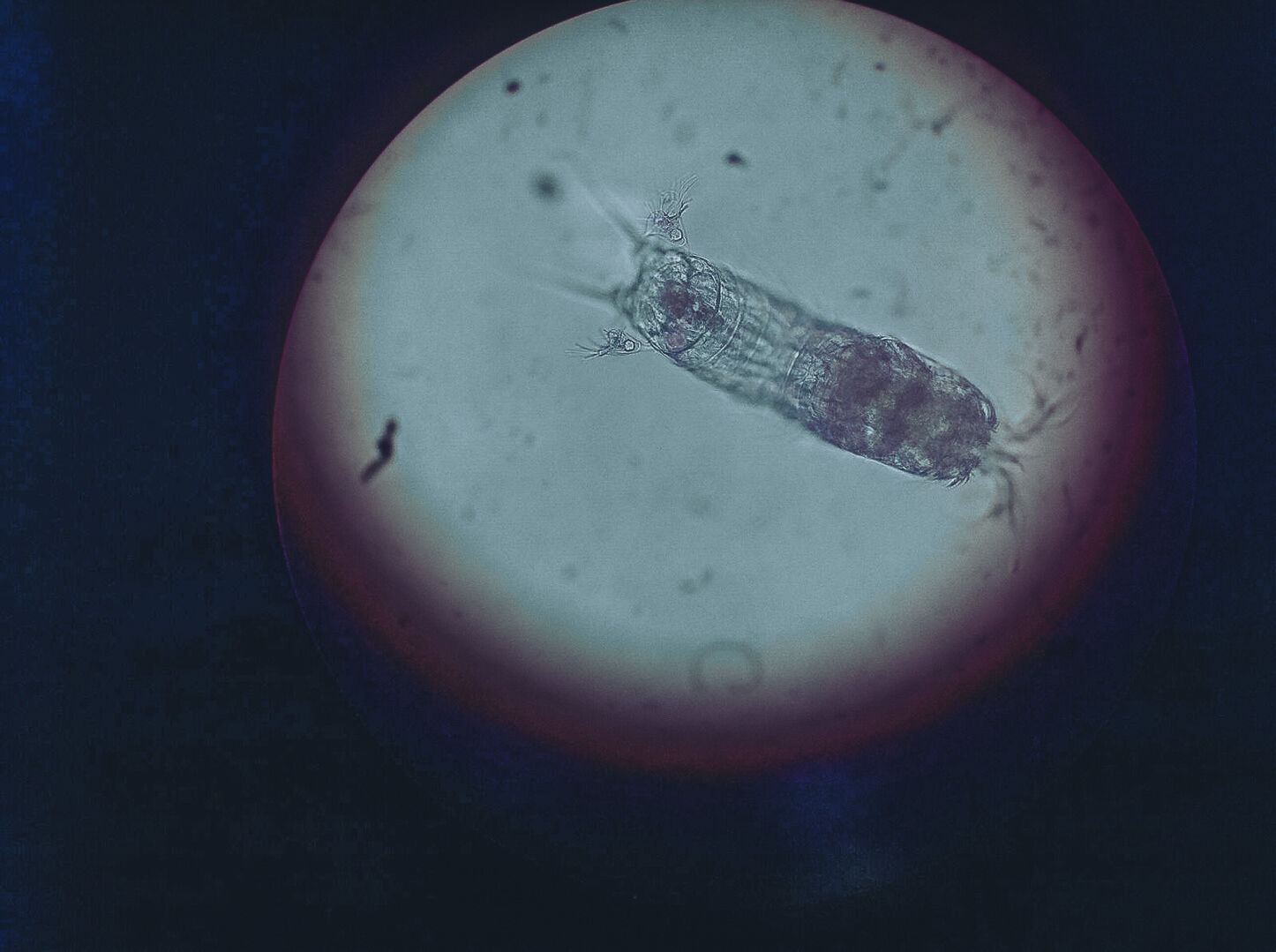
An harpacticoid copepod (a small crustacean living in between the sediment grains) as viewed through a stereomicroscope.
Memory of ice.
Throughout those years, I gradually learned that ice wasn’t a singular actor in this story. The disturbances I observed on the seafloor originated from different forms of ice, each shaping the ecosystem in its own way.
People often imagine Antarctica as a world of stillness: icebergs drifting through silent seas, frozen landscapes suspended outside of time. I’ve been asked whether such environments feel monotonous or lifeless.
Not at all.
The longer I worked in Potter Cove, the more I realised that Antarctic ice is constantly in motion. It advances and retreats. It fractures, drifts, melts, freezes, and reforms. And each of these movements leaves traces in the living world.
The retreating Fourcade Glacier is one of the forces shaping the communities I studied. As it melts, it releases freshwater and fine sediments into the cove. The water has become more turbid. New stretches of seafloor have emerged from beneath the ice. Icebergs calve from the glacier front and scour the seabed. Entire assemblages of organisms respond to these changes, adapting, recolonising, or disappearing.
But glaciers are only one part of the story.
Over time, I came to understand that not all Antarctic ice plays the same role. The glacier itself is a land-based mass of ancient ice, built up through the accumulation of snowfall over thousands of years. This is the ice that, when lost to the ocean, contributes directly to global sea-level rise, threatening coastal cities and ecosystems far beyond Antarctica.
Between many glaciers and the sea lie ice shelves, vast floating platforms attached to the continent. Although they already float on the ocean and therefore don’t directly raise sea levels when they melt—or, to be precise, they do but just infinitesimally in comparison to the ice that rests on land—they act as powerful brakes on the seaward flow of land ice. When an ice shelf weakens or collapses, the glaciers behind it can accelerate, increasing ice loss from the continent. Some ice shelves are hundreds of metres thick and preserve within their layers valuable records of past climatic conditions.
Then there’s sea ice.
Unlike glaciers and ice shelves, sea ice forms directly from the freezing of seawater. Every Antarctic winter, as darkness returns and katabatic winds descend from the continent, the ocean surface begins to freeze. The extent of sea ice expands dramatically, more than doubling the apparent size of Antarctica before retreating under the returning sunlight of spring and summer.
Some of this ice survives the summer melt. Year after year, it thickens, becoming multi-year sea ice. Within its layers, it preserves traces of the environmental and atmospheric conditions under which it formed: temperatures, storms, oceanic processes, and seasonal cycles.
What fascinated me most was that sea ice is not merely frozen water.
It’s a habitat.
On its surface and beneath it thrive entire communities of microorganisms sustained by nutrients carried by winds, sea spray, and ocean currents. Scientists refer to this community as the ‘sympagic biota’. The green and reddish hues sometimes visible in the ice are often signs of cyanobacteria and other photosynthetic microorganisms inhabiting this narrow interface between ocean and atmosphere.
Seen from afar, ice appears inert. Up close, it reveals itself as a dynamic system: a habitat, a climate archive, and an ecological force.
Yet this system is changing rapidly.
Since the late 1970s, the duration of seasonal sea-ice cover along the West Antarctic Peninsula has shortened by nearly one hundred days. Freezing begins later in autumn, and melting arrives earlier in spring. Coastal fjords remain ice free for increasingly long periods throughout the year.
The consequences extend across entire ecosystems. Light conditions change. Patterns of primary production shift. Iceberg scouring intensifies in some areas. Habitats that evolved under relatively stable conditions for millennia are being reorganised.
What happens to ice eventually happens to life.
This was perhaps the most important lesson Antarctica taught me. The glacier retreat I observed, the sediment communities I analysed, the microscopic organisms hidden within the seabed, and the seasonal rhythms of sea ice were never separate stories. They were all expressions of the same interconnected system.
Antarctica is often imagined as distant from the rest of the world. Yet nothing I observed there suggested isolation. The winds, the oceans, and the atmosphere connect the continent continuously to everywhere else. Decisions made thousands of kilometres away become inscribed into its glaciers, its sea ice, and its sediments. Somewhere within the layered structure of multi-year ice remains a memory of past winters, storms, temperatures, and seasons. And slowly, that memory is disappearing.
There’s no true elsewhere on Earth, only a single interconnected system within which even the most remote ice ultimately bears the imprint of our presence.
This online contribution is part of Trigger #7: Ocean, the wider project accompanying the printed book published by FOMU and Fw:Books. Extending the book beyond its printed pages, the online series follows further conversations, works and perspectives that explore the ocean as an environment, a force and a way of thinking with images. Each contribution takes its own route through these questions.