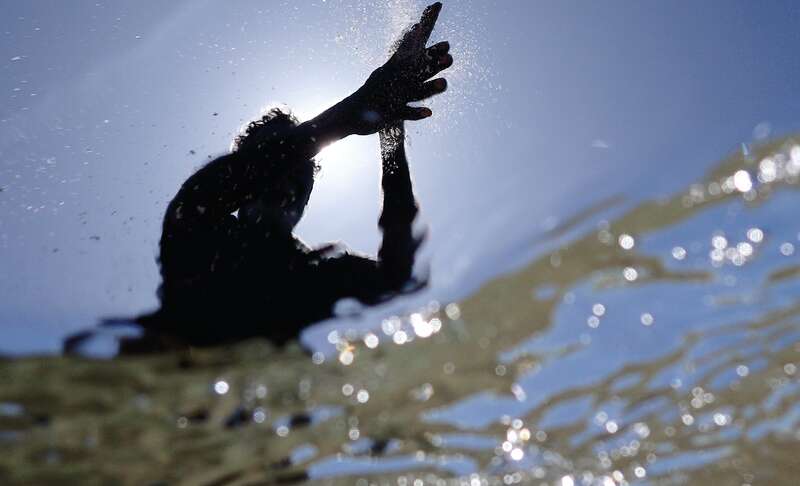
The land, the colours, the patterns, the people. Everything holds you. Video still, Raŋipuy, Coming from the Beach (work in progress).
Gapupuy Bitja: From our Ocean, to your Ocean
Editorial introduction: Miyarrka Media is a Yolŋu-led intergenerational collective based in Yalakun on Arnhem Bay, Australia, working across film, photography, and digital media. In this contribution - published as part of the digital ecosystem of Trigger #7: Ocean - image-making is reimagined not as an act of capturing from a distance, but as a fluid, relational practice made with Country and seawater (gapu).
Grounded in Yolŋu law and ethics (rom), the collective resists the camera’s fixed, Western gaze, refusing to treat the sea as a passive landscape, resource, or backdrop. Instead, the ocean is encountered as kin, a living network of ancestral relations that teaches us how to look, feel, and listen. Moving between video stills, dialogue, and intentional moments of opacity where sacred knowledge remains beyond the frame, Gapupuy Bitja directly embodies Trigger’s wider inquiry: de-centering the human observer, questioning who holds the authority to make images, and demonstrating how photography transforms when attuned to the rhythms, ethics, and material conditions of the ocean.
Miyarrka Media
17 nov 2026 • 4 min
Nhäma. Look.
The ocean is not a swimming pool. It’s not a supermarket. It’s family. We breathe with it, feeling its moods and desires, feeling its caresses and its warnings, moving with its rhythms as it teaches us how to look and how to see.
Sometimes at our homeland, tourists come and look around. They take their pictures. Dhap dhap dhap. They show their friends and families. That’s ok. But we are doing something different.
When we go hunting, we’re searching for whatever might show itself. Turtle and stingray, reefs and sandbars. We get ourselves ready for the moment when something becomes visible. This is larrum.
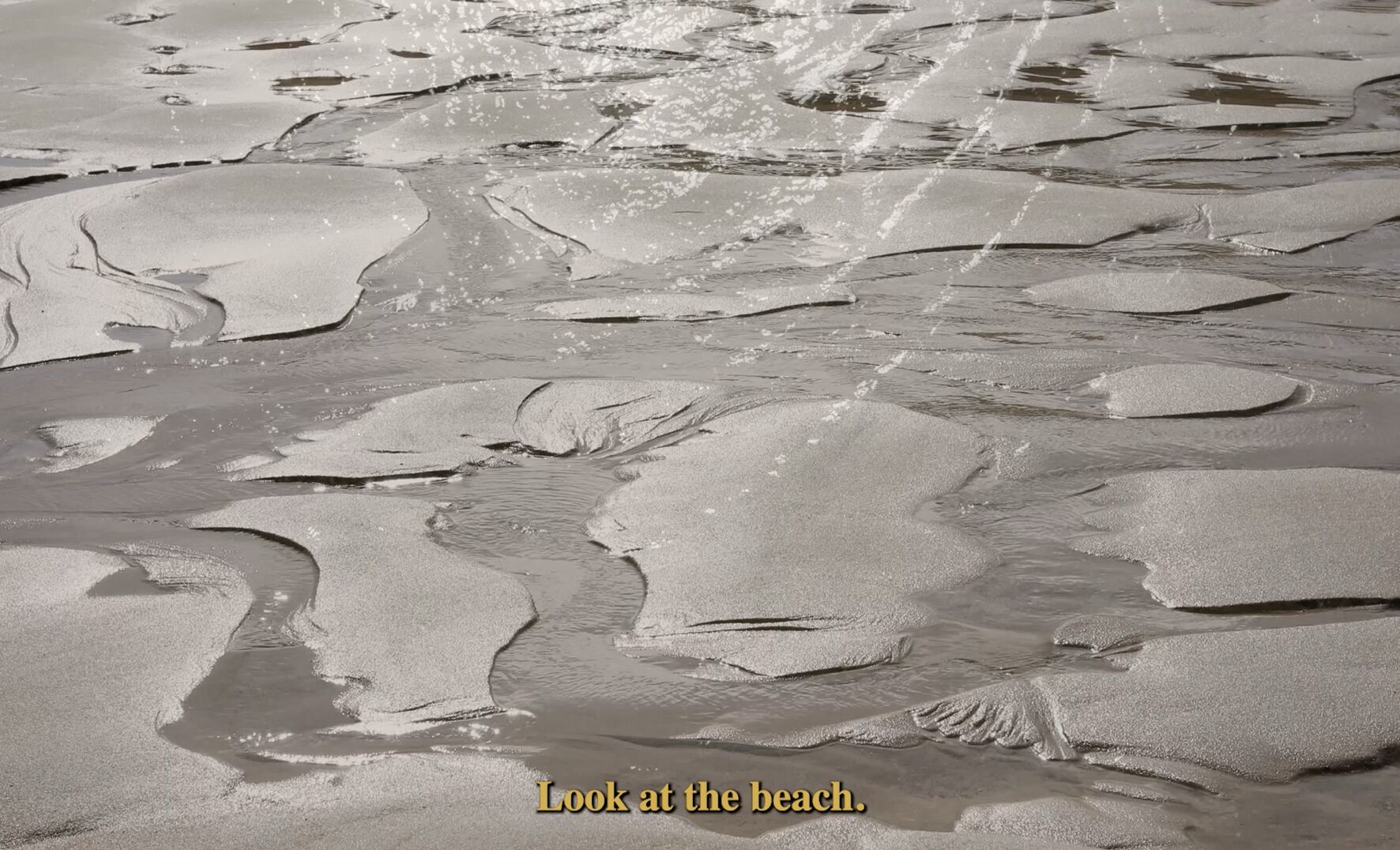
Bring your whole being closer to the sand and saltwater. Video still, Dhamuruŋbuy, saltwater life, 2026.
Between seeking and showing, that’s where images happen.
When a new person joins Miyarrka Media, someone who comes from another place—maybe in Australia, maybe overseas—we adopt them. That’s how they become related to everything and everyone here. If people are open, we can teach them.
They become related to places too. Rubbing sand on their body, we introduce them to our gapu. It smells their sweat. Then the gapu can recognise that person.
If that camera person is djambatj, like an expert hunter, they start to recognise the images gapu is giving. Feeling where to look, feeling when to stop. Feeling when the gapu has had enough. Sensing when the team is done.
Small changes in energy guide the process as much as the light, the tide and the wind. That’s part of dhäkay-ŋänhawuy rom, the law of feeling and connection.
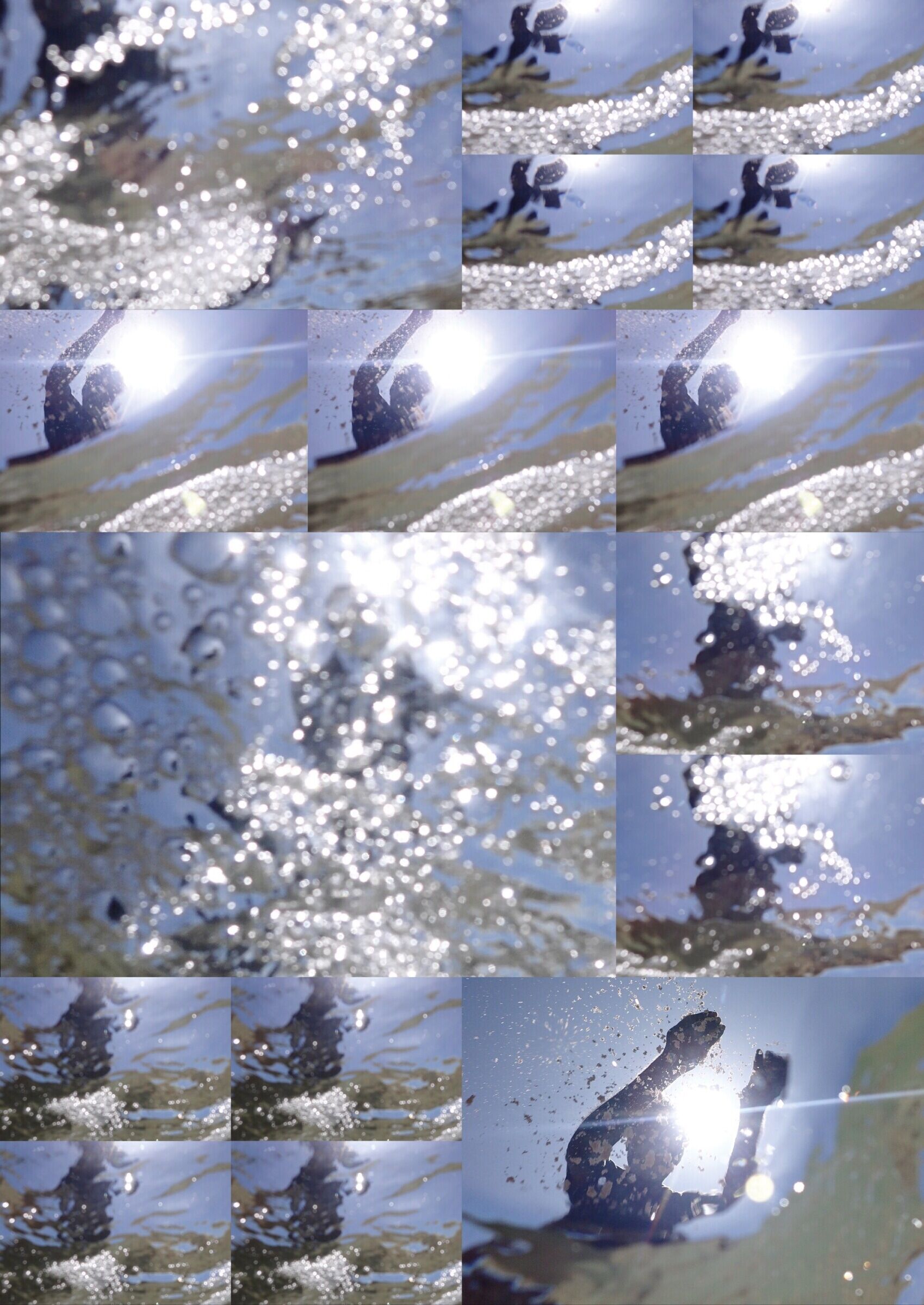
Rom is what matters most in this work. You might translate rom as law, culture and way of life. But that does not feel enough. Rom gives our lives value, meaning and identity. It holds us. It is our ancestral foundation. It guides how we come together, and it shapes what we give out. Gapu has its own rom—its own knowledge, power and authority. No one can tell it what to do, when to move, or when to settle down. But we can work together, through rom.
When images are made in relationship, they can become bitja alive with feeling. Alive with rom.
When Datam learned to dance with the gapu and her camera, Gurrumuruwuy guided her, showing her his favourite waves in our homeland—this place that our fathers and grandfathers cared for, this place that is always calling us to come home. The rest of us watched on from the shore.
In the evenings we would look together on the laptop. We would choose our favourite shots, deleting when an image showed too much, or not enough. Deep in gapu there are sacred elements that do not belong in a book or in a film.
To design, we come together across screens, languages and time zones: Gurunulmiwuy, Balanydjarrk, Dhawa and Jennifer in Gapuwiyak, Datam in Newcastle and Caleb in Sydney. We look and talk and feel together. We laugh a lot. Sometimes we cry. Finding new patterns and more feelings on each tide. Sensing with our bodies in rhythm. Searching, feeling, waiting, finding.
When an image or a design feels right to all of us, then we know it’s ready. Something becomes visible, and our bodies respond to it. It wakes us up. We didn’t know how to imagine these images before.
They came through working together with gapu.
We will always see more in these images than you. When Yolŋu look beneath the surface of bitja, they can see sacred patterns and knowledge held by the old people. This happens with photographs and videos. Senior people and ritual managers see more again. The patterns, the stories, songlines flow through Yolŋu veins. Like gapu.
But surfaces speak too. From where you sit, wherever you are, you might see and feel things that we can’t, as our images travel to you and stir your own connections.
We don’t expect you to recognise our home like we do. That is not the djäma, not the work here. Our bitja ask you, our gapu asks you, to feel for your own ocean—for the waters, places and relations that move in you.
These bitja are not images taken from Country. They are made with Country. They carry relationship through new currents, from our shorelines and families into other lives. But rom travels with them. The ties of belonging and responsibility that hold them to us do not loosen.
They reach further.
Flowing,
Flowing,
Flowing.
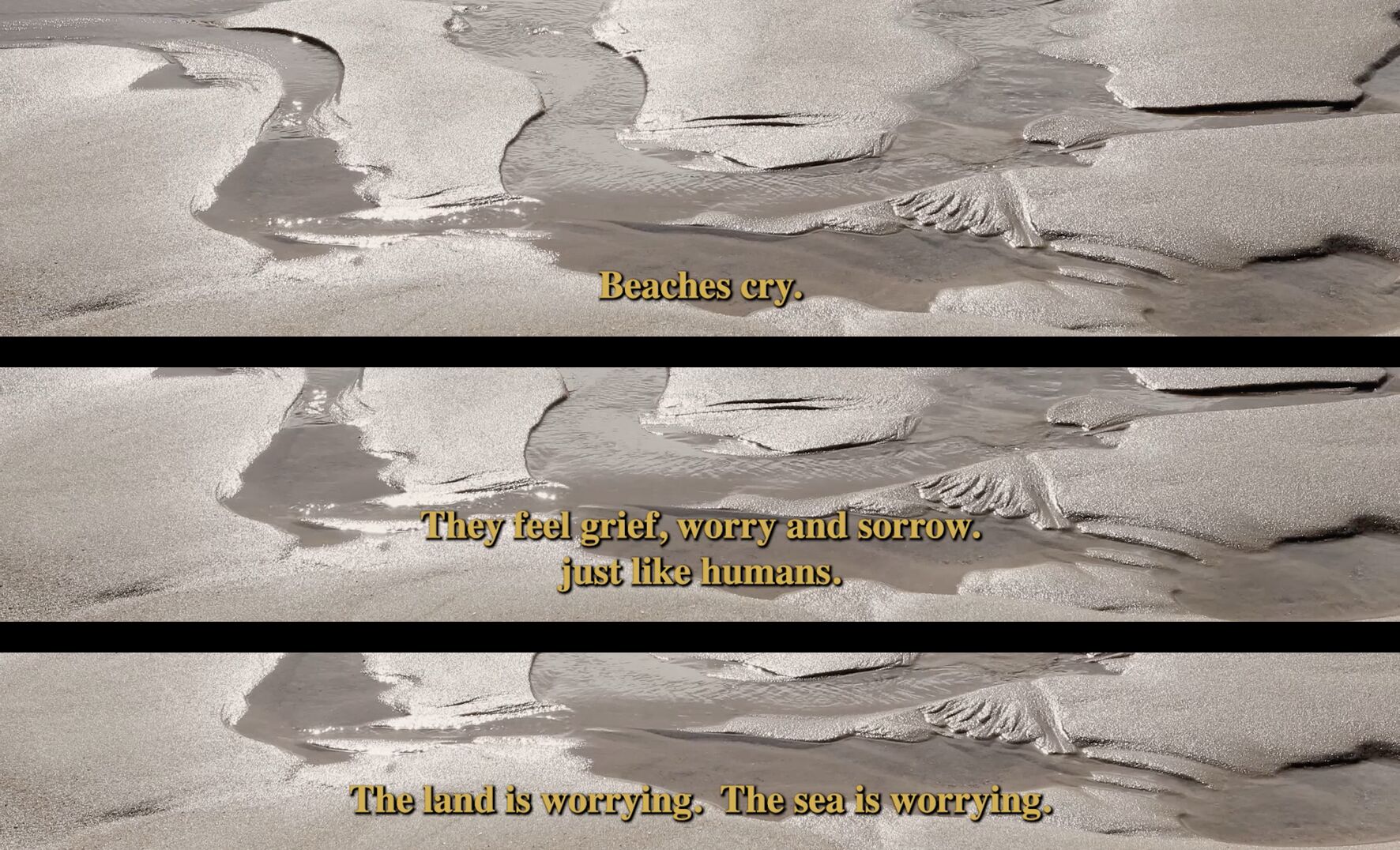
We worry for each other. Video still, Dhamuruŋbuy, saltwater life, 2026.
Acknowledgment
Miyarrka Media works in partnership with the Northern Institute, Charles Darwin University; Goŋ-Däl Aboriginal Corporation; and Gapuwiyak Culture and Arts. This project is funded by the Australian Research Council, SR200200346, Rangingur: A Yolŋu Digital Art of Renewal.
——
This online contribution is part of Trigger #7: Ocean, the wider project accompanying the printed book published by FOMU and Fw:Books. Extending the book beyond its printed pages, the online series follows further conversations, works and perspectives that explore the ocean as an environment, a force and a way of thinking with images. Each contribution takes its own route through these questions.