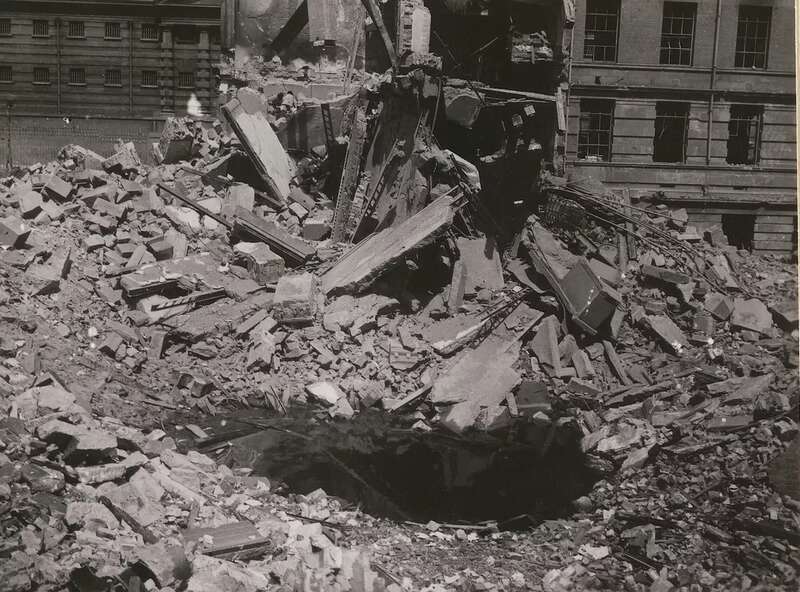
I was born in 1998, the year of the Good Friday Agreement, the peace accords that ended the decades-long conflict in Northern Ireland known as the Troubles. I have only known peace, yet a sense of unmistakable unease still lingers along the edges of our national narrative. In 2022, to mark 100 years of Irish independence, a colonial-era archive, the Public Records Office of Ireland (PROI), was digitally reconstructed. This act may at first appear contradictory in an era of decolonial rhetoric, resurrecting an archive of oppression to celebrate a nation’s collective autonomy. One can almost hear the muttering of whiskey-eyed men: 'Let sleeping dogs lie'. However, as Achille Mbembe notes, archives do not die but instead overcome material death to exist as haunting spectres of the instituting imaginary.Achille Mbembe, ‘The Power of the Archive and Its Limits,’ in Refiguring the Archive, ed. Carolyn Hamilton, Verne Harris, Jane Taylor, Michele Pickover, Graeme Reid & Razia Saleh (Dordrecht: Springer / Kluwer Academic, 2002), 22. In planting the spectral archive within a digital architecture, the Virtual Record Treasury of Ireland (VRTI) confronts the nation’s violent archival record, in an attempt to recast the records from tools of repression to vessels of emancipation. This article explores the digital archive’s liberatory potential, and to strengthen that analysis I have embedded excerpts from a conversation with the VRTI’s programme’s current co-director, Ciaran Wallace. This essay also explores placeness, legitimacy, and the VRTI’s capacity to enable liberatory action in the now within current discourses of digital sovereignty and surveillance capitalism.
The researchers at Trinity College Dublin who led the international effort in co-locating the lost archival records of the PROI do not feign neutrality, a position that has long been discarded within critical archival theory.Howard Zinn, ‘Secrecy, Archives and the Public Interest,’ Midwestern Archivist 2 (1977): 14–26; Joan M. Schwartz and Terry Cook, ‘Archives, Records and Power: The Making of Modern Memory,’ Archival Science 2 (2002): 1–19. Their task is clearly an intellectual endeavour, one that tests the powers of systemic research in recuperating a lost institutional memory. However, the project of re-animating a colonial-era archive in the now has undoubtedly led to a re-confrontation with the nation’s haunted spectre. According to archival scholar Michelle Caswell, this reencounter with the archive offers its users and custodians a chance to enact liberatory memory work in the present, deconstructing the long history of colonial archival violence shaping the nation’s consciousness.Michelle Caswell, Urgent Archives. Enacting Liberatory Memory Work (London, Routledge, 2021). Engaging with the archive in this way may even eventually lead to the overall displacement of the archive’s status from the realm of institutional memory towards that of collective memory.
In my conversation with Wallace, it became evident from the start that the archive was undergoing many forms of transition, including its emergence from the speculative imaginary into the digital realm. Signifying its layers of physical and political repositioning, Wallace explains the efforts made in appropriately renaming the archive as a Treasury.During my conversation with Dr. Wallace, the political status of the former Public Records Office of Ireland was highlighted during a discussion of a 1990s UN report on the destruction of Archives. Governments worldwide were asked to report any archival loss from the past century. The Irish government submitted zero. In the words of Dr. Wallace, ‘no one felt like it was their event’. Despite its recording ‘every square inch and person in Ireland’ it was considered a creation of the former imperial master. - Memory of the World: Lost Memory - Libraries and Archives destroyed in the Twentieth Century, UNESCO 1996.
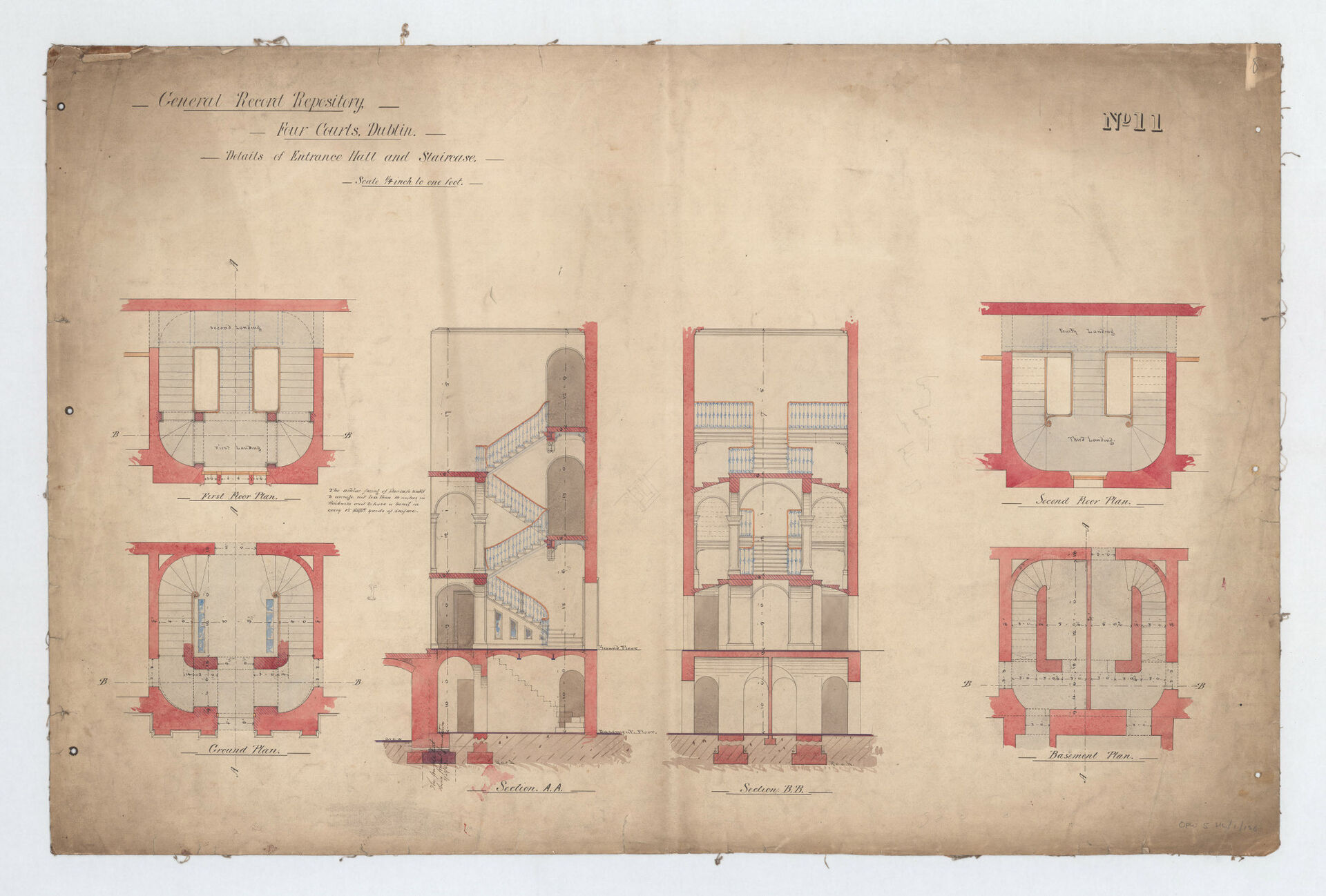
National Archives, Details of entrance hall and staircase, General Records Depository, Four Courts, 1864, Dublin.
We call ourselves a treasury - an invented term. It comes from the original physical building where the objects themselves were stored. It allows us to have an interpretative potential that goes beyond what an archive can do. In this way, we are not competing with archives.
Entering the VRTI is not so much a question of opening doors as the opening of a new browser tab. This point of access is crucial in determining the subjective experience of the archive for the user, and informs not only the affordances of its use but also the dimensions within which its liberatory memory work can manifest. Significantly these dimensions are architectural in nature despite their limbic status within the online realm. The best example of this is the virtual reality model of the former PROI building offered as the natural starting place when visiting the VRTI website. Prior to my conversation with Wallace, I explored the capabilities of the VR model from the comfort of my snug Brussels apartment. As I virtually flew through the normally inaccessible shelves of the PROI building, it became clear to me that new spatio-cultural thresholds had been crossed, and that access could no longer be simply considered an excuse for uncritical value judgements.Michelle Caswell, Urgent Archives: Enacting Liberatory Memory Work (London: Routledge, 2021), 115.
Despite its current limitations, Wallace points out the current ways in which the VR model is being utilised by the public.
There was a primary school teacher, she said she can use it as they have to show their pupils inside an archive. It was being used in ways we never predicted.
While the capabilities of this movement within virtual space are limited to the technical capacity of the current version of the VRTI website, I can imagine a future where such dimensions are populated with a host of networked users.
Erik Stein, the Digital Archive Advisor at the Talking Objects Archive, writes: 'Visiting a website is a movement of thought. It is like moving through an imaginary landscape'.Erik Stein, ‘Epistemological Landscapes,’ The Talking Objects Archive, January 2023. This landscape may be a 'digital garden’ of auto-ethnographic histories, a sentiment voiced by Chao Tayiana Maina, founder of Digital African Heritage.Digital African Heritage is a Nairobi-based NGO focused on the critical, holistic and knowledge-based approach to digital solutions within African heritage. I enjoy this image, the imaginative landscape of the digital garden designed with an information architecture that enables the movement inside of both users and information. Movements that can ultimately lead to novel encounters between both users and information. In light of these mobile affordances, new and discursive artworks are being crafted within the imaginative landscapes of digital archival spaces using VR technologies. Take for example Alisa Berger's work Rapture II - Portal, ‘a digital reconquest’ of an abandoned apartment lost through the displacement of the ongoing Ukrainian war.Alisa Berger, Rapture II - Portal, 2024, Installation VR, Le Fresnoy. Or the more speculative vision of Anna Biriulina who, in her project In Memories of Tartaria, constructs for the viewer an enigmatic world of fragmented identities and cultural trauma, ‘a liminal space arising from the once independent state of the Tartars’.Anna Biriulina, Memories of Tartaria, 2024, Installation VR, Le Fresnoy.
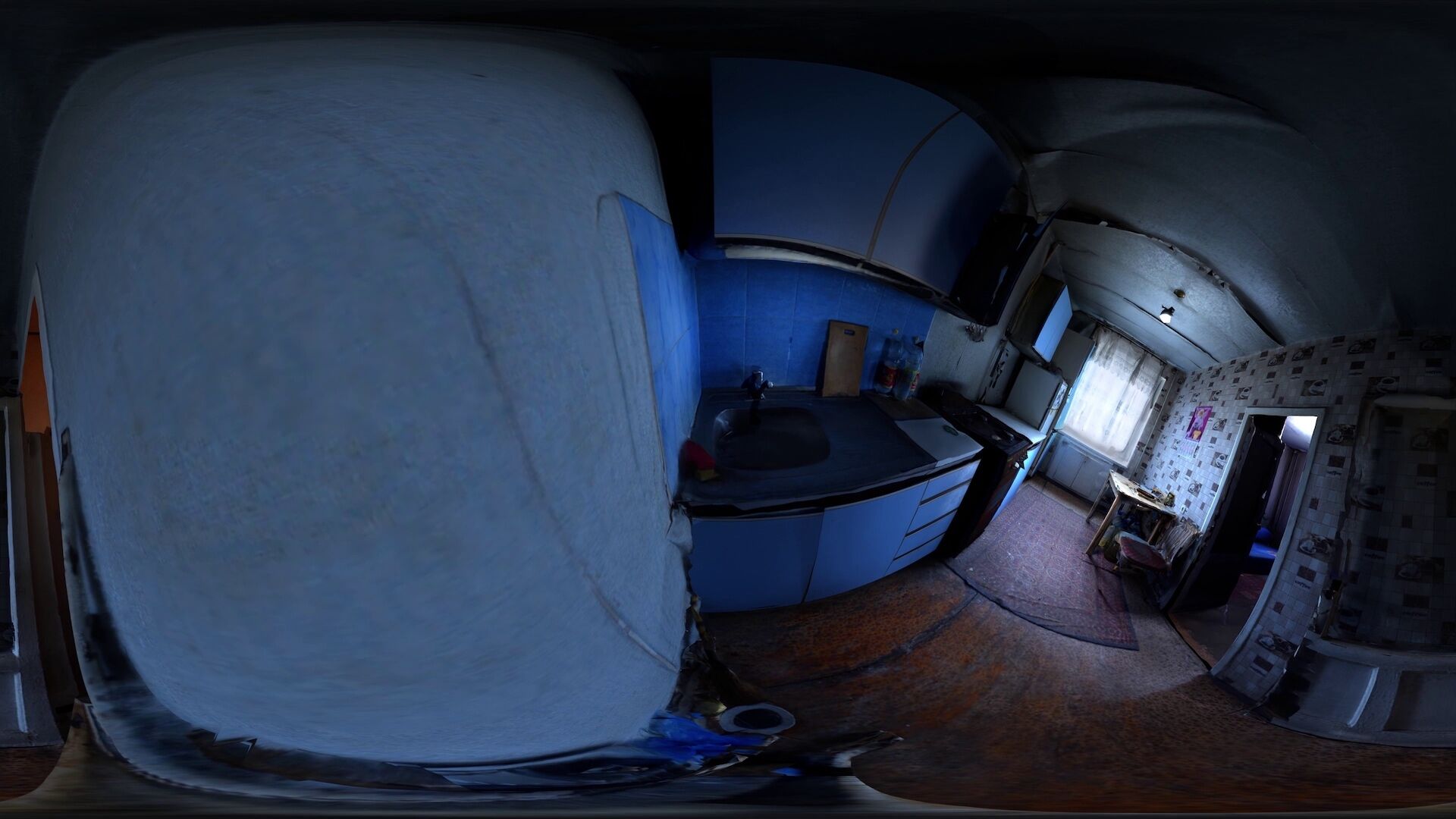
Alisa Berger, Rapture II - Portal, 2024, still from VR installation, Le Fresnoy.
The VRTI is not restricted to movements within the digital architecture of the website but also employs a hybrid roadshow format which travels throughout libraries in Ireland. It becomes a real-world meeting point between prospective users and the virtual archive. Wallace explains that such events act as informal guides for less internet-literate generations about accessing the archive, and aim to enable individuals to take ownership of their own histories.
We focus on how it is relevant to you in your constituency; we made this thing that’s intangible and conceptual but if you’re interested in your local history you will see how this tool can be used. Paying due respect to all the existing things. It’s one more tool and it’s free and it’s public. At half the talks we go to, there are people who say - Oh! I’ve got something under my bed.
These community-focused events have the potential to do more than simply spreading the word. Through two-way exchange, the VRTI may offer the potential for users to regain their creative agency in shaping their own representation and histories.
Defining the user is paramount in navigating the liberatory potential of such developing virtual archives. One may ask whether, in the case of the digital archive, the user is equivalent to the traditional viewer of the photographic encounter? To be a ‘user’ over a ‘viewer’ suggests an altogether more active role in the object-encounter. In the case of the VRTI, where narratives are generated by the visitor to the site, the agency of the viewer-turned-user appears to be heightened. This is unlike the vast majority of cases, where the internet’s ‘user’ of digital media is a pre-made and carefully crafted position, operated by corporate institutions to commodify the range of human emotions to better manipulate them through advertising and/or facilitate political bias.See Shoshana Zuboff’s work on ‘surveillance capitalism’, an extensive system of emotional commodification that has the effect of ‘a fundamentally anti-democratic coup’. Shoshana Zuboff, The Age of Surveillance Capitalism: The Fight for a Human Future at the New Frontier of Power (London: Profile Books, 2019). Such ‘users’ are offered a veneer of agency but exist within a massive system of control and coercion, a system dependent on the digital archive and its shifting affordances, where the archive is no longer limited to a collection site for discourse but acts also as a space to facilitate ‘mechanisms of control and social actions’.Yuk Hui, ‘Archivist Manifesto,' July 17, 2020. It appears that alongside computer-vision systems that have reversed the role of image and viewer, the technologically mediated image, both in its creation and its storage, is threatening predefined roles through a shifting of the viewer’s agency.Trevor Paglen writes, ‘We no longer look at images—images look at us. They no longer simply represent things but actively intervene in everyday life.’ ‘Invisible Images (Your Pictures Are Looking at You),’ The New Inquiry, December 2016.
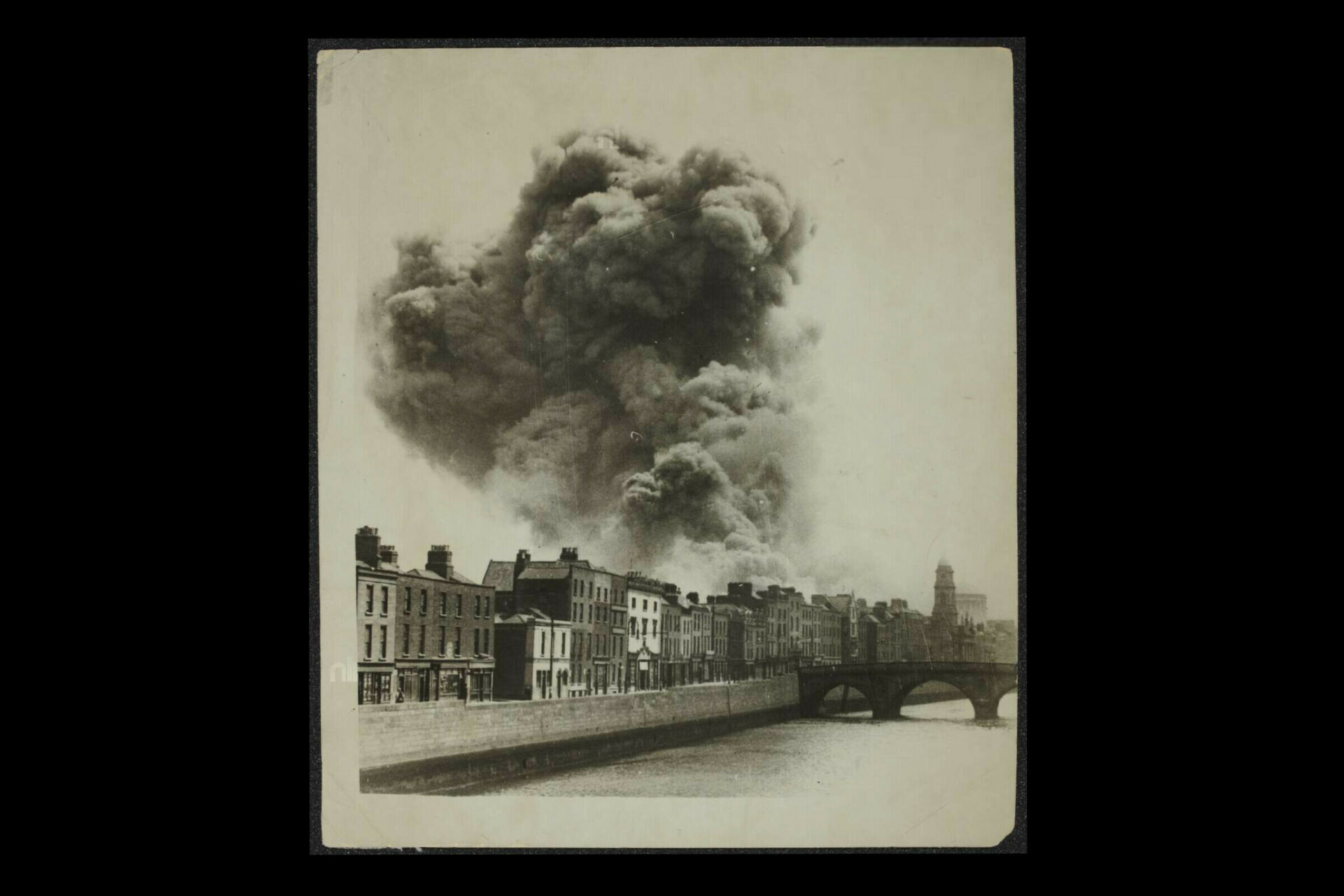
The Daily Mail, Smoke billowing over Dublin rooftops, following an explosion at the Four Courts, July 1922, Dublin.
In response, Yuk Hui, a philosopher of technology, proposes in his Archivist Manifesto to ‘re-appropriate archives’ in order for the commodified ‘user’ to regain agency. Through the Treasury’s intersection with personal histories at these roadshow events Wallace and his VRTI team may actually be enabling this re-appropriation as called for by Yuk Hui.In her ‘Archive Manifesto’ Yuk Hui calls for the ’reinsertion of knowledge and skills for developing personal archives.’ Focusing on the community as co-creators rather than end users in this way may force the transition of the PROI into a complete restructuring.In Urgent Archives Michelle Caswell states that ‘Liberation demands structural change’. Michelle Caswell, Urgent Archives. Enacting Liberatory Memory Work (London, Routledge, 2001), 121. The spectre, rehoused not only in the digital architecture of the web but also through community-led intervention, becomes a vessel for the reconstitution of institutional and collective memory. Its capacity then meets the corresponding fluctuations in humans’ desire and need to be recorded and archived as symptoms of cycles of oppression, rather than submitting to the singular conception of linear progressive time.
My interest in the VRTI is rooted in my personal desire for a clearer sense of self-identity within the conflux of conflict, religion and colonial rule that has defined Irish history to date. It was sparked by my fascination for the spectral nature of the VRTI and its reconstruction in the digital architecture of the web. While considering my approach to the VRTI as a contemporary restoration of an institutional archive, Jacques Derrida’s 1994 keynote lecture Archive Fever: a Freudian Impression presented itself as a sensible starting place. In his lecture he outlines the early movements of the archive, or arkheoin in Greek, from a domestic ‘dwelling place of the archons’ through an ‘institutional passage’ to the privileged ‘topo-nomology’ of the public space.Jacques Derrida, Archive Fever a Freudian Impulse (Chicago & London: The University of Chicago Press,1996), 2. Derrida argues that the housing of the archive, the literal place the records are kept, imbues the archive with as much legitimacy as the records themselves. Summarily, it felt imperative to consider the placeness of the archive as a requisite precursor for legitimacy. However, upon a deeper reading of Caswell’s Urgent Archives and following my discussion with Wallace, it became clear to me that the potential of the VRTI is not in its capacity to demonstrate that legitimacy is socially conferred through networked users but politically earned by the degree to which the archive participates in justice-orientated truth-telling and redress.
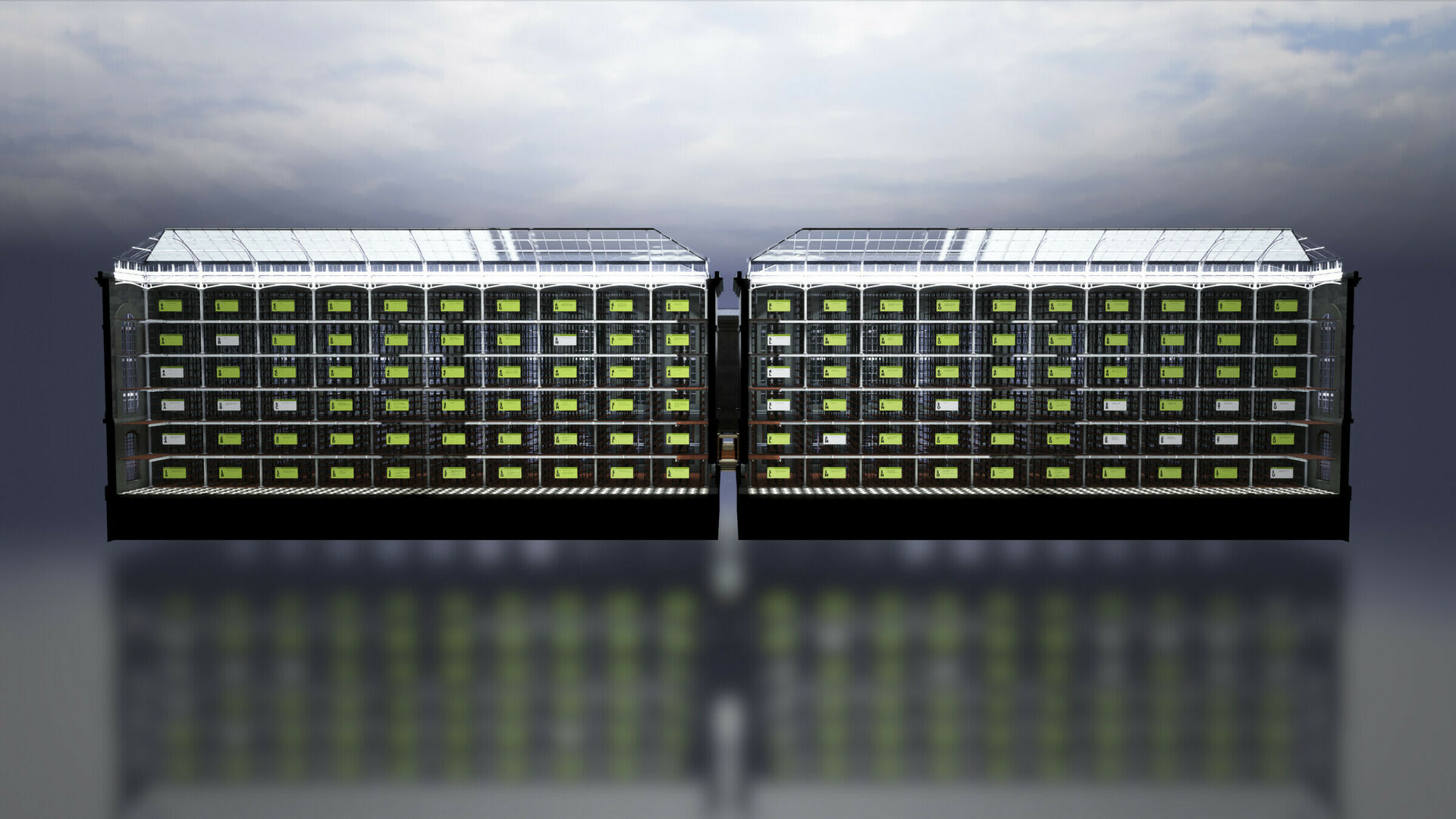
Treasury view, Screengrab from VR walk through the Virtual Record Treasury of Ireland, June 2025.
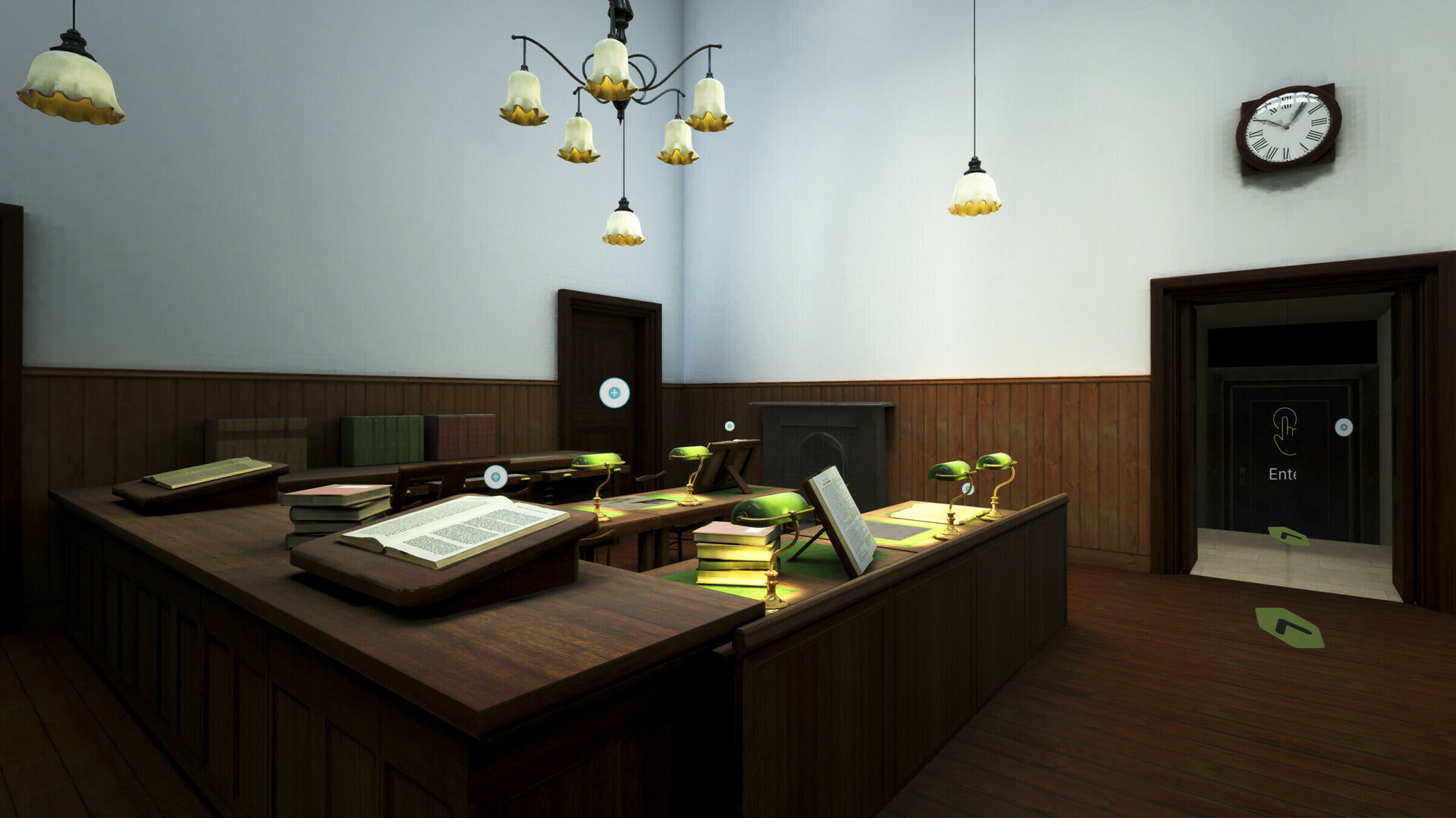
The reception, Screengrab from VR walk through the Virtual Record Treasury of Ireland, June 2025.
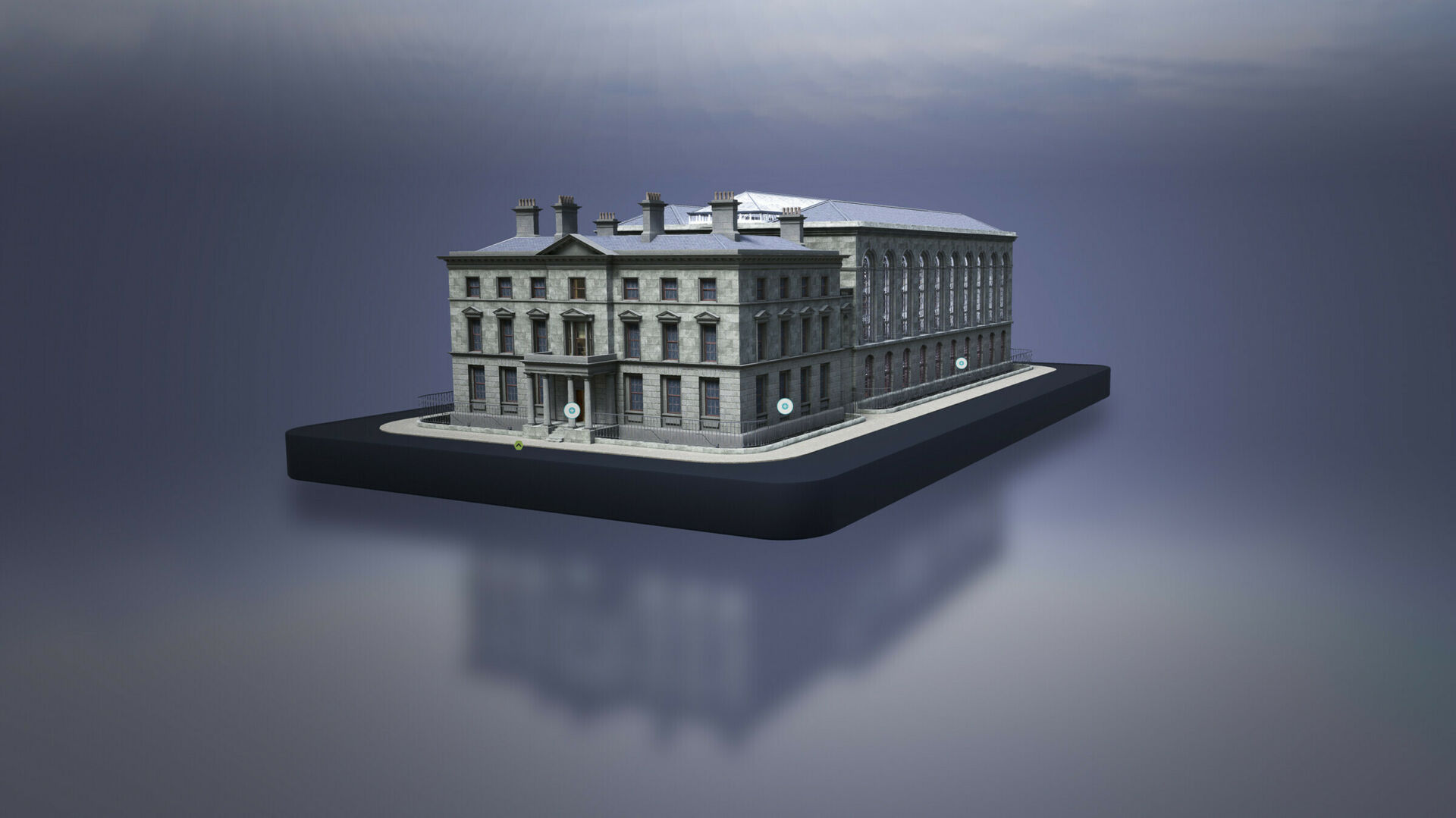
The exterior, Screengrab from VR walk through the Virtual Record Treasury of Ireland, June 2025.
Digital technologies may permit many spectral archives to become re-animated among us. However, the technological capacity to trespass and reimagine must lead to the liberatory potential of new archives outside of the cycles of coercion and oppression. The VRTI demonstrates the tantalising liberatory potential offered by hybridised digital-physical space and the capacity for community co-creation. The VRTI in this way represents a turn away from the archive as an abstracted idolatry and towards a truer transition of the archive into the public space, mirroring the shift from institutional to collective memory. Recognising Yuk Hui’s assertion that we are all archivists–and that we don’t have a choice in the matter–makes even more pressing the need for urgent archival interventions offered by initiatives such as the VRTI.In the Archive Manifesto Yuk Hui opens with the statement ‘We are archivists, since we have to be. We don’t have a choice.’ A society of archivists must not become a society of commodified users; it is our collective responsibility to act urgently and identify when digitally afforded agency is conferred, rather than being cloaked in a facade of control.
To find a User's Guide to help you navigate the archival records, click here.
___
This article forms part of Networking the Audience, a themed online publication guest-edited by Will Boase and Andrea Stultiens, developed in collaboration with MAPS (Master of Photography & Society) at KABK The Hague. The contributions emerge from an open call shared across the MAPS network, including alumni, and bring together artistic and critical perspectives on photography, publishing, and circulation.
Together, the nine contributions reflect on how digital systems reshape authorship, readership, and meaning-making, foregrounding publishing itself as a creative and relational practice. Rather than addressing a fixed audience, the series explores how images and texts move through fluid, networked publics.